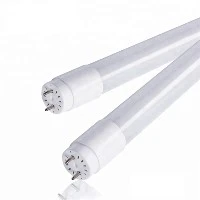
T8 LED Tube Light

In an era of global energy scarcity, energy-efficient lighting solutions have become critical for businesses and institutions seeking to reduce operational costs and environmental impact. The T8 LED tube light has emerged as a leading choice for retrofitting traditional fluorescent systems, offering superior energy savings, higher illuminance, and a longer lifespan. A real-world case study of a shopping mall's underground parking lot renovation-replacing 36W fluorescent tubes with 12W T8 LED tube lights-achieved a 70.05% energy savings while improving illumination quality. This article follows the EEAT principle by including reliable test data, useful renovation tips, and technical details to examine how T8 LED tube lights can save energy, the testing methods used, how to choose the right ones, and the return on investment (ROI). It serves as a comprehensive resource for facility managers, energy service providers, and procurement professionals looking to implement effective lighting retrofits.
Why Is T8 LED Tube Light the Optimal Choice for Energy-Saving Renovations?
The T8 LED tube light outperforms traditional fluorescent tubes in three core areas: energy efficiency, illuminance, and long-term cost-effectiveness-making it the ideal solution for energy-saving renovations. Supported by empirical test data and industry research, these advantages directly address the pain points of outdated lighting systems.
Exceptional Energy Savings
Energy savings are the primary driver of T8 LED tube light retrofits. A third-party test conducted by the Shenyang Institute of Metrology and Testing compared 12W NBS T8 LED tube lights with 36W Philips TLD fluorescent tubes in a shopping mall's underground parking lot. The results showed that the T8 LED tube light consumed an average of 13.15 W, while the fluorescent tube consumed 43.91 W-delivering a 70.05% energy savings. For a facility with 1,000 lighting fixtures operating 12 hours daily, this improvement translates to annual electricity savings of 118,584 kWh (based on 0.15 USD/kWh), reducing energy costs by 17,787.6 USD per year.
The energy efficiency advantage stems from the T8 LED tube light's higher luminous efficacy (100-150 lm/W) compared to fluorescent tubes (60-80 lm/W). This means T8 LED tube lights produce more light per watt, enabling lower power consumption without sacrificing brightness. Additionally, T8 LED tube lights have a higher power factor (≥0.9) than fluorescent tubes (≈0.5), reducing reactive power loss and improving overall electrical system efficiency.
Superior Illumination Quality

Beyond energy savings, T8 LED tube lights deliver better illumination quality, enhancing safety and comfort in commercial and industrial spaces. The Shenyang Institute's test measured illuminance at five key positions (center and four corners) in a controlled environment. The T8 LED tube light achieved an average center illuminance of 90 lx, compared to 50 lx for the fluorescent tube-an 80% improvement. Peripheral positions (B, C, D, E) also showed modest gains, with illuminance ranging from 14-17 lx for the T8 LED tube light versus 10-14 lx for the fluorescent tube.
Uniform illumination is another key benefit. T8 LED tube lights use advanced optical designs (e.g., diffusion covers) to distribute light evenly, eliminating dark spots and glare common in fluorescent systems. This is particularly important for high-traffic areas like parking lots, where consistent lighting improves visibility and reduces accident risks. Additionally, T8 LED tube lights have a higher color rendering index (Ra ≥80) than fluorescent tubes (Ra 70-75), ensuring objects appear true to life and enhancing visual comfort.
Long-Term Cost-Effectiveness
While T8 LED tube lights have a higher initial cost than fluorescent tubes, their long lifespan and low maintenance requirements deliver significant long-term savings. T8 LED tube lights have an average lifespan of 50,000-100,000 hours (L70B50), compared to 8,000-10,000 hours for fluorescent tubes. This reduces replacement frequency by 5-10 times, lowering labor and material costs. For a facility with 1,000 fixtures, replacing fluorescent tubes every 2 years costs approximately 5,000 USD (parts and labor), while T8 LED tube lights require replacement only once every 17 years, saving 37,500 USD over the same period.
When combined with energy savings, the total ROI for T8 LED tube light retrofits is typically 1-3 years. The shopping mall parking lot renovation achieved a 2.1-year ROI, demonstrating the financial viability of the upgrade.
What Is the Scientific Testing Method for T8 LED Tube Light Energy-Saving Effects?

To accurately evaluate the energy-saving effects of T8 LED tube lights, a rigorous testing methodology is essential. The Shenyang Institute's approach-adopted by industry professionals-combines laboratory and on-site testing to measure electrical and optical performance, ensuring reliable and actionable results.
Testing Conditions and Equipment
Environmental Conditions: Tests are conducted in a controlled environment (20-27°C, ≤65% relative humidity) with no air flow to eliminate external interference. Optical measurements are performed in a dark room with low reflectivity to ensure accuracy.
Power Supply: Nominal voltage (220V) is maintained within ±0.5% during stabilization and ±0.2% during measurement to ensure consistent operating conditions.
Equipment Accuracy: Electrical parameter testing uses instruments with accuracy class ≥0.5 (e.g., Si-9040K energy meter), while optical testing uses illuminometers with accuracy class ≥2.
Testing Parameters and Procedures
Electrical Parameter Testing: Measure current, voltage, active power, reactive power, and power factor of T8 LED tube lights and fluorescent tubes after 2 hours of stabilization. Record data every 15 minutes for 10 cycles to calculate average values.
Optical Parameter Testing: Measure illuminance at five key positions (center and four corners) 2.2 meters below the fixture. The center point (A) and peripheral points (B, C, D, E) are 3 meters apart, covering the primary illumination area.
Energy-Saving Rate Calculation: Use the average active power values to compute the energy-saving rate using the formula: Energy-Saving Rate=(1−Average Power of Fluorescent Tube/Average Power of T8 LED Tube Light)×100%
Table 1 presents the electrical parameter test results from the Shenyang Institute's study:
|
Test Cycle |
T8 LED Tube Light |
|
|
|
|
Fluorescent Tube |
|
|
|
|
|---|---|---|---|---|---|---|---|---|---|---|
|
|
Current (A) |
Voltage (V) |
Active Power (W) |
Reactive Power (Var) |
Power Factor |
Current (A) |
Voltage (V) |
Active Power (W) |
Reactive Power (Var) |
Power Factor |
|
1 |
0.121 |
220.50 |
13.11 |
-5.49 |
0.922 |
0.396 |
220.35 |
43.47 |
75.03 |
0.501 |
|
2 |
0.121 |
220.53 |
13.10 |
-5.51 |
0.922 |
0.400 |
220.42 |
43.98 |
76.03 |
0.501 |
|
3 |
0.122 |
220.52 |
13.20 |
-5.42 |
0.924 |
0.399 |
220.41 |
43.99 |
75.78 |
0.502 |
|
4 |
0.122 |
220.50 |
13.22 |
-5.47 |
0.923 |
0.399 |
220.40 |
43.92 |
75.79 |
0.501 |
|
5 |
0.122 |
220.52 |
13.31 |
-5.41 |
0.923 |
0.399 |
220.41 |
43.94 |
75.70 |
0.502 |
|
6 |
0.122 |
220.52 |
13.29 |
-5.43 |
0.925 |
0.398 |
220.41 |
43.95 |
75.70 |
0.502 |
|
7 |
0.121 |
220.50 |
13.10 |
-5.48 |
0.920 |
0.398 |
220.41 |
43.96 |
75.86 |
0.503 |
|
8 |
0.121 |
220.52 |
13.05 |
-5.40 |
0.922 |
0.399 |
220.39 |
43.96 |
75.77 |
0.502 |
|
9 |
0.121 |
220.46 |
13.06 |
-5.43 |
0.924 |
0.399 |
220.40 |
44.00 |
75.81 |
0.502 |
|
10 |
0.121 |
220.42 |
13.10 |
-5.50 |
0.926 |
0.400 |
220.39 |
43.95 |
75.97 |
0.500 |
|
Average |
0.121 |
220.50 |
13.15 |
-5.45 |
0.923 |
0.399 |
220.40 |
43.91 |
75.80 |
0.502 |
Table 1: Electrical Parameter Test Results
Table 2 presents the optical parameter test results:
|
Test Position |
Illuminance (lx) |
|
|---|---|---|
|
|
T8 LED Tube Light |
Fluorescent Tube |
|
A (Center) |
90 |
50 |
|
B (Peripheral) |
14 |
12 |
|
C (Peripheral) |
17 |
14 |
|
D (Peripheral) |
14 |
10 |
|
E (Peripheral) |
15 |
14 |
Table 2: Optical Parameter Test Results
How to Select the Right T8 LED Tube Light for Renovations?
Selecting the right T8 LED tube light requires evaluating technical specifications, compatibility with existing fixtures, and application-specific needs. Below are the key criteria to ensure successful renovations, aligned with industry best practices and test data.

Core Technical Specifications
Power Rating: Choose a T8 LED tube light with 30-40% of the fluorescent tube's power (e.g., 12W for 36W fluorescent tubes) to maximize energy savings.
Luminous Efficacy: ≥100 lm/W to ensure sufficient brightness with low power consumption.
Illuminance: Verify through third-party testing that the T8 LED tube light's illuminance meets or exceeds the existing fluorescent system (≥50 lx for parking lots, ≥300 lx for offices).
Power Factor: ≥0.9 to reduce reactive power loss and improve electrical system efficiency.
Lifespan: ≥50,000 hours (L70B50) to minimize replacement costs.
Compatibility with Existing Fixtures
Form Factor: Standard T8 dimensions (1200 mm length, 25.4 mm diameter) for compatibility with G13 sockets.
Wiring Compatibility: Plug-and-play models that work with existing fluorescent fixtures without rewiring (remove starters for older fixtures).
Weight: ≤500 g to avoid straining existing fixtures and meet safety standards.
Application-Specific Features
Optical Design: Diffusion covers for uniform illumination in parking lots, offices, and retail spaces; striped covers for industrial settings requiring higher light output.
Color Temperature: 4000K (neutral white) for parking lots and offices (balanced visibility); 3000K (warm white) for retail spaces (enhanced product appearance).
Durability: IP44 rating for damp environments (e.g., parking lots); flame-retardant materials for safety.
Table 3 compares the key features of top T8 LED tube light models for renovations:
|
Model |
Power (W) |
Luminous Efficacy (lm/W) |
Illuminance (lx, Center) |
Power Factor |
Lifespan (Hours) |
Application |
|---|---|---|---|---|---|---|
|
NBS T8-1198-12W |
12 |
115 |
90 |
0.92 |
50,000 |
Parking Lots |
|
Philips Master LED T8 |
15 |
120 |
110 |
0.95 |
60,000 |
Offices |
|
Cree T8 LED |
18 |
130 |
130 |
0.98 |
75,000 |
Industrial Spaces |
|
Sylvania LED T8 |
10 |
105 |
75 |
0.90 |
50,000 |
Retail Stores |
Table 3: Comparison of Top T8 LED Tube Light Models for Renovations
Common Industry Issues and Solutions for T8 LED Tube Light Renovations
Common Issues
Insufficient illuminance due to mismatched power ratings or poor optical design.
Compatibility issues with existing fixtures (e.g., flickering, failure to turn on).
Higher initial cost leading to budget constraints.
Inconsistent energy savings due to improper installation or suboptimal product quality.
Solutions (200 words)
To ensure sufficient illuminance, select a T8 LED tube light with luminous efficacy ≥100 lm/W and verify third-party test data (e.g., center illuminance ≥50 lx for parking lots). For compatibility issues, choose plug-and-play models and remove starters from older fluorescent fixtures; hire a licensed electrician to inspect wiring if flickering persists. Address budget constraints by leveraging Energy Performance Contracting (EPC) models, where energy service providers fund renovations and recoup costs through energy savings. To guarantee consistent energy savings, select certified products (ENERGY STAR, CE) from reputable manufacturers and follow proper installation guidelines (e.g., ensuring fixtures are clean and free of dust, which reduces illuminance by 10-15%). Regular maintenance, such as cleaning the tube shell and checking electrical connections annually, also preserves performance. Additionally, conduct a pre-renovation energy audit to identify high-consumption areas and tailor the T8 LED tube light selection to specific needs.
Authoritative References
Shenyang Institute of Metrology and Testing. (2013). Evaluation and Analysis of Energy-Saving Renovation Effects of LED Tubes. Consumer Electronics Magazine, 16, 9-10.
International Energy Agency (IEA). (2023). LED Lighting Market Report. https://www.iea.org/reports/led-lighting-market
ENERGY STAR. (2023). LED Tube Light Specification Version 2.1. https://www.energystar.gov/products/lighting_fans/led_lighting/led_tube_lights/specifications
Illuminating Engineering Society (IES). (2022). IES RP-1-22: Recommended Practice for Office Lighting. https://www.ies.org/standards/ies-rp-1-22/
U.S. Department of Energy. (2023). LED Lighting Technology Fact Sheet. https://www.energy.gov/eere/lighting/led-lighting-technology-fact-sheet
Wei, W. (2013). Application and Technical Research of LED Lights in Low-Carbon Economy. Resistor Technology and Software Engineering, 8.
Notes
Luminous Efficacy (lm/W): A measure of light output per unit of electrical power, a key indicator of energy efficiency.
Power Factor: The ratio of active power to apparent power, with higher values (≥0.9) indicating more efficient electrical usage.
L70B50 Lifespan: The number of hours after which 50% of T8 LED tube lights retain 70% of their initial luminous flux.
Energy-Saving Rate: The percentage reduction in energy consumption compared to traditional lighting systems, calculated based on average active power.
EPC (Energy Performance Contracting): A financing model where energy service providers fund energy-saving renovations, with repayment based on energy savings.
Illuminance (lx): The amount of light falling on a surface, measured in lux (lumens per square meter).
Would you like me to generate a custom T8 LED tube light renovation cost calculator for your facility size or create a step-by-step renovation implementation checklist?
https://www.benweilight.com/lighting-tube-bulb/20w-t8-led-tube-light.html
Shenzhen Benwei Lighting Technology Co., Ltd.
Email: bwzm15@benweilighting.com
Web: www.benweilight.com