Do different wavelengths of plant lights have the same effect on plants?

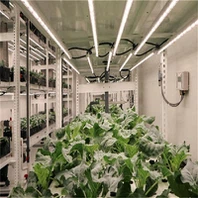
In recent years, with the development of artificial light plant factory technology, using LEDs as the sole light source for lettuce seedling cultivation has become an effective means of cultivating high-quality seedlings. LED light sources have advantages such as adjustable wavelength, high energy efficiency, and precise spectral control, and are gradually replacing traditional fluorescent lamps and high-pressure sodium lamps, becoming the main light source choice for facility agriculture. The application of LED light sources has significantly impacted the growth and physiological characteristics of vegetable seedlings.
In facility agriculture, seedling cultivation is a crucial stage that determines the final crop yield and quality. Lettuce seedlings are extremely sensitive to the light environment; different spectral compositions significantly affect their growth and development, photosynthetic efficiency, and nutrient accumulation. Light is the main energy source for plant photosynthesis, and different wavelengths of light have different effects on plant photosynthetic pigments and growth regulation. Within the visible light range, red and blue light have particularly important effects on plant growth and morphogenesis. Red light (600–700 nm) helps promote biomass accumulation and flowering, while blue light (400–500 nm) plays a key role in regulating stomatal opening and closing and photomorphogenesis.

However, a single wavelength of light source may lead to poor plant growth; therefore, the combined use of spectra is more beneficial for healthy plant growth. For example, the research by Han Qingyan et al., published in *Northeast Agricultural Science* in 2025, aimed to explore the effects of different LED spectra on the growth and development of lettuce seedlings. The experiment included four treatments: white light, pure red light, a red-blue light combination (660 nm:450 nm = 7:3, T3), and high-red light, all with a light intensity of (250 ± 10) μmol/m²·s. Seedling morphology, chlorophyll content, photosynthetic characteristics, and fluorescence parameters were measured. The results showed that group T3 had the best overall performance, significantly promoting stem diameter growth and biomass accumulation, increasing chlorophyll a and b content, and exhibiting the highest net photosynthetic rate, stomatal conductance, and light energy absorption and utilization efficiency. Treatments using a single spectrum or with improper combinations showed poor results. This study provides a theoretical basis for precise control of the light environment in lettuce seedling cultivation in greenhouse agriculture.
Different wavelengths of light have different effects on plant growth. Therefore, learning how to select the appropriate spectrum when purchasing plant lights is crucial. Red light (610~660 nm) effectively promotes the growth and development of peanut seedling roots compared to natural light, while blue light, although inhibiting root elongation to some extent, can improve root vitality. Furthermore, red light promotes the height of pumpkin plants but may reduce stem diameter; conversely, blue light is more beneficial for increasing seedling stem diameter. A reasonable combination of red and blue light can exert a synergistic effect in simultaneously increasing stem diameter and plant height.
Currently, the application of red and blue LED light sources is increasingly widespread in modern protected horticulture. Different ratios of red and blue light combinations show differentiated effects on the growth of various vegetable seedlings. Studies have shown that adjusting the red-blue light ratio not only affects the plant's growth rate but also significantly impacts its morphogenesis and physiological characteristics. Blue light significantly promotes root vitality in tomatoes, which is particularly crucial for cultivating robust seedlings. Under LED red light, holly test-tube seedlings exhibited better root-to-shoot ratios and root lengths than those treated with blue light, while increasing the proportion of blue light significantly affects the distribution of assimilates in the underground parts of cucumber seedlings. Research on lettuce shows that red light can significantly increase the dry weight of the aboveground parts, thereby promoting yield growth, while blue light exhibits a certain inhibitory effect, causing dwarfing of the plants. Overall, optimizing the mixed light quality ratio is an important means to improve the seedling growth effect of different vegetables, and the rational application of different light quality combinations will help achieve the precision cultivation goals of protected agriculture.
Product Recommendation:https://www.benweilight.com/lighting-tube-bulb/best-grow-lights-for-indoor-plants.html
For more purchasing guides and information on the plants corresponding to various spectral diagrams, please consult me.