The Critical Role of Flicker-Free LED Panel Lights in Modern Classrooms

Introduction: The Evolution of Educational Lighting
In the ongoing transformation of educational infrastructure, lighting has emerged as a crucial factor influencing both student performance and well-being. The transition from traditional fluorescent and incandescent lighting to LED technology represents more than just an energy efficiency upgrade-it's a fundamental shift in how we approach learning environment design. Among LED solutions, panel lights have gained particular prominence in educational settings due to their uniform illumination, sleek design, and compatibility with modern architectural elements. However, research increasingly reveals that not all LED panels are equal, particularly when it comes to addressing the critical issue of flicker effects.
Understanding Flicker: The Invisible Threat in Educational Settings
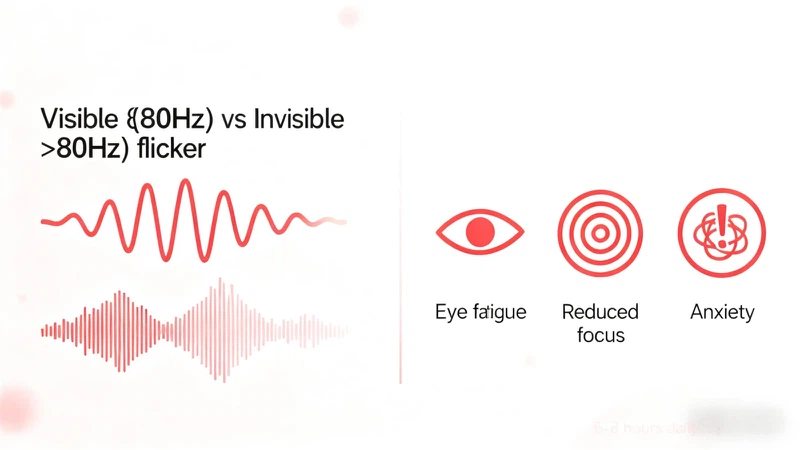
"Flicker" refers to the rapid, periodic fluctuations in light output that occur in many artificial lighting systems. While sometimes imperceptible to the conscious eye, these fluctuations can have significant impacts on visual comfort, cognitive performance, and overall health. Research by Ying Ming (2025) categorizes flicker into two primary types: visible flicker (below 80 Hz), which is consciously detectable, and invisible flicker (above 80 Hz), which may not be directly noticeable but can still cause physiological effects.
The fundamental concern in educational environments lies in the extended exposure periods. Students and teachers typically spend 6-8 hours daily under classroom lighting, creating cumulative exposure that magnifies even subtle lighting deficiencies. As the research indicates, "When flicker frequency exceeds the human eye's critical threshold, it forms invisible flicker that can still cause headaches, dizziness, and attention dispersion."
Why LED Panel Lights Dominate Modern Classroom Design

LED panel lights have become the preferred lighting solution in educational environments for several compelling reasons. Their slim profile allows for seamless integration into suspended ceiling systems, providing a clean, modern appearance while maximizing illumination distribution. The large surface area of panel lights creates exceptionally uniform light dispersion, eliminating harsh shadows and reducing contrast ratios that can cause eye strain.
Furthermore, panel lights offer superior design flexibility, available in various sizes, color temperatures, and dimming capabilities to accommodate different classroom activities. From focused individual work to collaborative group activities and multimedia presentations, properly specified LED panels can adapt to diverse educational needs while maintaining consistent light quality.
The Multifaceted Causes of Flicker in LED Lighting Systems
Understanding the root causes of flicker is essential for selecting appropriate classroom lighting solutions. The research identifies four primary contributors:
Power Supply Quality: Voltage fluctuations, harmonic pollution, and transient overvoltages in the electrical supply can directly impact LED driver performance, causing noticeable flicker. Stable, clean power is the foundation of flicker-free operation.
Driver Circuit Design: The driver circuit serves as the critical interface between the power supply and LED chips. Poorly designed drivers with inadequate filtering, unstable current output, or inferior components can introduce significant flicker, regardless of LED chip quality.
Component Compatibility: Mismatches between LED chips and their driver circuits-whether in voltage, current, or power requirements-can create instability in light output. This is particularly problematic when retrofitting existing fixtures or mixing components from different manufacturers.

Environmental Factors: The temperature, humidity, and electromagnetic interference from other electronic devices in the classroom can all affect how well LEDs work and cause flicker.
Documented Impacts on Student Health and Performance
The consequences of flicker in educational environments extend far beyond simple visual discomfort. Comprehensive research reveals multiple concerning effects:
Visual Health Implications: Extended exposure to flickering lighting has been linked to increased visual fatigue, dry eyes, and temporary vision impairment. The study notes that "teachers and students exposed to flickering light sources for prolonged periods report headaches, nausea, and other discomfort reactions that significantly impact health conditions and teaching effectiveness."
Cognitive Performance Effects: Perhaps most critically for educational settings, flicker has demonstrated negative impacts on concentration and information processing. Students exposed to flickering lighting conditions show reduced attention spans, increased distraction, and diminished learning efficiency. The subtle but constant visual system adjustment required under flickering conditions diverts cognitive resources that should be available for learning tasks.
Psychological Well-being: The research further identifies concerning psychological impacts, including increased anxiety, irritability, and in severe cases, triggering of photosensitive epilepsy. The disruption of circadian rhythms and sleep patterns creates additional stress that compounds these effects, potentially leading to broader behavioral changes and reduced resilience.
Technical Solutions for Flicker-Free Classroom Lighting

Addressing flicker concerns requires a comprehensive approach to lighting system design and specification:
Advanced Driver Technology: Modern flicker-free LED panels incorporate sophisticated driver circuits that maintain consistent current delivery regardless of minor power fluctuations. High-frequency PWM (Pulse Width Modulation) drivers operating above 500 Hz ensure that any modulation occurs well beyond human perception thresholds.
Power Conditioning Integration: Quality LED panels often include built-in power conditioning components that filter harmonic distortions and voltage variations before they reach the LED chips. This provides an additional layer of protection against external power quality issues.
Thermal Management Systems: Effective heat dissipation mechanisms prevent temperature-related performance degradation, ensuring consistent light output throughout extended operation periods. Proper thermal design is particularly important in panel lights, where the compact form factor can challenge cooling efficiency.
Comprehensive Quality Assurance: Rigorous testing protocols that verify performance under variable conditions help identify potential flicker issues before products reach classroom installations.
Implementation Standards and Performance Metrics
For educational institutions specifying LED panel lights, several key performance parameters ensure flicker-free operation:
Flicker Frequency: The research suggests that "LED module flicker frequency should be 200 Hz or more," and for schools, it's best to use systems that work at 500 Hz or higher so that flicker is not noticeable at all.
Flicker Percentage: Quality flicker-free panels maintain flicker percentages below 5%, with premium solutions achieving results under 1%. This metric quantifies the magnitude of light output variation.
Illumination Quality: A comprehensive performance assessment should include evaluation of illuminance levels (300 lux minimum on work surfaces), color rendering index (CRI >80, with >90 for art and science rooms), color temperature (3300-5300K), and glare control (UGR <19).
Shenzhen Benwei Lighting: Setting the Standard for Educational Lighting Solutions
For educational institutions seeking reliable, flicker-free lighting solutions, Shenzhen Benwei Lighting represents an ideal partner in creating optimal learning environments. Their specialized educational LED panel lights incorporate the latest advancements in flicker reduction technology while addressing the unique requirements of classroom settings.
Benwei's Educational Lighting Advantages:
Advanced Flicker Control: Incorporating high-frequency drivers operating above 500 Hz, Benwei panel lights eliminate perceptible flicker while maintaining consistent color quality and light output. Independent verification confirms flicker percentages below 3%, well within the recommended safety thresholds.
Optimized Visual Comfort: With carefully engineered optical systems that ensure uniform illumination without harsh shadows or glare, Benwei panels create comfortable visual environments conducive to extended reading and computer work.
Educational-Specific Design: Understanding that classrooms serve multiple functions, Benwei offers tunable white technology that allows adjustment of color temperature throughout the day, supporting concentration during core learning periods and creating calmer environments for creative activities.
Full Compliance: All of Benwei's educational lighting products meet or exceed international standards, such as IEC photobiological safety requirements, IEEE 1789 recommendations for reducing flicker, and other relevant educational lighting specifications.
Proven Reliability: Benwei panel lights are built to last, with great thermal management and strict quality control. They work consistently for years of continuous use, which means less maintenance and a lower total cost of ownership.
Case Study: Successful Educational Implementation

Research documents a compelling example of flicker resolution in a nine-year compulsory education school that experienced "eye fatigue, dryness, and headaches" among students following an LED lighting upgrade. Comprehensive assessment revealed "unstable power quality, unreasonable drive circuit design, and LED chip-driver compatibility issues" as root causes.
The implementation of voltage stabilizers, power filters, and properly matched driver-LED systems resolved these issues completely. The case demonstrates that "after optimization, the classroom LED lighting system showed no flicker effect, with better lighting performance and higher energy efficiency."
Conclusion: Investing in Visual Health and Academic Performance
The transition to LED lighting in educational environments represents both an opportunity and a responsibility. While the energy efficiency benefits are clear, the potential impacts on student health and performance demand careful attention to lighting quality, particularly regarding flicker effects.
By understanding the causes and consequences of flicker, establishing rigorous performance standards, and selecting appropriate solutions from qualified manufacturers like Shenzhen Benwei Lighting, educational institutions can create learning environments that support rather than hinder the educational process.
As the research concludes, "With continuous improvement in LED lighting technology, classroom LED flicker issues can be effectively resolved." Through informed specification and quality implementation, we can realize the vision of "safer, more comfortable, and efficient classroom lighting solutions that better protect student development."
References
Ying Ming (2025). Analysis of the Flicker Effect of Classroom LED Tubes. Light & Lighting, 49(4): 215-217.
Yang Guang (2011). Discussion on Flicker and Its Influencing Factors in Educational Lighting. China Light & Lighting, (3): 17-22.
Zhang Chunming, Wang Guohua, Zhao Jianping, et al. (2021). Experimental Study on Flicker in Classroom Lighting Renovation in Beijing Primary, Secondary Schools, and Universities. Building Science, 37(6): 200-205.
IEEE Standard 1789-2015: Recommended Practices for Modulating Current in High-Brightness LEDs for Mitigating Health Risks to Viewers.
CIE Standards: Lighting for Educational Facilities and Visual Environment in Educational Buildings.
FAQ: LED Panel Lights
Q1: Are your LED panels flicker-free?
A1: Yes. Our panels use high-frequency drivers to eliminate flicker, reducing eye strain and making them ideal for offices and classrooms.
Q2: Do you offer dimmable options?
A2: Yes. We provide dimmable panels compatible with 0-10V, TRIAC, and DALI systems upon request.
Q3: What is your warranty policy?
A3: We offer a 5-year warranty covering manufacturing defects and significant light output depreciation.
Q4: Can we get samples before ordering?
A4: Yes. We provide samples for quality verification. Samples are low-cost, but customers cover the shipping fee.
Why Choose Shenzhen Benwei Lighting?
We specialize in high-quality, flicker-free LED panels with a 50,000-hour lifespan. Our products meet international standards and come with reliable OEM/ODM support.
https://www.benweilight.com/lighting-tube-bulb/32-w-squared-led-panel-light-daylight-l-595.html
Shenzhen Benwei Lighting Technology Co., Ltd.
Mobile(+86)18673599565
Whatsapp :19113306783
Email:bwzm15@benweilighting.com
Web: www.benweilight.com