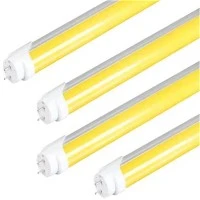
UVA Tubes with wavelengths of 365 nm and 395 nm illuminate the enchanting world of fluorescent light.
Within the domain of light, 365nm and 395nm UVA tubes provide access to a fascinating fluorescent world. This world is a secret cosmos


of colours and phenomena that are not apparent to the human eye when the lighting conditions are regular. Despite the fact that these ultraviolet (UV) wavelengths are outside the visual range for humans, they have the extraordinary capacity to cause a brilliant display of fluorescence, which may convert everyday items into incandescent marvels.
Fluorescence is a fascinating optical phenomena that takes place when particular compounds, which are referred to as fluorescent materials, take in high-energy photons from ultraviolet A light and then re-emit them as photons with lower energy, so producing visible light. UVA tubes with wavelengths of 365 nm and 395 nm are the keys that unlock this amazing process. Each wavelength has its own set of features and applications that are unique to it.
One of the most well-known characteristics of the 365nm UVA tube is its capacity to produce bright fluorescence from a diverse assortment of substances. When it comes to activating fluorescent dyes, minerals, and biological molecules, this wavelength is very effective. The hidden beauty of fluorescent minerals is brought to light by 365nm UVA irradiation, which is commonly used in the field of mineralogy. Fluorite, for instance, comes to life when exposed to light with a wavelength of 365 nanometres, generating a variety of colours that range from bright blues and purples to gentle greens and yellows. In contrast to willemite, which emits a dazzling green light, calcite, which is another common mineral, frequently exhibits a fluorescence that is either orange or red. Not only do these fluorescent displays offer a visual feast, but they also provide key insights that provide vital insights for the identification and categorisation of minerals.


UVA tubes with a wavelength of 365 nanometres have been the source of inspiration for a new kind of artistic expression known as black light art. In order to produce works that are rather muted when exposed to regular lighting, artists utilise fluorescent paints and pigments. However, when lit by 365nm UVA light, these painted and pigmented works explode into brilliant life. Viewers are drawn into an other plane of visual experience as a result of the contrast between the gloomy surrounds and the brilliant artwork, which produces a sense of mystery and surprise. This particular kind of art has made its way into galleries, nightclubs, and even children's parties, and it has the ability to impart a sense of enchantment to any environment.
On the other hand, the 395nm UVA tube, despite the fact that it is likewise capable of causing fluorescence, possesses a beauty that is exclusively its own. In terms of the visible light component, 395nm and 365nm are distinguished from one another in a number of important ways. UVA tubes with a wavelength of 395 nm create a faint purple glow that is detectable to the human eye. This fluorescent tube can provide an additional layer of visual intrigue. Due to the fact that it offers a clear indicator of the existence of the light source, this visible light also makes 395nm UVA tubes more user-friendly in some applications.
UVA tubes with wavelengths of 365 nm and 395 nm are both extremely important in the field of forensic research. Latent fingerprints, body fluids, and other evidence that may be undetectable under normal lighting conditions are among the things that can be found with these devices. Because ultraviolet A light activates the fluorescent qualities of some compounds that have been left behind at crime scenes, it enables investigators to see and gather evidence that is crucial to the investigation. In many cases, the decision between 365nm and 395nm is determined by the particular kind of evidence that is being sought as well as the level of sensitivity that is necessary for detection.
It is common practice in the entertainment industry to use 395nm UVA tubes for the purpose of producing special effects. For the purpose of adding a dash of excitement and a sense of novelty, they are frequently utilised in laser displays, concerts, and themed events. A dynamic and immersive environment is created as a result of the combination of the visible purple light and the fluorescent effects on clothes and props. This atmosphere contributes to an overall improvement in the theatrical experience.
However, despite the fact that the fluorescent universe that is lighted by 365nm and 395nm UVA tubes is certainly interesting, it is essential to approach these light sources with caution. UVA radiation can cause damage to human skin and eyes if it is exposed to the body for an extended period of time. When working with UVA tubes for lengthy periods of time, it is very necessary to take the necessary precautions to protect oneself, such as wearing gloves and goggles that block ultraviolet light. In addition, it is essential to ensure that there is enough ventilation in confined locations when UVA tubes are being utilised. This is because certain fluorescent materials may liberate volatile chemicals when they are subjected to ultraviolet radiation.
In conclusion, 365nm and 395nm UVA tubes provide a channel via which one can enter a fascinating luminous universe. These ultraviolet (UV) wavelengths have a wide range of uses that continue to engage and excite people. These applications include the finding of buried mineral treasures, the creation of breathtaking artworks, forensic investigations, and entertainment spectacles. As technology continues to improve, we may anticipate even more inventive applications of 365nm and 395nm UVA tubes, which will further broaden our comprehension and enjoyment of the fluorescent phenomena that are present in our environment. The entrancing world of fluorescence, which is lighted by these unique UVA tubes, serves as a reminder of the hidden beauty and complexity that lurks under the surface of the everyday, ready to be uncovered with the appropriate light.