The Intelligent Sentinel: How Motion-Activated Emergency LED Lights Revolutionize Outdoor Lighting
Outdoor lighting has long been tasked with a simple yet critical mission: to illuminate. However, traditional solutions have consistently fallen short, plagued by inefficiency, unreliability, and a glaring lack of intelligence. The advent of the motion-activated emergency LED vapor-tight fixture marks a paradigm shift. This is not merely a light; it is a sophisticated sentinel designed to address the deepest pain points of outdoor illumination through a fusion of advanced technologies.
The shortcomings of conventional lighting are stark. Energy waste is endemic, with fixtures burning at full capacity through empty nights, leading to exorbitant electricity bills. Safety is compromised the moment the grid fails, plunging critical pathways, stairwells, and parking areas into hazardous darkness. Poorly designed motion sensors, often based on passive infrared (PIR) technology, offer a frustrating user experience with slow response times and limited detection ranges. Furthermore, the harsh outdoor environment-rain, dust, salt spray, and extreme temperatures-relentlessly attacks these fixtures, causing premature failure and demanding frequent, costly maintenance.
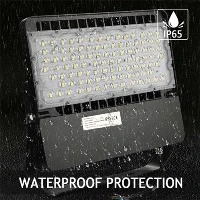
The modern motion-activated emergency light confronts these challenges head-on with a suite of core features. Its first line of defense is exceptional environmental resilience, achieved through an IP65/IP66 rating. This is not a mere specification but a result of meticulous engineering: silicone gaskets, potted internal electronics, and housings crafted from corrosion-resistant materials like fortified polycarbonate or specially coated die-cast aluminum. This robust sealing ensures the fixture remains utterly impervious to moisture ingress-the root cause of failure in standard lights.

At its core lies its intelligent sensing capability, typically powered by microwave radar (RC) technology. Unlike old PIR sensors, radar detects motion through Doppler shift, allowing it to see through non-metallic materials and不受影响 by ambient temperature changes. It offers superior range, wider coverage, and instant response, triggering the light only when needed. This intelligence is augmented by adjustable settings for sensitivity, duration, and a built-in photocell to prevent activation during daylight hours, slashing energy consumption by up to 80%.
Its most critical feature is its integrated emergency function. When a power outage occurs, an internal circuit instantly switches the light to a self-contained lithium iron phosphate (LiFePO4) battery. This provides crucial illumination for a mandated duration (often 90+ minutes), guiding occupants to safety and deterring security threats, effectively transforming a simple light into a life-saving device.

Further enhancing its efficiency and user comfort is smooth dimming control, often via the 0-10V protocol. The light can operate at a low, energy-sipping "vigil" level (e.g., 20%) when idle and ramp up to full brightness only upon detection, eliminating harsh glare and light pollution while providing perfect illumination when required.
Finally, long-term reliability is baked in through advanced thermal management. The fixture's housing acts as a massive heat sink, channeling heat away from the LED chips to prevent the accelerated lumen depreciation that plagues poorly designed lights. This is powered by a high-efficiency, industrial-grade driver capable of handling wide voltage fluctuations, ensuring stable performance for over 50,000 hours.
In conclusion, this product category represents the pinnacle of functional lighting design. It is a holistic solution that seamlessly integrates detection, power backup, environmental hardening, and adaptive control. It moves beyond the simple goal of illumination to deliver unparalleled energy savings, unwavering safety and security, and flawless reliability, finally fulfilling the true promise of intelligent outdoor lighting.