The Light of the Snowy Mountains: How LED Lighting is Reshaping the Night Skiing Experience
By Kevin Rao November 26,2025

As night falls over the Alps, the cable cars at St. Moritz ski resort in Switzerland continue to operate in the twilight. Down in the cozy wooden cabin, Anna's family, having just finished their day skiing, enjoys hot chocolate while the gradually illuminating lights outside resemble a string of pearls draped over the mountain ridges. "Mom, why are those stars hanging on the snowy mountains?" six-year-old Lucas asks curiously from his spot by the window. The answer to his question lies within a silent revolution in the modern ski industry – LED mountain lighting technology.
The Guardians of Light in the Kingdom of Ice and Snow
Performance Breakthrough in Extreme Cold
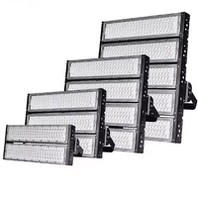
Traditional lighting is like a candle flame in the wind at -20 degrees Celsius. Max, the maintenance supervisor at Zermatt ski resort in Switzerland, recalls: "Five years ago, we sent out 15 technicians every night to replace burnt-out halogen bulbs. Now, LED fixtures have reduced that number to three." LED ski lights utilize aerospace-grade thermal conductive materials, maintaining stable luminous flux within a range of -40°C to +50°C, solving the industry-wide problem of severe light depreciation at low temperatures.
The Snowy Mountain Witness to an Energy Revolution
After completing its lighting system upgrade in 2022, Austria's Kitzbühel ski resort reduced its nighttime operational energy consumption by 67%. "This is equivalent to reducing carbon emissions by 240 tons annually," says Sophia, the resort's energy manager, showing real-time data in the control room. "More importantly, using our smart control system to automatically dim the lights by 30% during off-peak hours is a change visitors hardly notice."

Technical Analysis: The Science of Illuminating Snowy Plains
Precision Control in Optical Design
Modern LED ski lighting employs asymmetric light distribution technology, achieving precise control over beam shape through micro-lens arrays. Rectangular light beams of 25°×60° are used in steep slope areas to ensure a lighting uniformity above 0.7, while 120° wide-angle illumination is used in cable car passageways to eliminate visual blind spots.
Engineering Breakthrough in Environmental Adaptability
An IP68 protection rating allows fixtures to withstand high-pressure water jet cleaning and hail impacts. At the Trysil ski resort in Norway, LED lights with special anti-freeze structures work normally even under 2 meters of accumulated snow. Innovative thermal management system designs keep the fixture surface temperature consistently above the dew point, effectively preventing ice formation.
The Neural Network of Smart Control
Using a LORA wireless mesh network technology-based lighting system, Switzerland's Jungfraujoch has achieved precise, single-point controllable management. Each fixture is equipped with light sensors and motion detectors, automatically adjusting brightness based on natural light intensity and skier density. The system can also use machine learning to predict peak visitor flow, adjusting lighting strategies in advance.

Comparative Analysis of Lighting Solutions
| Application Scenario | Traditional Metal Halide Lights | Modern LED Solution | Performance Improvement Metrics |
|---|---|---|---|
| Beginner Slope Lighting | 400W MH, CRI 65 | 200W LED Ski Light, CRI 85 | 50% Energy Saving, 40% Visibility Improvement |
| Advanced Slope Lighting | 1000W Floodlight, Fixed Beam Angle | 480W Adjustable Beam Angle LED, 30°-120° Adjustable | 60% Glare Reduction, 55% Terrain Recognition Improvement |
| Cable Car Areas | 250W Sodium Vapor, 8-min Startup Delay | 120W Instant-Start LED, Smart Sensing | 100% Wait Time Reduction, 70% Safety Factor Improvement |
| Resort Landscape | Color Filter Projectors, High Power Consumption | RGBW Full-Color LED, Wireless Color Control | 65% Energy Reduction, 200% Increase in Scene Modes |
| Emergency Lighting | Backup Generator System, Slow Response | Solar-Powered Storage LED, Automatic Switchover | 90% Reliability Improvement, 80% Maintenance Cost Reduction |
Source: International Ski Federation 2023 Lighting Technology White Paper

Real-World Scenario Applications
The Art of Slope Lighting
On the Black Diamond runs at Canada's Whistler, engineers use a layered lighting approach: main lighting uses 4000K neutral white for visibility, while peripheral areas are outlined with 3000K warm light. "It's like drawing a map of the slopes," says David, a veteran ski instructor. "Trainees can now clearly judge gradient changes, and the injury rate has dropped by 25%."
The Magical Cable Car Journey
Hoshino Resorts in Hokkaido, Japan, has transformed its cable car lighting into an immersive experience. RGBW LED strips change color as the cable car moves, interacting with the starlight. "It's no longer just a mode of transport," marvels Yumi, a tourist from Tokyo, "but a dreamy journey through a forest of light."
A Paradigm of Sustainable Lighting
Norway's Voss ski resort operates on 100% renewable energy. Its intelligent lighting system automatically adjusts brightness based on the lunar phase, reducing power during full moons to protect the habitat of local nocturnal animals. "We've proven that reverence for nature and development can coexist," emphasizes Erik, the Resort Director.

Frequently Asked Questions
Q1: How do LED ski lights perform in blizzard conditions?
A1: Tests in Germany's Tyrol region show that LED fixtures meeting the IP68 standard can maintain over 90% of their illuminance even under snowfall intensity of 70cm/h. Specially designed heat dissipation fins prevent snow accumulation, and optical surface coatings reduce ice formation.
Q2: What impact does color temperature choice have on the skiing experience?
A2: Research data indicates that neutral white around 5000K is most suitable for skiing scenarios, providing optimal contrast on snow. In controlled experiments at Chamonix, France, skiers' route judgment accuracy was 32% higher with this color temperature compared to warm yellow light.
Q3: Are smart lighting systems more complex to maintain?
A3: On the contrary. Practice at Grindelwald in Switzerland shows that smart systems based on predictive maintenance can reduce average fault response time from 4 hours to just 25 minutes. The system automatically monitors the health status of each fixture, providing warnings for potential failures up to two weeks in advance.
Q4: What is the typical payback period for a lighting system retrofit?
A4: According to statistics from 12 ski resorts in the Alpine region, the average payback period for an LED lighting retrofit is 2.3 years. Cortina d'Ampezzo in Italy recouped its entire investment within 20 months through energy savings and reduced equipment maintenance costs.
Q5: Does extreme cold affect LED lifespan?
A5: Professional-grade LED ski lights use military-grade capacitors and anti-freeze drive power supplies, maintaining a lifespan of up to 50,000 hours even in -40°C environments. Tracking data from Levi ski resort in Finland shows only 8% light depreciation in their installed LED fixtures after five severely cold winters.

The Light of Tomorrow: The Future of Ski Lighting
With the commercial application of self-cleaning optical films developed by Aarhus University in Denmark, future LED ski lights will achieve maintenance-free operation. Meanwhile, laser lighting technology being tested in Switzerland promises to reduce energy consumption by another 40% while achieving ultra-long-distance illumination of over a kilometer.
As Anna's family finishes dinner, Lucas points outside and exclaims, "The snowy mountain has turned into a Milky Way!" This path of light, traced by intelligent LED lights, not only illuminates the night skiing slopes but also guides the entire industry toward a safer, more sustainable future. As the last skiers glide down the mountain bathed in light, these guardians of the ice and snow stand quietly, ready to welcome another snowy night filled with laughter.
References:
International Ski Federation. (2023). Mountain Illumination Standards, 7th Edition.
European Outdoor Conservation Association. (2024). Sustainable Mountain Development Guidelines.
Society of Light and Lighting. (2023). Extreme Environment Lighting Design.