The mystery of the museum can be created with LED track spotlights and downlights
Generally speaking, museums are not allowed to take pictures, even if you can take pictures, you are not allowed to use flash.
Because there are many historical relics in the museum, and they are genuine, the flash light will accelerate the oxidation of these cultural relics, thereby reducing the lifespan and destroying the cultural relics, just like many cultural relics unearthed and cannot see the light is also the reason.
The reason why a tripod cannot be used is because the house tripod will damage the cultural relics, because some exhibits are only enclosed without sealing, and the tripod may endanger the safety of these things.
Years of project experience tell us that most of the LED lighting fixtures used in museums are track lights and LED downlights.
Regarding museum lighting, we often hear that the requirements are anti-glare, prevention of infrared and ultraviolet radiation, illuminance limit standard, CRI greater than 90, etc.
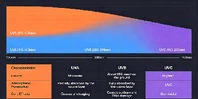
In fact, meeting certain demands is no longer a problem today. For example, LED lights represented by LED downlights do not generate infrared and ultraviolet radiation like lights with traditional light sources, so they do not need to be controlled. However, the museum has a more refined lighting "specialty", and it is understood in detail.
1. Why do museums use track lights?
Track lights can be said to be the "standard" lights of the museum. They are characterized by easy adjustment of the light position, and the track can be used to connect electricity and lights at the same time.
From the perspective of regional functions, there are many temporary exhibitions in the museum. Every time the exhibition is installed, the lighting must be adjusted, and the track lights can fully meet this requirement.
In addition, during the exhibition, the exhibits often encounter uncertainty or need to be replaced, and the lighting needs to be adjusted. The projection direction and beam angle adjustment of the track lights are very convenient.
2. Why are the walls of the museum mostly dark? The anti-glare aperture of the LED downlight is also black?
The museum is a place to promote culture and history. It is always related to quietness and precipitation. Therefore, the light environment is usually dark. The lighting has the following characteristics:
(1) The materials of walls, floors and ceilings are mainly dark colors, mainly for the purpose of absorbing light, and dark lining the light.
(2) The light rail line tube is also dark, such as sprayed black.
(3) Hide point-shaped luminous bodies such as LED downlights in the ceiling structure of the ceiling, or improve the anti-glare angle of LED downlights, and try to achieve the effect of "seeing the light but not the light".
The creation of a dark environment is conducive to the subsequent accurate lighting of cultural relics and other exhibits, so as to highlight the exhibits, eliminate environmental interference, and let the cultural relics and lighting "dialogue" by means of dark and bright.
ceiling light
3. The museum is only open during the day, why not use natural light but artificial lighting?
This involves the functional requirements of the special place of the museum - the need to protect cultural relics and exhibits!
Due to the large radiation of natural light and the high content of harmful radiation such as ultraviolet light, the radiation energy can reach 400 microwatts per lumen at noon, which is 20 times the standard control of museum lighting! will cause serious damage to the exhibits. Therefore, museums do not use natural light, but rely entirely on artificial lighting.
4. Why is the light efficiency of the museum lights not high?
This is also related to the special demands of the museum. The museum places great emphasis on the effect of light, which requires soft, precise, high-reduction light, and the lights have no glare. The realization of these conditions will affect the efficiency of the lights (the light efficiency is mostly 35-55lm/W), especially the reducibility of the light and the shading angle of the lights. Reducibility is related to color rendering. The higher the color rendering, the lower the light efficiency of the light.
The same is true for the shading angle, the larger the shading angle, the lower the light efficiency.

Shenzhen Benwei Lighting Technology Co., Ltd is a professional manufacturer in producing LED lighting products, Our main products T8 T5 LED Tube, LED Grow Light,Poultry LED Light,Tri-proof LED Light,LED Flood Light, LED Panel, LED Stadium Light, LED High Bay, LED Classing Room Light ,If you want to purchase a high-quality LED lighting products or have a more in-depth understanding of the application of LED lighting, please contact send us inquiry.