Humans have been accustomed to the solar spectrum for millions of years, and have only begun to use artificial light sources for nearly 100 years. The poor quality of the light source will cause many problems, such as eye fatigue and myopia. This is because the spectrum of artificial light sources is different from the solar spectrum. If the spectrum technology of artificial light sources can be improved to make it as close to the solar spectrum as possible, it will greatly reduce the occurrence of visual problems.
At present, the incidence of myopia in children and adolescents is increasing year by year, high incidence, and younger age, which has become a problem that cannot be ignored in our public health safety. According to the 2018 Myopia Survey of Children and Adolescents published by the National Health Commission, the overall myopia rate of children and adolescents nationwide is 53.6%. Among them, 14.5% of 6-year-old children, 36.0% of elementary school students, 71.6% of junior high school students, and 81.0% of high school students. The task of prevention and control of myopia is arduous.
The problem of myopia in children and adolescents has also attracted the attention of the country. National leaders made an important instruction: The whole society must take action to take good care of children's eyes and let them have a bright future. Subsequently, the "Implementation Plan for Comprehensive Prevention and Control of Myopia in Children and Adolescents" jointly issued by multiple departments put forward the goal of controlling the myopia rate of 6-year-old children in my country at about 3% by 2030, and included myopia prevention and control work in the assessment. Full-spectrum led lights for myopia prevention in school classrooms are being promoted.
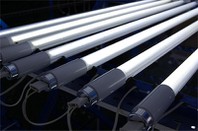
There are many factors that affect the visual health of children and adolescents. One of the important factors is the unqualified classroom lighting environment. As a key factor directly related to the eye health of students, classroom lighting is attracting public attention. A good classroom lighting environment can not only effectively reduce the visual fatigue of students, adjust the rhythm of the human body, improve people's mood, but also improve efficiency. Therefore, how to create a healthier and more comfortable light environment has become a hot topic of social discussion. In the early days, LED tubes used in classrooms generally used cold light source LED tubes, which had defects due to technical limitations. The school classrooms prevent myopia from the full-spectrum led tube, which overcomes the shortcomings and is closer to the sunlight. With the maturity and development of LED technology, the manufacture of school full-spectrum LED tubes that are similar to the solar spectrum has become a hot spot in the industry. Full-spectrum LED will become the next outlet of the lighting industry, and its demand potential is huge. Therefore, many manufacturers have carried out related research and development and layout.
There are two ways to achieve the prevention of myopia in school classrooms with full-spectrum led lamp chips.
1. The LED purple chip solution has excellent light quality, which is almost close to the solar spectrum. In the state of 5000K color temperature, Ra 100; In the state of 3000K color temperature, Ra 97.
2. Another blue chip + multi-color phosphor solution, Ra 96 at a color temperature of 5000K; Ra 97 at a color temperature of 2700K, is a star product with high luminous efficiency and cost-effectiveness in the full-spectrum family of products.
The breakthrough of full-spectrum LED lamp beads will drive the development of downstream full-spectrum LED lamps, which is even more beneficial for the promotion into schools, kindergartens, and scientific research units. Due to its large advantages, it is easy to promote. Maybe it is a good opportunity to upgrade the led tube. At the same time, it will promote the development of related industries.