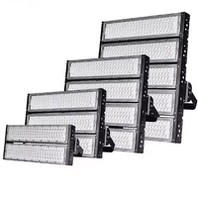
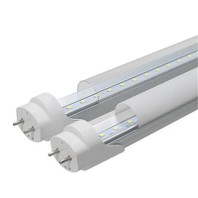
The principle of LED light products
Its basic structure is a piece of electroluminescent semiconductor material, a solid-state semiconductor device, which can directly convert electricity into light. It is placed on a shelf with leads, and then sealed with epoxy resin around it to protect the inner core wire, so the LED has good seismic performance. LED light features
The LED fluorescent lamp adopts LED light source technology and digital appearance design, which can save more than 70% of electricity. The intensity of 12W LED fluorescent lamp is equivalent to that of 40W fluorescent tube. The main features of LED lamp are as follows:
1) Energy saving and long life.
2) Good applicability. Because of the small size of a single LED, it can be made into any shape.
3) The response time is short, which is the response time of ns (nanosecond) level, while the response time of ordinary lamps and lanterns is ms (millisecond) level.
4) Environmental protection, no harmful metals, and easy recycling of waste.
5) The color is gorgeous, the luminous color is pure, the spectral range is narrow, and can be mixed into colorful or white light through the three primary colors of red, green and blue.
Principle of LED light
The heart of the LED is a semiconductor chip. One end of the chip is attached to a bracket, and the other end is connected to the positive pole of the power supply, so that the entire chip is encapsulated by epoxy resin. The semiconductor wafer is composed of two parts, one part is a P-type semiconductor, in which holes dominate; the other end is an N-type semiconductor, here are mainly electrons. But when these two semiconductors are connected, a P-N junction is formed between them. When the current acts on the chip through the wire, the electrons will be pushed to the P area, where the electrons and holes recombine, and then emit energy in the form of photons. This is the principle of LED light emission. The wavelength of light is also the color of light, which is determined by the material forming the P-N junction.
LED light application
Initially, LEDs were used as indicator light sources for instruments and meters. Later, LEDs of various light colors were widely used in traffic signal lights and large-area display screens, which produced good economic and social benefits. Automobile signal lights are also an important field of LED light source applications. Because of the fast response speed of LEDs, the drivers of the following vehicles can be informed of the driving conditions as soon as possible, and the occurrence of rear-end collisions can be reduced. In addition, LED lights have been used in outdoor red, green, and blue full-color display screens, key ring type miniature flashlights and other fields. ,LED wall washer products
What kind of light is the LED light product and how does it work?
LED light products company LED (Light Emitting Diode), light-emitting diode, is a solid-state semiconductor device that can directly convert electricity into light. The heart of the LED is a semiconductor chip. One end of the LED light (6 photos) chip is attached to a bracket, one end is the negative pole, and the other end is connected to the positive pole of the power supply, so that the entire chip is encapsulated by epoxy resin. The semiconductor wafer is composed of two parts, one part is a P-type semiconductor, in which holes dominate, and the other end is an N-type semiconductor, which is mainly electrons. But when these two semiconductors are connected, a P-N junction is formed between them. When the current acts on the chip through the wire, the electrons will be pushed to the P area, where the electrons and holes recombine, and then emit energy in the form of photons. This is the principle of LED light emission. The wavelength of light is also the color of light, which is determined by the material forming the P-N junction.