The Psychology of Color in Lighting: A Strategic Guide to Light Color for Shaping Emotion in Commercial Spaces
In commercial space design, lighting has transcended its basic function of illumination to become a strategic tool for shaping space character, guiding user emotion, and influencing behavior. A scientifically-grounded light color psychology plan can systematically impact customer dwell time, employee focus, and even overall brand perception. This article provides a practical, science-based framework for business decision-makers, designers, and facility managers, explaining how to enhance spatial value through commercial space mood lighting design.
Comparative Analysis: Light Color Properties and Their Effects on Commercial Mood
Understanding the physical properties of different light colors and the psychological and physiological responses they trigger is fundamental to designing effective lighting schemes. The table below systematically outlines the application logic of mainstream commercial light colors, based on research into human visual and non-visual effects (impacting circadian rhythms via ipRGCs).
| Light Color / CCT | Typical Spectral Characteristics | Induced Psychological & Physiological Reactions | Priority Commercial Applications | Technical Implementation & Key Considerations |
|---|---|---|---|---|
| Warm White (2700-3000K) | High proportion of red and yellow light, lower blue light. Spectral continuity varies with phosphor/chip combination. | Psychological: Warmth, safety, relaxation, intimacy, tradition. Physiological: Weak cortisol suppression, minimal disruption to melatonin secretion, aids nighttime relaxation. |
Luxury hotel lobbies/rooms, fine-dining restaurant booths, high-end retail sections, private clubs, senior living facilities. | Use high-CRI LED sources (CRI>90, R9>50) to ensure colors (food, fabric, skin tones) appear rich and authentic under warm light. Avoid overuse leading to a dated or dim appearance. |
| Neutral / Natural White (3500-4000K) | Relatively balanced spectrum, with red, green, and blue proportions close to noon daylight. | Psychological: Clarity, authenticity, balance, efficiency, professionalism. Physiological: Moderately activates alertness, enhances visual acuity and color discrimination, less likely to cause fatigue. |
Open-plan offices, conference rooms, classrooms, hospital examination rooms, art galleries, retail fitting rooms. | Implement precise LED CCT tuning solutions to ensure color consistency and avoid CCT mixing in a single space. The top choice for "what you see is what you get" environments. |
| Cool White (5000-6500K) | Significantly increased blue light component, with a spectral energy peak in the blue band. | Psychological: Focus, alertness, seriousness, modernity, technological feel. Physiological: Significantly suppresses melatonin, increases alertness and reaction time. Prolonged exposure may cause eye strain or circadian disruption. |
Precision manufacturing floors, laboratories, hospital operating rooms, logistics/sorting hubs, 24-hour convenience stores, bank teller areas. | Must strictly control Blue Light Hazard weighting (per IEC/TR 62778). Requires high illumination levels; avoid use in low-light conditions to prevent a cold, alienating feel. |
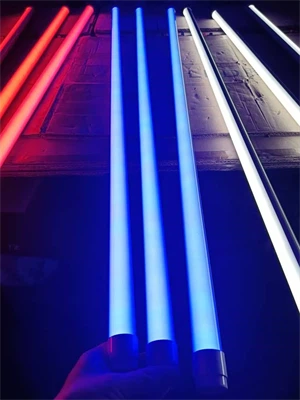
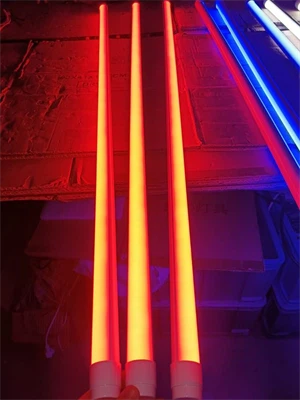
| Dynamic Colored Light (RGB/RGBW) | Mixes Red, Green, Blue, and White LED chips to produce a wide gamut. | Psychological: Highly variable. Red energizes/appetite, Blue calms, Green balances, Purple inspires creativity/mystery. Physiological: Specific wavelengths (e.g., 460-480nm blue) significantly impact circadian rhythm. |
Brand flagship store theme zones, bars/clubs, exhibition interactive installations, gym dynamic zones, stages, event venues. | Relies on stable intelligent color-mixing algorithms and high-quality LEDs for color consistency and smooth transitions. Use should have clear narrative or functional purpose, avoiding chaotic, meaningless color. |
Note: Psychological effects are modulated by illuminance, individual differences, cultural context, and environmental associations. Physiological effects are primarily based on research into the neural pathway where light affects melatonin secretion via intrinsically photosensitive Retinal Ganglion Cells (ipRGCs).

Technical Deep Dive: From Color Psychology to a Programmable Light Environment
Modern LED technology and intelligent controls have moved light color psychology from theory to precise engineering practice.
Precise Color Temperature & Spectrum Control
Traditional sources have fixed CCT. Full spectrum LED mood enhancement technology allows for continuous, stepless adjustment from 2700K to 6500K, or even across the full color spectrum, by tuning the drive current of different-wavelength LED chips or using special phosphor blends in the package.
Key to High Quality: Spectral continuity and color rendering. Low-cost solutions may lack specific wavelengths (e.g., deep red R9), making skin tones or wood appear dull and unhealthy even in warm white mode. Therefore, commercial space mood lighting design should specify detailed metrics like CRI, R9, and Rf (Fidelity Index).
Dynamic Lighting Logic Based on Scenes
Static light environments no longer suffice. Intelligent lighting control systems enable pre-set dynamic scenes triggered by time, events, or sensors.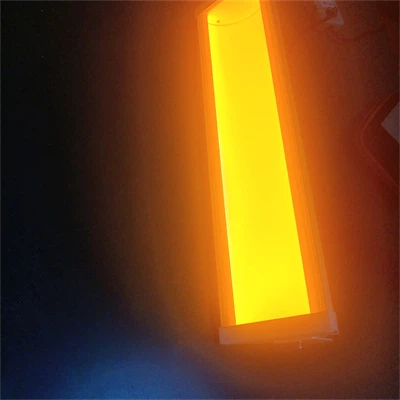
Application Examples:
Office: 5000K high-illuminance cool white from 9-11 AM to boost energy; switch to 4000K neutral white in the afternoon to maintain focus; transition to 3000K warm white before leaving to help staff relax and unwind.
Retail Store: Use high-CCT white light at the entrance for attention and clarity; high-CRI warm white in featured product areas to enhance texture; daylight-like light (4000K, CRI>95) in fitting rooms for accurate customer feedback.
Restaurant: 2700K warm light in the main dining area during dinner for intimacy; automatic switch to high-illuminance cool white during cleaning/turnover for efficient operations.
Human-Centric Lighting & Circadian Health
This is a deeper application of light color psychology. Simulating the natural daylight cycle from warm to cool and back to warm ("circadian lighting" or "human-centric lighting") can help regulate the biological clocks of building occupants, improving sleep and daytime alertness. This is particularly important in windowless spaces, hospital wards, and 24/7 operation centers.
Implementation Guide: Integrating Color Psychology into Commercial Lighting Projects
Start with Needs Analysis: Define the space's core function (sales, work, healing, social), target audience, and desired behaviors (extending dwell time, increasing flow, promoting collaboration, enabling deep relaxation).
Layered Design Approach:
Base Layer (Ambient Light): Establish the foundational CCT and illuminance, setting the overall mood.
Accent Layer (Focal Lighting): Use contrasts in light color and intensity to guide visual focus and reinforce brand identity or product value.
Dynamic Layer (Effect Lighting): Use controllable color changes to create memorable points, guide customer flow, or adapt to different event modes.
Select Verifiable Products: Require suppliers to provide test reports from accredited laboratories on Spectral Power Distribution, CCT, CRI, dimming, and color-tuning performance.
Integrate with Control Strategy: Lighting design must be synchronized with control system design. Ensure the system has adequate scene management capability and stable color performance.

Frequently Asked Questions (FAQ)
Q1: Can the effects of color psychology be quantified? How do we assess ROI?
A1: Some effects can be quantified via A/B testing. For example, compare footfall, dwell time, and conversion rates in different colored lighting zones in a retail store; or compare self-reported focus, incidence of eye strain, and task completion rates under different office lighting schemes. ROI should be calculated by combining energy savings, reduced maintenance costs (long-life LEDs), and potential gains in productivity/sales. While the enhanced emotional value is difficult to monetize, it is a significant component of brand premium.
Q2: Is blue light harmful? Should commercial spaces avoid cool white light entirely?
A2: A balanced view is needed. An appropriate amount of short-wavelength blue light (460-495nm) during the day is crucial for maintaining alertness and regulating circadian rhythms. Harm is related to exposure dose (illuminance, blue light weighting, exposure duration). Avoid high-CCT light in night-time rest areas (e.g., hotel rooms). In work areas, use "time scheduling" to provide cool/neutral white light with appropriate blue content during the day, automatically reducing CCT and blue content in the evening. Selecting luminaires compliant with photobiological safety standards (IEC 62471) is fundamental.
Q3: How do we design a dynamic light environment for multi-functional spaces (e.g., co-working spaces, boutique hotel lobbies)?
A3: The core principle for such spaces is flexibility. It is recommended to install a base lighting system with full-area tunable CCT and dimming. Preset modes like "Focus Mode," "Collaboration Mode," "Social/Party Mode," and "Night Cleaning Mode" accessible via smart panels or mobile apps allow managers or users to switch instantly. Lights in different zones can be programmed independently to support simultaneous, varied activities.
Q4: With a limited budget, how can we prioritize achieving mood lighting effects?
A4: Follow the "80/20 rule." Allocate at least 80% of the budget to high-quality, tunable luminaires for the most critical zones (e.g., product display walls in retail, dining tabletops in restaurants, collaboration areas in offices), ensuring premium light quality at these core touchpoints. Use fixed-CCT, cost-effective standard LED products for the remaining general areas. A brilliantly lit focal area often has more impact than a uniformly mediocre lighting scheme.

Notes & Sources
The psychological effects of light color reference classic studies in color psychology (e.g., Color Psychology and Color Therapy) combined with empirical research in environmental psychology.
The mechanism of light's effect on circadian rhythms is primarily based on neuroscience findings related to ipRGCs, referenced in multiple papers from journals like Proceedings of the National Academy of Sciences.
Commercial application cases and effect data synthesize references from International Association of Lighting Designers (IALD) award case studies, application guides published by the Illuminating Engineering Society (IES), and retail lighting whitepapers.
Definitions and measurement standards for technical parameters (CCT, CRI, spectrum) are based on documents published by the International Commission on Illumination (CIE) and the International Electrotechnical Commission (IEC).
Dynamic lighting control strategies reference best practice reports on implementing Human Centric Lighting (HCL) in the smart building sector.