Understanding LED Tube Light Safety Standards for Global Markets: A Comprehensive Guide to IEC and UL Compliance

Introduction
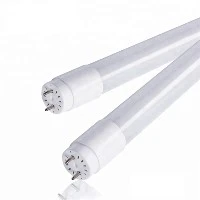
LED tube lights, also known as double-capped LED lamps, have revolutionized the lighting industry by offering energy-efficient, long-lasting alternatives to traditional fluorescent tubes. As demand grows, manufacturers aiming to export to markets like Europe and America must navigate complex and evolving safety regulations. This article examines the key safety standards for LED tube lights in these regions, highlights common compliance challenges, and provides actionable guidance for manufacturers seeking certification.
What Are the Primary Safety Standards for LED Tube Lights in Europe?
In Europe, LED tube lights are typically assessed against a combination of standards due to the absence of a single, fully harmonized regulation. The most forward-looking and comprehensive approach is based on IEC 62776 (Double-capped LED lamps – Safety specifications), which, though initially a draft, provides detailed safety criteria.
Key requirements under IEC 62776 include:
Marking and Instructions: Labels must indicate whether the LED tube light is suitable for high-frequency circuits, if starter replacement is needed, and IP ratings. Installation manuals must detail replacement steps with diagrams and warnings.
Interchangeability-Physical dimensions, weight, and temperature performance must match traditional fluorescent tubes to ensure safe retrofitting.
Electrical Safety-To prevent electric shock, the tube must be designed so that no electrical connection exists between the two caps during insertion.
Insulation and Dielectric Strength – Insulation resistance and electric strength between pins must be tested.
Thermal and Mechanical Performance-Temperature rise on lamp holders must not exceed that of the replaced fluorescent tube. Caps must not rotate more than 6° during or after use.
Failure Conditions-The design must prevent unsafe conditions during component failures, incorrect ballast matching, or short circuits.
Table 1: Key European Standards for LED Tube Lights
|
Standard |
Scope |
|---|---|
|
IEC 60598-1 |
General luminaire safety |
|
IEC 62560 |
Self-ballasted LED lamp safety |
|
IEC 61347-2-13 |
LED driver safety |
|
IEC 62031 |
LED module safety |
|
IEC 62776 (draft) |
Comprehensive safety for double-capped LED lamps |
Without adherence to these guidelines, products may pose risks such as electric shock, fire hazards, or performance failures.

How Do U.S. Safety Requirements for LED Tube Lights Differ?
In the United States, LED tube lights are categorized into three types based on installation method:
Type A: Direct replacement for fluorescent tubes, compatible with existing ballasts.
Type B: Designed for use with modified fixtures, with an internal LED driver.
Type C: LED tube and driver are separate; used with specially adapted fixtures.
The primary standards include UL 1993 (Self-Ballasted Lamps), UL 8750 (LED Equipment), and UL 1598C (Supplement SA for retrofit luminaires).
Critical U.S. requirements involve:
Enclosure and Materials-Housing must meet flame retardancy ratings (e.g., 5-VA, V-0). Ventilation openings ≤ 2 mm.
Lamp Caps-G5/G13 caps must comply with dimensional standards. Pins must not be shorted unless for mechanical support.
LED Driver Circuits-Must be Class 2 isolated or comply with UL 8750. Failure tests (SA22, SA26) are mandatory.
Creepage and Clearance-Minimum 1.2 mm for voltages below 300 V in dry environments.
Testing includes input measurement, temperature rise, dielectric strength, drop tests, and fault condition simulations.
Table 2: U.S. Testing Requirements for LED Tube Lights
|
Test Code |
Description |
|---|---|
|
SA15 |
Input voltage, current, power |
|
SA17 |
Temperature rise in dedicated test fixture |
|
SA18 |
Dielectric strength (500 V or 2U + 1000 V) |
|
SA22 |
Component failure simulation |
|
SA25 |
Shock hazard during tube replacement |
|
SA26 |
Insulation between pins (600 V AC) |
|
SA27 |
Incorrect installation scenarios |
Non-compliance can lead to rejected shipments, legal liabilities, and safety incidents.
What Are Common Compliance Challenges and Solutions for LED Tube Light Manufacturers?
Challenge 1: Inconsistent Standards Across Regions
Manufacturers often struggle with differing European and U.S. requirements, leading to duplicated testing and design modifications.
Solution: Adopt a modular design approach that allows region-specific adaptations without full redesign. Engage with accredited labs early for pre-compliance testing.
Challenge 2: Electrical Safety in Retrofit Applications
Ensuring that LED tube lights do not energize both ends during installation is critical to prevent shock hazards.
Solution: Implement non-shorting pin designs and incorporate clear warnings in manuals. Test according to IEC 62776's clause on "protection against electric shock."
Challenge 3: Thermal Management and Material Selection
Overheating can degrade components and cause fire risks, especially in enclosed fixtures.
Solution: Use materials with a high relative thermal index (RTI ≥ 65) and design efficient thermal pathways. Validate with SA17 temperature rise tests.
Challenge 4: Incorrect Installation and Misapplication
Users may install LED tube lights in incompatible ballasts or modify fixtures unsafely.
Solution: Provide detailed, illustrated installation guides. Label products with clear limitations (e.g., "Only for use with electronic ballasts").
Challenge 5: Lack of Harmonized Global Standards
The absence of unified regulations creates market confusion and increases compliance costs.
Solution: Advocate for international standards alignment through industry associations. Monitor updates from IEC, UL, and regional bodies.
Conclusion
Navigating the safety landscape for LED tube lights requires meticulous attention to regional standards, robust design practices, and thorough testing. As global standards evolve toward documents like IEC 62776, manufacturers who prioritize compliance will gain a competitive advantage and ensure user safety. Staying informed through authoritative sources and engaging with certification bodies early in the design process is essential for success in the international marketplace.
References & Further Reading
IEC 62776:2012 – Double-capped LED lamps for general lighting services – Safety specifications.
UL 1993:2009 – Self-Ballasted Lamps and Lamp Adapters.
UL 8750:2009 – Light Emitting Diode (LED) Equipment for Use in Lighting Products.
IEC 60598-1:2008 – Luminaires – Part 1: General requirements and tests.
IEC 62560:2011 – Self-ballasted LED lamps for general lighting services > 50 V – Safety specifications.
Useful Links:
International Electrotechnical Commission (IEC)
Underwriters Laboratories (UL)
Lighting Global Standards Database
Appendix: Industry Frequently Asked Questions (FAQ)
Q1: Can the same LED tube light be sold in both Europe and the U.S.?
Not without modifications. European standards emphasize IEC-based assessments (e.g., IEC 62776), while the U.S. requires UL certification (UL 1993/8750). Differences in voltage, frequency, and safety philosophies necessitate separate designs or dual-certified models.
Q2: What is the most critical test for preventing electric shock in LED tube lights?
The dielectric strength test between pins (e.g., SA26 in UL, clause 9 in IEC 62776) is vital. It ensures insulation integrity even when one end is live during installation.
Q3: How do I ensure my LED tube light meets thermal requirements?
Conform to RTI ratings for plastics, provide adequate heat sinking, and validate with temperature rise tests (SA17 in UL, clause 10 in IEC 62776).
Q4: Are there labeling requirements specific to LED tube lights?
Yes. Labels must include input power, compatible ballast types, warnings against use with incompatible starters, and IP rating if applicable.
Q5: What is the future of LED tube light standardization?
Harmonization efforts are underway, with IEC 62776 moving toward full publication. Manufacturers should monitor ANSI/NFPA and IEC updates for convergent criteria.
(Notes)
Double-capped LED lamps: LED tubes designed to replace traditional fluorescent tubes, with pins on both ends.
IEC 62776: International standard specifying safety requirements for double-capped LED lamps.
UL 1993: U.S. standard for self-ballasted lamps, including LED retrofit tubes.
Class 2 driver: A power supply with limited output voltage and current, reducing shock and fire risks.
G5/G13 caps: Standardized bi-pin bases for fluorescent and LED tubes; G5 has 5 mm pin spacing, and G13 has 12.7 mm.
RTI (Relative Thermal Index): A measure of a material's ability to retain properties at elevated temperatures.
Creepage and clearance: Distance measures to prevent electrical arcing and short circuits.
(Long-tail Keywords)
LED tube light safety standards for Europe and America
Double-capped LED lamp compliance with IEC 62776
UL 1993 certification for LED tube lights
How to install LED tube lights safely in existing fixtures
Difference between Type A, B, and C LED retrofit tubes
https://www.benweilight.com/lighting-tube-bulb/5000k-led-t8-tube.html