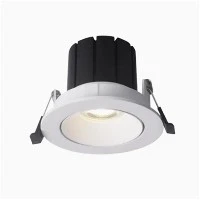
The Ultimate LED Bulb Buying Guide: End Choice Paralysis, Light Up Your Ideal Home
The light suddenly goes out at home, and facing the array of differently shaped LED bulbs on the shelf, you pick one up, glance at the specs, and hesitantly put it back down-this scene plays out in countless households.
When we stand in front of the light bulb aisle, confronted with LED bulbs ranging from traditional A19 to various reflector and decorative types, the alphanumeric model codes can be dizzying. According to U.S. Department of Energy data, LED bulbs are about 90% more energy-efficient than traditional incandescent bulbs, with a lifespan over 25 times longer.
However, high efficiency does not directly equate to suitable lighting. Choosing the right LED bulb involves considering far more factors than we might imagine.
01 Shape & Purpose: The "Looks Matter" Guide to LED Bulbs
The shape designation of an LED bulb is actually a precise code-the letter indicates the type, while the number represents the diameter in eighths of an inch. This means a larger number in the designation corresponds to a physically larger bulb.
Among the most common A-type bulbs, the A19 is the most widely used in households, with a maximum diameter of 2 3/8 inches, sufficient to replace most incandescent bulbs up to 75 watts. For spaces requiring higher brightness, the A21 or even larger sizes might be necessary.
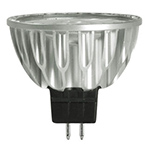
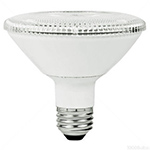
Reflector-type bulbs are designed specifically for directional lighting. For example, the MR series focuses light to a single point, making it ideal for track and recessed lighting, while PAR bulbs, with their flat lens design, are the go-to choice for outdoor flood lighting.
Decorative bulbs combine aesthetics with function. From CA-type candle bulbs that mimic a flickering flame to vintage-style LED filament bulbs, these designs serve as both a light source and a part of home decor.
| Type | Image |
|
MR (Mirrored Reflector) Designed to focus lighting into a single focal point, MR bulbs are commonly used in track lighting, recessed lighting, and landscape lighting to replace halogen bulbs. |
|
|
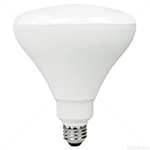
R (Reflector) and BR (Bulged Reflector) Both R and BR bulbs are directional, focusing light outward. R bulbs have a mirror-like coating inside the housing. BR bulbs are similar but have an additional mirror in the neck, creating a "bulge" just before the socket base. These bulbs are used in recessed and track lighting, and are a popular choice for wall washing or grazing. |
|
|
PAR (Parabolic Aluminized Reflector) PAR lamps have a flat lens and are available in several shapes including, PAR16, PAR20, PAR30, PAR36, and PAR38. These lamps are suitable for a wide variety of applications including track lighting, recessed lighting, and outdoor flood lighting. |
|
|
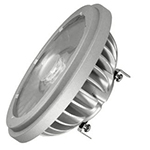
AR (Aluminum-facetted Reflector) Replacing halogen bulbs, AR lamps are generally used for low voltage applications from 12 to 24 Volts, but may also come in 120V options. These bulbs are used for retail displays and architectural lighting. |
|
02 Base Type: The "Handshake Agreement" Between Bulb and Fixture
Once the bulb shape is determined, the type of bulb base becomes the next critical choice. A bulb with the wrong base is like wearing the wrong shoe size-it simply won't fit or function.
The Edison screw base is the most common type in households today, with the number following the letter 'E' indicating the screw width. The E26 (medium base) is virtually ubiquitous in North American homes, while the petite E12 (candelabra base) is commonly found in decorative fixtures.
In commercial and specialty lighting, bi-pin bases (starting with 'G', where the number denotes pin spacing) and bayonet bases are more prevalent. For instance, the GU5.3 base, commonly used for MR16 bulbs, simply plugs in, whereas the GU10 requires a twist to lock-a physical design difference that directly dictates compatibility.
|
Shape |
Image |
|
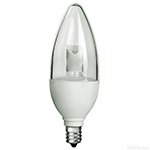
B (Bullet) Also referred to as Torpedo bulbs. |
|
|
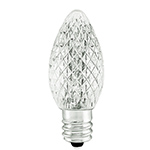
C (Candle or Conical) Conical bulbs are most commonly used for night lights and Christmas replacement bulbs. |
|
|
CA (Candle Angular) Designed to mimic the look of a flame, CA decorative bulbs are often referred to as Flame Tip (F) or Bent Tip bulbs. |
|
|
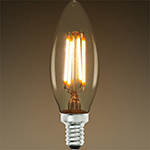
LED Filament Available in both bullet and candle angular shapes, these bulbs use LED filaments to mimic the look of antique lighting. |
|

03 The New Brightness Standard: Shifting from Watts to Lumens
In the era of traditional incandescent bulbs, we were accustomed to using "wattage" to gauge brightness, but this method is no longer applicable for LED bulbs. The brightness of an LED bulb should be measured in lumens-the unit representing the total quantity of visible light, which is the true indicator of brightness.
A common misconception is that "a higher wattage means a brighter LED bulb." In reality, due to variations in energy efficiency among different LED brands, bulbs with the same wattage can have significantly different lumen outputs. This is why a 9-watt LED bulb from one brand might match the brightness of an 11-watt product from another.
For consumers transitioning from incandescent to LED, the most important step is to establish a new framework for understanding brightness. The table below provides a reference for common replacements:
| Traditional Incandescent Power (Watts) | Recommended LED Lumen Output | Typical LED Power (Watts) | Ideal Application |
|---|---|---|---|
| 40W | 450 lm | 4-6W | Bedside lamp, night light |
| 60W | 800 lm | 8-10W | Desk lamp, main light for small rooms |
| 75W | 1100 lm | 11-13W | Main light for living room, bedroom |
| 100W | 1600 lm | 14-18W | Large space lighting, dining room |
| 150W | 2600 lm | 22-28W | High-ceiling spaces, workshop |
It's worth noting that within the same brand, higher wattage typically means higher lumen output, but comparisons between different brands should be based on the actual lumen value.
04 Color Temperature & Ambiance: The Emotional Language of Light
The "warmth" or "coolness" you feel upon entering a room actually comes from the light's color temperature. Measured in Kelvin (K), LED color temperature selection directly influences the ambiance of a space and the psychological response of its occupants.
Warm white light at 2700K most closely resembles traditional incandescent bulbs, creating a cozy and comfortable atmosphere ideal for bedrooms and living rooms. Neutral white at 3000K provides a natural daylight feel, perfect for kitchens and offices. Cool white light above 5000K enhances alertness and is suitable for garages and workrooms.
A more subtle distinction is that bulbs from different brands may produce slightly different hues of light even at the same color temperature value. This is because, beyond color temperature, the light's tint also affects the final result. High-quality LED bulbs will clearly indicate their color consistency rating on the packaging, ensuring uniformity when purchasing multiple bulbs.
 |
Soft White / Warm White (2700K – 3000K) Recommended for use in: Living Rooms Bedrooms Rooms decorated in earthy tones (reds, oranges, and yellows) |
 |
Cool White (3500K – 4500K) Recommended for use in: Kitchens Bathrooms Rooms decorated in airy, fresh hues (blues, greens, whites) |
 |
Daylight / Full Spectrum (5000K – 6500K) Recommended for use in: Garages Offices Craft room Rooms where productivity is key |
05 Technical Analysis: The Optical Science Beyond Basic Specs
The relationship between lumens and watts essentially measures two different things: lumens characterize light output, while watts characterize energy input. The high efficiency of LED technology lies in its ability to produce more light (lumens) with less energy (watts). This ratio is known as "luminous efficacy," measured in lumens per watt (lm/W).
For the average consumer, understanding this helps break the mental model of "higher wattage = higher brightness." In practice, when selecting an LED bulb, you should first determine the required lumen output, then compare the wattage needed by different products to achieve that output-this is the correct method for evaluating energy efficiency.
The science behind color temperature involves black-body radiation theory. When a theoretical "black body" is heated, the color of light it emits changes with temperature-from red to orange, yellow, and eventually blue. The color temperature value describes a specific position on this continuous spectrum, not an actual temperature.
06 Special Features: The Important Details Often Overlooked
Dimmability is a complex but crucial feature in LED bulbs. Not all LED bulbs are dimmable, and even products labeled as dimmable may not be compatible with specific dimmer switches. Manufacturers typically provide a list of tested and compatible dimmers, which is the most reliable reference for ensuring functionality.
The Color Rendering Index (CRI) measures a light source's ability to reveal an object's true colors. Most standard LED bulbs have a CRI between 80-85. For spaces where color accuracy is critical (like makeup vanities or art studios), choose products with a CRI of 90 or above.
The environment rating is a vital indicator for safe use. A bulb rated for "damp locations" can be used in humid but not directly wet environments like bathrooms. A rating of "suitable for enclosed fixtures" ensures the bulb can operate safely without overheating in fully enclosed luminaires like ceiling domes or porch lights.
Regarding lifespan, the rated life of an LED bulb refers to the time it takes for its brightness to diminish to 70% of its initial value. This means a bulb with a rated life of 25,000 hours will still be emitting light at that point, just at a reduced brightness.
07 Certification Labels: Guarantees of Quality & Rewards for Efficiency
The ENERGY STAR certification is a voluntary energy efficiency program managed by the U.S. Environmental Protection Agency (EPA). LED bulbs earning this certification must not only meet efficiency requirements but also achieve higher standards for light output stability, color temperature maintenance, and more.
The JA8 certification is part of California's Title 24 building code, which imposes stricter lighting requirements for new construction and renovations. JA8-certified LED bulbs typically feature higher CRI, better dimming compatibility, and longer lifespans.
These certifications are not just marks of quality; they can also translate into tangible economic benefits. Many regions and utility companies offer rebates or discounts for consumers purchasing certified products. In the long run, the electricity savings from high-efficiency products can also be substantial.
Faced with the dazzling array of LED bulb options, the wisest strategy is to first clarify your needs: Where will it be used? How much brightness is required? What light color is preferred? Are any special features needed? Then, search for suitable products based on these criteria.
Technological advancements mean today's LED bulbs can meet almost any lighting need-from foundational illumination to ambiance creation, from practical function to decorative effect. The truly good bulb is the one that makes you think, "This is exactly the light I wanted," the moment you turn it on.
Next time your bulb needs replacing, may you confidently approach the shelf, or skillfully browse the web, to find the LED bulb that best suits your needs.
FAQ
Q1: The dimmer switch in my home worked fine with the old bulbs, but after installing new dimmable LED bulbs, they flicker or buzz. Why is this happening?
This is a typical compatibility issue. Most traditional dimmers were designed for high-wattage incandescent bulbs, while LED bulbs have completely different electrical requirements. Solutions include: 1) Check the compatible dimmer list provided by the LED bulb manufacturer and switch to a recommended dimmer model; 2) Choose LED bulbs specifically labeled as "compatible with most dimmers"-these usually have more complex driver circuitry built-in; 3) Consider replacing the dimmer with an LED-specific model. While the initial cost may be higher, it ensures stable long-term operation.
Q2: Can I use an LED bulb NOT rated for "Enclosed Fixtures" in a fully enclosed fixture?
It is strongly discouraged. Enclosed fixtures (like ceiling domes, sealed porch lights) restrict airflow, leading to heat buildup. LED bulbs are sensitive to high temperatures; overheating can significantly shorten their lifespan and may even pose safety risks. Using an incorrect bulb may also void the product warranty. If your fixture is fully enclosed, be sure to choose an LED bulb clearly labeled "Suitable for Enclosed Fixtures" or "Enclosed Fixture Rated." These products are designed with additional heat dissipation mechanisms.
References & Notes
U.S. Department of Energy. LED Lighting: Energy Savings and Performance Characteristics. Updated 2022.
Illuminating Engineering Society (IES). The Lighting Handbook (10th Edition). 2020.
California Energy Commission. Title 24 Building Energy Efficiency Standards, Part 6 Lighting Standards. 2019 Revision.
International Electrotechnical Commission (IEC). Supplements regarding LED replacements within *IEC 60081: Double-capped fluorescent lamps* and *IEC 60901: Single-capped fluorescent lamps*.
U.S. Environmental Protection Agency (EPA). ENERGY STAR Program Requirements for Lamps (Light Bulbs). Version 2.2.
*Note: Voltage and electrical standards vary by region. Please confirm the product is suitable for your local grid standard (e.g., 120V/60Hz in North America, 230V/50Hz in Europe) before purchasing.*