Can UVC lamps render the SARS-CoV-2 coronavirus inactive?
UVC radiation is a well-known disinfectant for nonporous surfaces like water and air. Since many years ago, UVC radiation has been used successfully to stop the spread of microorganisms like TB. Because of this, UVC lamps are often referred to as "germicidal" lights.
The SARS-Coronavirus, which is a distinct virus from the present SARS-CoV-2 virus, has been demonstrated to have its outer protein covering destroyed by UVC radiation. The virus is finally rendered inactive as a result of the destruction. (See Effectively and securely inactivates airborne human coronaviruses with far-UVC light (222 nm)External Link Disclaimer.) The SARS-CoV-2 virus, which is the virus that causes Coronavirus Disease 2019, may also be effectively rendered inactive by UVC radiation (COVID-19). See "Q: Where can I learn more about UV radiation and disinfection?" for further details. The wavelength, dosage, and duration of UVC radiation needed to inactivate the SARS-CoV-2 virus, however, are only partially known at this time.
There are restrictions on how efficient UVC radiation can be in inactivating viruses generally, in addition to knowing if it is successful at doing so for a specific virus.
Direct exposure: A virus can only be rendered inactive by UVC radiation if it is exposed to it directly. Therefore, owing to dirt, such as dust, or other impurities, such as body fluids, obstructing the UV light, the inactivation of viruses on surfaces may not be efficient.
Dose and duration: Since many UVC lamps marketed for household use have modest doses, it could need more exposure time to a given surface area to inactivate germs or viruses.
In order to purify the air, UVC radiation is often employed within air ducts. The placement of UVC inside an air duct is less likely to expose skin and eyes to UVC radiation, making it the safest approach to utilize UVC radiation since direct UVC exposure to human skin or eyes may cause harm.
There have been complaints of skin and eye injuries as a consequence of UVC lamps being installed incorrectly in spaces that people may enter.
Can UVB or UVA rays render the SARS-CoV-2 coronavirus inactive?
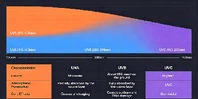
The SARS-CoV-2 coronavirus should be more resistant to UVB and UVA radiation than it is to UVC radiation.
There is some indication that UVB light may effectively render other SARS viruses inactive (not SARS-CoV-2). Although less efficient than UVC in doing so, UVB radiation is more dangerous to people than UVC because it may reach deeper layers of skin and eyes. UVB is known to damage DNA and is a risk factor for cataracts and skin cancer.
UVA: Although UVA radiation is much (about a 1000-fold) less efficient in inactivating other SARS viruses than UVB or UVC radiation, it is less dangerous than UVB radiation. The effects of UVA on skin aging and skin cancer risk are also known.
Is it safe to use a UVC light at home to disinfect surfaces?
Think about the dangers that UVC lights pose to people and things, as well as the danger of insufficient viral inactivation.
Issues: Depending on the UVC wavelength, radiation dosage, and exposure time, UVC lamps used for disinfection might provide health and safety risks. If the device is improperly placed or handled by unskilled persons, the danger may rise.
Some UVC lamps' direct UVC radiation exposure to skin and eyes may result in severe eye damage and skin responses that resemble burns. Never, not even for a second, gaze directly at a UVC light source. We strongly advise you to notify the FDA if you have suffered an accident as a result of using a UVC lamp.
Ozone is created by certain UVC lamps. Inhaling ozone might irritate the airways.
Certain materials, including plastic, polymers, and colored textiles, may be degraded by UVC.
Mercury is present in certain UVC lamps. Extreme care must be used while cleaning and discarding a damaged lamp since mercury is dangerous even in little quantities.
Effectiveness: Due to a lack of published information on the wavelength, dosage, and duration of UVC radiation necessary to inactivate the SARS-CoV-2 virus, the efficacy of UVC lamps in doing so is uncertain. It is crucial to understand that, typically, if a virus or bacteria is not exposed to UVC directly, UVC cannot render it inactive. In other words, if a virus or bacteria is lodged in a porous surface, coated in dust or dirt, or found on the underside of a surface, it will not be rendered inactive.
You may want to: in order to learn more about a certain UVC bulb.
Inquire with the manufacturer on the product's health and safety dangers as well as the availability of use guidelines and training materials.
Find out whether the product produces ozone.
Find out what materials can be disinfected with UVC.
Inquire about the lamp's mercury content. If the lamp is broken and you need to know how to clean up after it or get rid of it, this information could be useful.
Are all UVC lights the same in their output?
There are variations among UVC bulbs. Lamps may produce a narrow range of UV wavelengths or highly precise UVC wavelengths (like 254 nm or 222 nm). Additionally, some bulbs release infrared and visible radiation. The lamp's wavelengths may have an influence on how well it can inactivate viruses and on the health and safety issues that may be involved. Several different wavelengths are emitted by certain bulbs. Testing the lamp may reveal if and how much of any additional wavelengths it emits.
While there is some indication that excimer lamps with peak wavelengths of 222 nm may be less harmful to the skin, eyes, and DNA than those with wavelengths of 254 nm, there is a dearth of information about their long-term safety. See "Q: Where can I learn more about UV radiation and disinfection?" for further details.
What are the many lamp kinds that may emit UVC radiation?
Low-pressure mercury lamp: In the past, UVC radiation was most often produced by low-pressure mercury lamps, which emit mostly at 254 nm (>90%). This kind of bulb can also generate other wavelengths. Other lamps are available that not only generate visible and infrared light but also a wide variety of UV wavelengths.
Excimer lamp or Far-UVC lamp: A particular kind of lamp with a peak emission of around 222 nm is referred to as a "excimer lamp."
Pulsed xenon lamps: These lights, which produce brief bursts of UV, visible, and infrared light that have been filtered to release mostly UVC radiation, are sometimes used in hospitals to clean surfaces in operating rooms and other areas. These are often used when there are no people present in the area.
Light-emitting diodes (LEDs): It is also becoming easier to get LEDs that emit UV radiation. Typically, a relatively small wavelength range of radiation is emitted by LEDs. Peak wavelengths for the UV LEDs that are now on the market include 265 nm, 273 nm, and 280 nm, among others. Since LEDs don't contain any mercury, they have an advantage over low-pressure mercury lamps. However, LEDs may be less effective for germicidal applications because to their limited surface area and increased directionality.
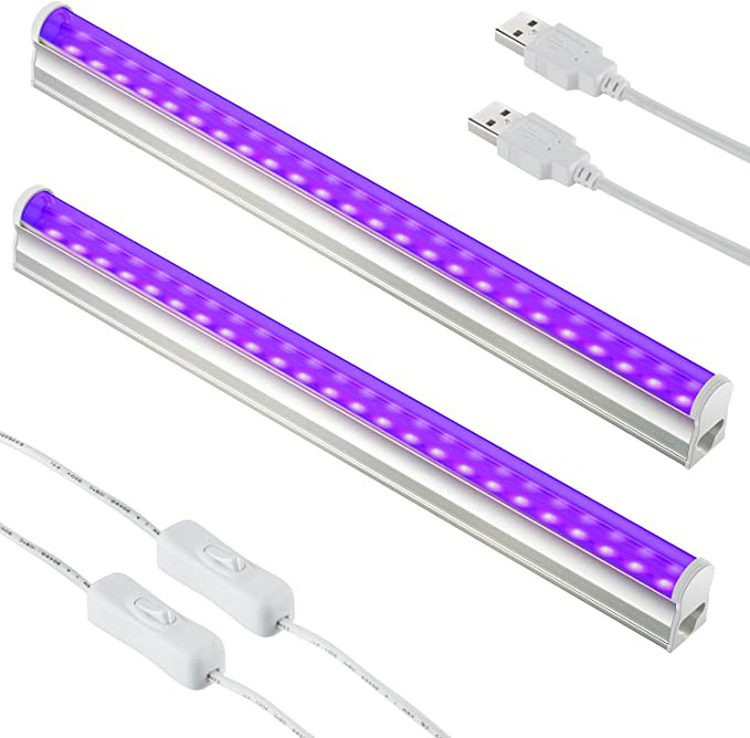
Benwei UV 120cm led tube black light Product Specification:
|
Item |
UV led light tube bulb T8 |
|
Input Volt |
AC85-265V |
|
Power |
10W,18W,24W |
|
Length |
60cm/2ft, 120cm/4ft, 150cm/5ft |
|
Bean Angle |
120°, 180° |
|
Lifespan |
50000 hrs |
|
Wavelength |
365nm 395nm 254nm 280nm |
|
Warranty |
3-5 years |