Voltage Drop in LED Lighting: What It Is and How to Manage It
When planning and installing LED lighting-particularly for strip lights, linear runs, or architectural applications-voltage drop is a critical yet often overlooked electrical issue. Failing to account for it can result in dim or uneven lighting, color inconsistency, and even premature system failure. So, what exactly is voltage drop, and why is it so important in LED lighting systems?
What Is Voltage Drop?
Voltage drop is the decrease in electrical voltage that occurs as current travels through a wire. All conductors have inherent resistance, and the longer the wire or the higher the current, the greater the resistance encountered. This leads to a measurable voltage loss between the power source and the load-in this case, the LED lights.
In LED installations, voltage drop becomes visibly apparent when lights located farthest from the power source appear dimmer or exhibit shifts in color temperature compared to those closer to it.
What Causes Voltage Drop in LED Systems?
Several factors contribute to voltage drop:
Wire Length: Longer wire runs introduce more resistance, resulting in greater voltage loss.
Wire Gauge: Thinner wires (higher gauge numbers) have higher resistance. Using undersized wires for the current load increases voltage drop.
Total Load: A higher number of LEDs or greater power draw increases current flow, which in turn raises resistance and voltage drop.
Power Supply Distance: When the driver or transformer is located too far from the lighting installation, significant voltage loss can occur before power even reaches the LEDs.
System Voltage: 12V DC systems experience more voltage drop over the same distance compared to 24V DC systems, as lower voltage requires higher current to deliver the same power.
How to Measure Voltage Drop
To determine voltage drop in your LED system:
Use a Multimeter:
Turn on the LED system.
Measure the voltage at the power supply output (e.g., 24V).
Measure the voltage again at the farthest point of the LED strip.
The difference between these readings is the voltage drop.
Example:
Power supply output = 24.0V
Voltage at end of strip = 22.4V
Voltage drop = 1.6V
Effects of Voltage Drop
Dim or uneven brightness, especially toward the end of a strip
Visible color shifts (e.g., white light turning yellowish or bluish)
Reduced lifespan of LEDs and drivers
Failure to meet design or safety standards
How to Prevent or Minimize Voltage Drop
Use Higher Voltage Systems: Opt for 24V DC instead of 12V DC to reduce current and minimize drop.
Shorten Wire Runs: Place the power supply as close as possible to the LED installation.
Use Thicker Wires: Upgrade to a lower-gauge wire (e.g., 14 AWG instead of 18 AWG).
Power from Multiple Points: Instead of a single long run, feed power from both ends or at intermediate points.
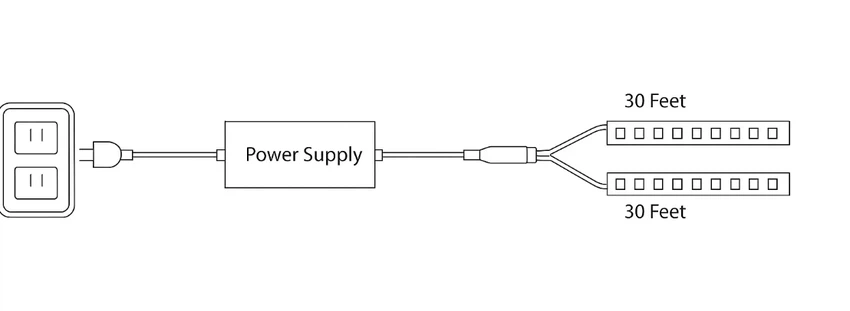
Split the Load: Use parallel wiring for multiple sections rather than daisy-chaining them in series.
Install a Voltage Regulator: Helps maintain consistent voltage where other solutions are not feasible.

Benwei Is Here to Help
At Benwei, we specialize in helping you design and implement LED lighting systems that are both energy-efficient and visually consistent. Whether you're illuminating a hotel lobby, an art gallery, or outdoor signage, we can assist in selecting the right components and layout to avoid voltage drop issues.
Need support planning or pricing materials for your next LED project? Contact us today!