In order to improve the user experience on the property and to foster effective administration, safe operations, and easy access to stored goods, warehouse lighting is a crucial instrument.
The ability of warehouses to store products, tools, and equipment has steadily made these areas more and more necessary for enterprises to expand, and it has created new industries that are solely focused on storage capacity.
As a result, efficient warehouse lighting is necessary to ensure and enhance the smooth functioning of warehouses. Currently, energy-efficient LED lighting solutions are the most widely utilized.
1. Minimizes Maintenance Costs
The operational cost of warehouses and warehouse lighting may be a significant overhead charge for the business since warehouses are so closely related to business activities.
LED lighting is crucial in reducing maintenance costs as organizations search for ways to reduce losses and operating expenses while keeping the warehouse operational. Given its high lifespan of 100,000 hours, LED lights may operate continuously for approximately 11 years.
This lengthy lifespan not only enhances light quality but also significantly lowers running expenses. Basically, LED technology may be adjusted for various operational circumstances, traffic patterns, and particular settings.
2. Promotes Productivity
For product handling and movement in a warehouse scenario, precise color representation is crucial. Studies have revealed that flickering lights from traditional lighting is a major contributor to workers' eyestrain and headaches.
On the other hand, no matter the operating circumstances, LED lighting completely eliminates flickering lights.
Therefore, LED lights can increase productivity by reducing lighting-related distractions while also providing a comfortable and secure working environment for the staff.
3. Reduces Costs By Up To 80%
Energy use is another significant expenditure that organizations want to reduce. Compared to conventional lighting, LED technology may reduce the energy consumption of lighting systems by at least 70%. The lighting system may use up to 80% less energy in the warehouse if motion sensors are added.
4. Ensures Safety And Pleasant Ambience
For workers who work long days or shifts that end late at night, LED lights provide a wide range of lighting options that can produce nice lighting patterns and make the warehouse atmosphere more comfortable.
There is no need to be concerned about sluggish transitions to full brightness with frequent switching as the personnel walk throughout the warehouse since LED light fixtures instantaneously turn on with high levels of brightness.
5. Makes Use Of Frequent Switching
The illumination quality or the bulbs themselves are unaffected by the instantaneous switching of LED lights, which are semiconductors.
As a result, because LED lighting fixtures use traditional light sources, which degrade quickly, their power and longevity are not harmed by frequent switching.
LED Lighting for the Warehouse: Savings on Maintenance Costs and Energy
Warehouse owners are adopting LED lighting technology to replace their outdated lighting fixtures with LED lights in order to lower their high power bills and other running expenses. By doing so, they may save more than 25,000 dollars annually on energy expenditures.
This is because LED lighting uses a fraction of the energy used by traditional lighting sources while yet generating high light outputs.
Additionally, LED lights may be instantly turned on to their full brightness, saving you the energy that conventional lights need to use to do so.
5 TIPS TO PROPERLY LIGHT YOUR WAREHOUSE
1. Determine the various lighting levels.
A crucial factor to establish before finishing the lighting choices is the amount of illumination needed to illuminate a storage area.
In addition to mathematical techniques used to establish the degree of installation of light fixtures, there are a few design guidelines that give the illumination levels based on various parameters.
Because each warehouse space is distinct in its design, structure, and function, it is necessary to study the lighting system based on the individual layouts in order to utilize the calculation findings as a planning foundation. This will provide the warehouse a special lighting setup that lights the area effectively and equally.
2. If feasible, utilize natural lighting
The design phase should consider whether allowing sunshine into the warehouse would be a wonderful way to lower operating expenses and provide a natural light source.
The simplest method is to enter the warehouse through openings in the roof, however owing to weather conditions like rain, this may not be feasible.
Different alternatives, such as high windows or retractable roofs, can be used depending on the warehouse's construction and layout, although unique roof lights with solar glass are the most advised.
These options should be considered for the project to balance their advantages against their high upfront expenditures in order to bring adequate sunshine into the room and offer protection.
3. Design the lighting system depending on the conditions in the warehouse.
When constructing or modifying the lighting system, it is crucial to pay particular attention to the warehouse's distinct distribution and structure.
The space should be examined in light of the operational areas, available windows, shelf arrangement, and aisle spacing, among other things. Planning the lighting system should take into account the redesign of the area because they are intimately intertwined.
For instance, the warehouse would need fewer lighting fixtures if additional windows could be provided.
4. Estimate the approximate amount of energy used.
The energy consumption of the lighting system and the strategies that may be used to reduce energy use and, ultimately, operating expenses, are another important planning aspect. The layout of the facility and the kinds of goods kept in the warehouse will both affect this adjustment.
In order to further minimize energy consumption, the operation of the warehouse must also be investigated in order to ascertain the specifics of the lighting system and whether it permits the use of lighting control and motion sensors to dim certain regions.
5. Whenever feasible, adopt updated lighting technologies
Several lighting solutions are presently available to aid in effective warehouse operation and management. Because updating the warehouse lighting system can be expensive, a thorough and reliable strategy must be established before upgrading and installing the fixtures.
For the upgrading, using LED lighting is strongly advised. When compared to conventional lighting systems, LED lights use 70% less energy and have a longer lifespan based on the same function.
LED lighting reduces the warm-up period needed to reach maximum brightness and produces a greater illumination output that is more uniform for lower power levels. With these additional advantages, the space is brighter and cozier while using a small fraction of the energy required by conventional systems.
Additionally, LED lighting produces a lot less heat than conventional lighting sources. Especially in areas with sensitive goods, warehouses often up the air conditioning loads to counteract this excess heat.
Using LED lights would also have the added benefit of using less energy for cooling, which would result in even reduced energy usage.
Finally, LED lighting is more ecologically friendly than incandescent bulbs and more durable than conventional lighting goods.
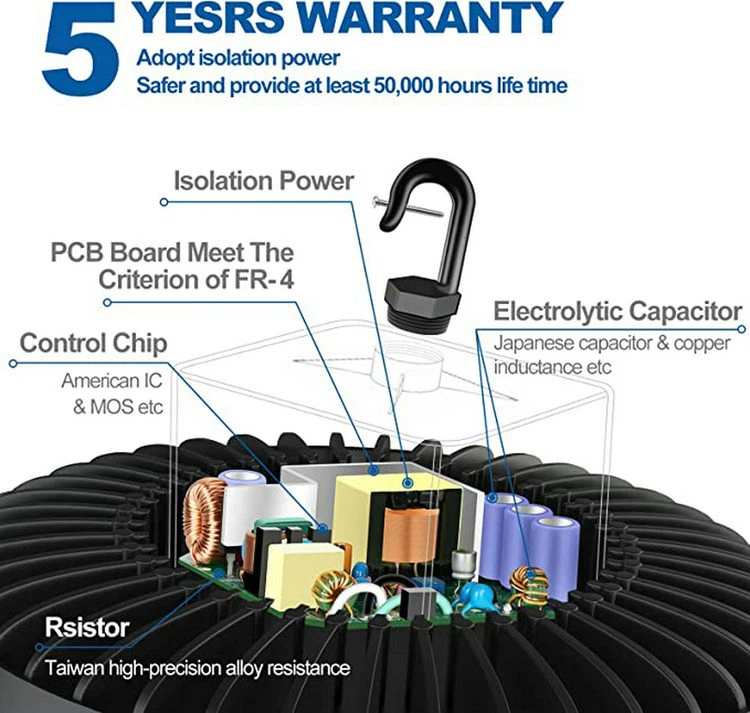

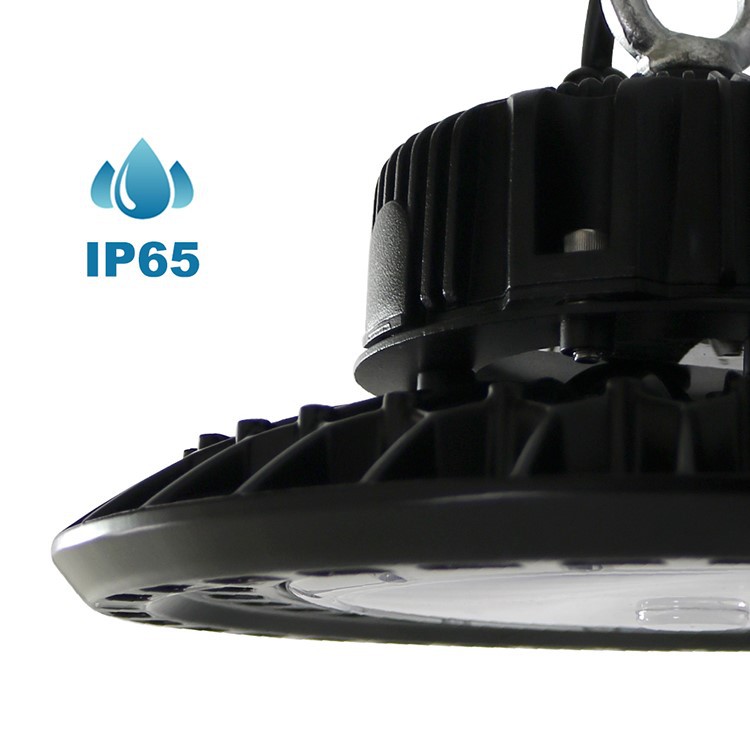


Benwei warehouse led lights:
| Model | BW-002-S100W | BW-002-S150W | BW-002-S200W |
| Power(W) | 100W | 150W | 200W |
| Light Source | SMD | ||
| Input Voltage | AC220-240V/ AC100-305V / 480v 50/60Hz | ||
| Material | Aluminum+PC | ||
| Beam Angle | 60°/90°/120° | ||
| IP Rating | IP65 | ||
| CCT | 3000K / 4000K / 6000K | ||
| CRI | Ra>80 | ||