What Uses Do LED Downlights Have in Residences and Businesses?
LED downlights, also referred to as can lights or recessed lights, are built into the ceiling to serve as an aesthetically pleasing addition to any space. Even though you might like this modern appearance, you might not be aware of all the elements that go into producing the ideal illumination in your house or place of work.
Where Should LED Downlights Be Installed?
For areas with low ceilings or big rooms, LED downlights are a fantastic choice. Recessed lights take up less room than conventional suspended light fittings because they merge in with the roof.
A room's lighting can be equally distributed, and because recessed lights are so unobtrusive, you can place more lamps than you otherwise would. This implies that light can enter the space from all sides.
How Should an LED Downlight Be Installed?
To put an LED downlight, you must make openings in the ceiling, or you can adapt an existing ceiling lighting device.
If there isn't a connection box already there where you want to put the concealed lighting devices, you'll probably need to get one. The electrical lines and connections required to link the light to the building's primary power source are housed in a junction box that is installed in the ceiling above the light bulb.
You must verify your downlight's Insulation Contact (IC) grade to make sure it is suitable with the type of insulation used in your house or place of business because architecture and construction laws differ.
Try perusing our blog post on installing concealed illumination if you still need assistance.
Do I Require a Dedicated Downlight for Exterior Spaces and Showers?
You should look for light fittings and lamps that can endure exposure to grime and precipitation for exterior recessed lighting and bathroom recessed lighting, as shown by the Ingress Prevention (IP) classification.
The correct IP classification will protect your concealed lighting device from the weather, reducing risks. An IP65 classification is advised for safety against dust and precipitation.
Which Specific Type of LED Lamp Do I Need for My Downlight?
Never select a light bulb with a higher power than is advised for the light fitting to prevent a fire danger. When compared to fluorescent and conventional lights, LED light bulbs create more light (measured in lumens) for less energy (measured in watts).
You can increase light production and cut upkeep expenses by using LED lights. Additionally fire-resistant, LED lights will keep your house or place of work from overheating.
Is My LED Downlight's Discharge Slant Adjustable?
Gimble
By adding an ocular or gimble light frame, you can adjust the downlight's beam orientation. With the help of these features, you can shift and rotate the lightbulb so that it shines in the desired direction.
The light source and the height at which it is placed both affect beam orientation. The light will look smaller and more direct the higher the roof.
A broad beam angle, which produces a gentle light, is one that is at least 60 degrees. Any beam angle that is less than 60 degrees produces a straight, crisp light that is excellent for screens.
Read about how to determine the ideal beam position for more information.
How Should I Use the Color Intensity of My LED Downlight?
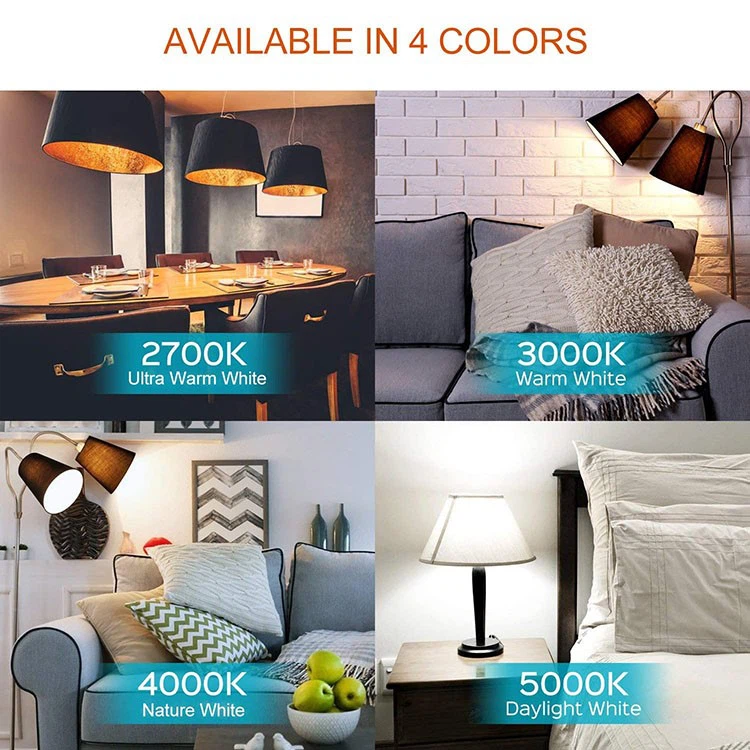
The color hue generated by a light source is referred to as color temperature and is quantified in Kelvins (K). Here is our inventory of recommended hue temperatures broken down by space:
Select a mild color tone (2500K–3500K) for the living area and bedroom. The soothing nature of the golden hues makes them ideal for situations with a more relaxed air.
Kitchens: We advise using pure white light for kitchen alcove illumination (4000K). Natural light enhances the aesthetics of the kitchen by giving a strong light that makes it easier to see while cooking and judge the quality of the food without being overly abrasive.
We advise a cold white light for offices, reading areas, and other workspaces (4100-5000K). Calm colors are soothing and perfect for reading. Additionally, it lessens migraines and increases concentration.
How Do I Choose the Correct LED Downlight Height and Quantity for My Room?
There are a variety of configurations for LED downlights to suit any residential or commercial space. Large downlights (8"–10") complement a conventional style, while small downlights (4"–6") give off a contemporary appearance.
The height and breadth of the room will also affect your choices. Larger downlights are preferable in big areas as tiny concealed lights will look out of place and won't provide enough light.
By planning your illumination, you can determine how many downlights are required in a given space. Downlights are typically positioned 1.5 to 2 feet distant from the wall. The required distance between downlights can then be calculated by taking the height of your area and splitting it in half. For instance, you want about 5 feet of area between downlights in a room with 10-foot ceilings.
When you have this planned out, you can determine how many downlights you require based on the room's area measurements. Assume for a moment that our room's 10-foot ceilings are 9 feet long and 9 feet broad.
Choose the Appropriate Amount of Downlights
Finding the square area of our room requires multiplying the room's length by breadth (9x9) (81 ft2). When you draw out this space, you'll see that there is space for 4 downlights based on the 10-foot ceiling height.
A fantastic small-space lighting option for your house or place of work is recessed lighting. Would you like to find your next illumination solution? Check out the LED downlight collection at HomElectrical right now!