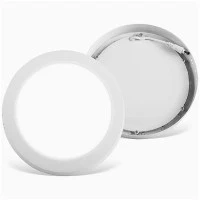
Making the switch to LED lighting that is explosion-proof comes with a lot of cost implications. LEDs provide revolutionary long-term savings, despite the first appearance of conventional lighting solutions being less expensive. Industries are realising their economic necessity as the worldwide explosion-proof LED market is expected to increase from $2.65 billion in 2022 to $4.45 billion by 2030. The actual expenses and savings of this change are examined in this article.
The Initial Outlay
Price of Hardware
The cost of explosion-proof LED lighting is significantly higher than that of conventional industrial lighting. Depending on the requirements, prices per unit might vary from $200 to $2,000 (e.g., 50W floodlights vs. 150W high-bay lights). Three crucial engineering considerations are reflected in this:
Sturdy Enclosures: IP66/IP67-compliant cast aluminium and stainless steel enclosures that are resistant to water and dust.
Certification Compliance: Manufacturing expenses are increased by 20–35% for ATEX, IECEx, or UL certifications.
Advanced heat sinks are used in thermal management to keep surface temperatures from rising to ignition points.
Retrofitting and Installation
Installing these technologies in already-existing facilities frequently necessitates:
Electrical Upgrades: Conduit wiring for hazardous areas ($50 to $150 per linear foot).
Specialised Labour: For Zone 1/Div 1 settings, certified electricians are paid between $75 and $150 per hour.
Production Downtime: Oil and gas facilities experience facility shutdowns that cost $10,000 to $50,000 per day.
Engineering and Design
Budgets are usually increased by 10% to 15% for site-specific planning, which covers:
audits of the classification of hazardous zones.
Photometric models for consistent illumination.
Planning for redundancy in emergency evacuation routes.
An example of the total upfront cost is $600,000 for an installation of 500 fixtures, of which fittings make up 58% ($350,000), labour 25% ($150,000), materials 10% ($60,000), and engineering/certifications 7% ($40,000).
The Savings Over Time
Efficiency of Energy
When compared to HID or fluorescent alternatives, LEDs reduce electricity usage by 60–80%:
A 100W LED increases light output while replacing a 250W metal halide lamp.
Reductions in demand charges Reduce your monthly utility costs by $15 to $50/kW.
In enclosed spaces, lower heat output reduces HVAC loads by 5–10%.
Real-World Example: After replacing 1,200 HID lights, a refinery in Texas achieved an 11-month payback period and saved $182,000 yearly.
Reduction of Maintenance
With 50,000–100,000 hour lifespans (as opposed to 10,000–20,000 for HID):
Fixture replacements have decreased from three to five times per ten years to almost none.
Interventions for hazard-area maintenance, which cost $500 to $2,000 per visit, are drastically reduced.
Every year, failure rates in corrosive conditions are less than 2%.
Value of Risk Mitigation
Explosion Prevention: Removes the possibility of ignition from overheated ballasts or damaged bulbs.
Insurance Discounts: Certified installations might receive rate discounts of 5–15%.
Regulatory Compliance: Prevents fines from OSHA that above $150,000 for each infraction.
Increases in Productivity
During 12-hour shifts, flicker-free operation lessens eye fatigue.
During emergency shutdowns, fast restrike is essential.
High CRI (>80): Enhances manufacturing flaw identification.
Total 10-Year Savings: LEDs cost $1,840 per fixture, compared to an average of $3,580 for typical HID systems, meaning a net savings of $1,740.
Implementation Strategy & ROI Drivers
Variables of the Payback Period
High-Utilization Sites: 12–24 months through maintenance and energy savings (mines, refineries).
Facilities for Intermittent Use: 36–48 months (extended by motion sensors and other smart controls).
Greenfield initiatives save 30–40% on installation expenses compared to new construction.
Monetary Rewards
Utility Rebates: Efficiency incentives of up to $0.25 per watt in more than 30 U.S. states.
ESCO Partnerships: Shared savings agreements are used by energy service providers to finance renovations.
OPEX Financing: leases with no down payment that turn capital expenditures into operational costs.
Sector-Specific ROI
Offshore Oil Rigs: Helicopter-assisted light replacements save $450,000 annually.
Grain silos: Prevents possible dust explosion losses of more than $2 million.
Wastewater Plants: Does away with the need to replace fluorescent lights in corrosive tanks every two years.
Getting Past Adoption Obstacles
Technical Difficulties
Thermal interface materials (5–8 W/m·K conductivity) are necessary for heat dissipation.
Driver Protection: In Zone 1 settings, potting chemicals provide electrical protection.
Photometrics: Asymmetric optics guarantees consistent illumination in small areas.
Best Practices for Procurement
Request third-party IECEx/ATEX certifications.
Give field-replaceable, modular designs first priority.
Require minimum guarantees of five years for both performance and materials.
Preparing for the Future
IoT Integration: Predictive maintenance is made possible with DALI/Zigbee controllers.
Climate Resilience: Seek operating temperatures between -60°C and +75°C.
Recyclable aluminium alloys that adhere to RoHS regulations are an example of circular design.
When considered comprehensively, explosion-proof LED lighting turns from a compliance expense to a source of revenue. Its 49% lifetime savings and sub-24 month paybacks in vital businesses make it indispensable, even if its initial expenditures are 2–3× greater than those of traditional lighting. Important guidelines for implementation:
Give high-impact locations (confined spaces, process areas that are open around-the-clock) priority.
Use financial leverage to balance savings and cash flow.
Smart-ready, modular solutions that are future-proof.
LEDs are becoming an operational requirement with measurable financial benefits, since safety events in dangerous places cost companies more than $200 billion a year. In 14 months, the lights paid for themselves, according to one factory manager. They are now creating money for us.