WHAT DO LED DRIVERS DO?
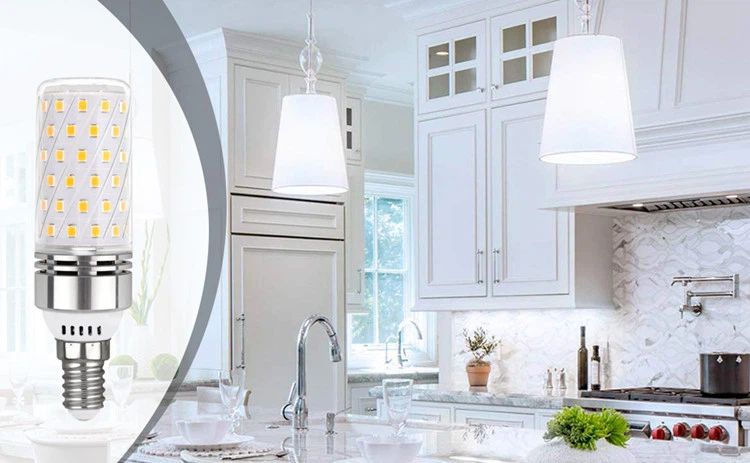
LED lights have taken over in the modern era. We frequently receive inquiries about LEDs and their drivers.
Describe them.
Why are they required?
How do they function?
How can an LED driver be tested? (Skip to the page's bottom)
Even if your LED is the best, it won't remain that way if your LED driver is poor. For additional information on general LEDs, visit our section on how LEDs function.
The driver of an LED light handles all the labor-intensive work. There is a driver inside every LED product, including LED Corn lights and LED fixtures. This driver transforms the alternating current, or ac, coming from the building into direct current, or dc. In your home, this translates to 36 or 48 volts DC from 120 volts AC. It functions as a huge transformer. Continuously doing that calls for a very premium product. The driver is mostly to blame for the problems we observe with LED failures.
An LED driver is what?
A power regulator is an LED driver. Strictly speaking, a circuit is in charge of controlling and delivering the ideal current to the LED. While the attributes of an LED fluctuate with temperature, the LED driver delivers power and controls the fluctuating needs of LEDs by supplying a steady quantity of power. Higher voltage alternating current is rectified to low voltage by LED drivers.
Your high bay LED lights won't last very long if you have a nice LED but a poor performing LED driver. Most LED failures are caused by the driver rather than the LED. The circuits typically burn out and malfunction.
Due to LEDs' efficiency, LED drivers normally need to give less power to them, but they also need to be more precise. High accuracy is used in the design of LED lighting, which requires the proper voltage to function. The LED driver uses contemporary technology that is based on circuit boards and is more equivalent to a computer than an electrical regulator.
An LED ballast is what?
A: This doesn't exist technically. A ballast was used to improve the power of HID and other types of bulbs. A driver is used by LEDs to change the building's AC power to DC. Direct continuous current is necessary for LEDs to operate.
LED drivers versus ballasts
The power regulators for lights are both ballasts and drivers, but they operate in distinct ways. By controlling the voltage between them, both act as a small buffer between the light and the current source, reducing the likelihood of an electrical overload. There is a distinction even if both of the components have the same function. Traditional parts used in metal halide and compact fluorescent (CFL) bulbs are the ballasts, which normally control significantly more power. Although the most recent ones were electronic ballasts, they also utilized more antiquated technology, such as magnets, to achieve their goals.
LED dimmable drivers
The ability of LED Drivers to incorporate an LED dimming option is the second key distinguishing characteristic. Several techniques can be used to dim drivers. The output of an LED gadget is determined by the amount of current passing through it, similar to modest household bulbs. Simply by manipulating the current flowing through the stacked layers of semiconductor material installed on a substrate, their brightness can be changed. A 0-10Volt or PMW is used to control LED lights with a higher wattage, like LED high bay lights. A good LED driver guarantees that the LED is protected in both scenarios.
Wiring
When it comes to performance, security, and reducing electricity usage, the wiring of each circuit is crucial. The 110v or 220v is transmitted directly to the LED driver using a typical 3-wire connection in large devices like LED street lights. The LED then modifies that to match each OED's proper voltage. Up to 70% more electricity can be saved thanks to the wiring of an LED driver than a conventional fluorescent bulb. The wiring of the driver increases security and ensures optimal performance even at high temperatures.
How can I change the LED driver?
A: To begin with, you must determine whether the driver is replaceable, or if it can be repaired. There is absolutely no chance that a bulb will work. The lamp has them firmly wired in. There is a good opportunity for big matches. You must gain access to the driver component and collect certain crucial specifications. Test the driver's input and output to make sure it's simply the driver. Try looking for one by using the driver model first. You'll need an equivalent if not. How many watts is the rated input? Maximum voltage? What results from this? constant voltage or constant current? Is there on-board 0-10v dimming. The next step is to choose a driver of a comparable size that meets the required input wattage, voltage, output current, etc. If you discover a match, you are ready to exchange them. The good news is that finding them is typically easier than swapping them out.
examining an LED driver in a fixture
Watch the video to see us disassemble an LED fixture and examine its drivers. This is an illustration of a serviceable fixture where the drivers can be changed.
drivers-free LEDs
Nowadays, driverless AC LED light motors are crucial new tools in the lighting industry. To see how they are becoming more prevalent but also riskier and failure prone, read our article on Driverless LEDs.
In conclusion, LED drivers are essential to the effectiveness of your lighting fixture. Only high-quality LED drivers from companies like Meanwell and Invetronics are used by LEDLightExpert.com. This is how we are able to offer a 5-year warranty on all high-lumen LED lights since we are confident that you won't experience any problems.
LED Corvus Series UFO High Bay Driver Sosen
How is an LED driver tested?
A: LEDs must be driven by dc since they require steady current. Ac is building power. Verify that the input voltage matches the building power. Verify that the output matches the driver dc on the output side. commonly a 24 dc, 36 dc, 48 dc, or 54 dc. Ensure that all wires, including those for dimming, are disconnected. For additional information, see our detailed how-to page.
Testing an LED Driver
roughly ten minutes
Power should always be checked first when diagnosing an LED fixture. Is the LED driver receiving power?
Things required:
LED lighting fixture with a functional driver
Cable Nuts
wire cutters
Screwdriver \sMultimeter \sPreparations
Security first. Make sure you have a safe ladder or lift to reach the fixture. For higher installations, a safety harness and clips should be used. The voltage at the breaker has to be known. You'll need to be aware of this for upcoming exams. Before continuing, make sure you are secure.
Find the electrical configuration and driver compartment.
The driver compartment can be found on the fixture. Certain fixtures may use a sealed driver or an onboard driver (DOB). These fixtures must be entirely replaced since they are not repairable. To facilitate maintenance, we always advise using serviceable fittings. The input and output cables must be located after you have found the compartment. Many fixtures will also have two additional wires for 0-10v dimming. For the test to be successful, they must be examined to make sure they are not touching. It will give you a false indication of a bad driver if a dimmer is fitted if the wires are touching.
An LED driver test procedure
Analyze the input side.
Depending on the structure, the driver's input side can range from 100 vac to 480 vac. You will have knowledge of the voltage from step 1 and can adjust your meter accordingly. The majority of fixtures employ wire nuts, while others use fast clips. You should be able to use either to gauge the power. Snap a photo of the meter's input side. We can't test the driver if you don't have any power. First, resolve the problem. We can continue once the meter reading matches the voltage of the building.
Step 3 of the driver testing process
Input side testing
DC power or constant current is used to power LEDs. The quantity of DC varies depending on the fixture, therefore you'll need to find this on the driver. The most typical range is between 24 and 54 dc. Switch your meter to DC, then reinstall the mutimeter probes. There are only 2 wires on the DC out since there is no ground. Once more, ensure that any additional wires and the dimming wires are capped off for the test. Take a reading of the DC Out and compare it to the reading from your driver.
How to check the DC output of an LED driver
You often obtain a 0 measurement on the output side because drivers frequently fail to 1. The fixture Lights would have been dim or flashing if the driver had just partially output. We know it's a terrible driver since we have good power coming in and none leaving. If you have good dc power coming in and going out and decent power coming in, then the LED board is the problem.
Conclusion on testing an LED driver
For more LED information, please pay attention to BENWEI's official website