What does the color temperature of the lamp mean? What is the appropriate color temperature of the led light?
What does the color temperature of the lamp mean? Simply put, it is a meter that indicates the color components in the light. Some people think that the preference for color temperature is determined by people. This is related to the scenery we see in our daily life. Generally, we need to look at the light when we choose lamps. What is the appropriate color temperature of the led light? The following Jiuzheng Lighting Network will explain it for everyone, let's take a look.
Light color temperature
What does the color temperature of the lamp mean?
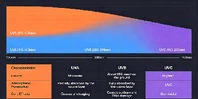
Color temperature is a unit of measurement that expresses the color components contained in light. Theoretically speaking, color temperature refers to the color of an absolute black body after being heated from absolute zero (-273°C). After the black body is heated. It gradually turns from black to red, turns yellow, turns white, and finally emits blue light. When heated to a certain temperature. The spectral components of the light emitted by the black body. It is called the color temperature at this temperature, and the unit of measurement is "K" (Kelvin). If the light emitted by a certain light source has the same spectral composition as the light emitted by a black body at a certain temperature. It is called a certain K color temperature. For example, the color of the light emitted by a 100 W bulb is the same as the color of an absolute black body at 2527K. Then the color temperature of the light emitted by this bulb is: 2527K+ 273K=2800K
Color temperature is a temperature measurement method, usually used in the fields of physics and astronomy. This concept is based on an imaginary black object that emits different colors of light when heated to different temperatures, and its objects appear in different colors. Just like when an iron block is heated, the iron block first turns red, then yellow, and finally white.
The color temperature calibrated by this method is exactly the opposite of what the general public thinks of "warm" and "cold". For example, people usually feel red. Orange and yellow are warmer, and white and blue are colder. In fact, red has the lowest color temperature, and then gradually increases are orange, yellow, white, and blue, and blue is the highest color temperature. When shooting with natural light, because the color temperature of the light is not the same at different time periods, the color of the photos taken is also not the same. For example, when shooting under a clear blue sky, the color temperature of the light is higher, so the photo is colder; and when shooting at dusk, the color temperature of the light is lower, so the photo is warmer. When shooting with artificial light, different types of light sources and different tones of the photos taken may also occur.
Understanding the relationship between light and color temperature helps photographers to shoot under different light, calculate in advance what tone of photos will be taken, and further consider whether to strengthen or weaken this tone. In actual When shooting, which function of the camera should be used to strengthen or weaken this tone.
The color temperature of the light source is different, and the feeling is different. Under high color temperature light source. If the brightness is not high, it will give people a feeling of coldness; under the illumination of a low color temperature light source, the brightness will be too high and it will give people a feeling of stuffiness. The lower the color temperature, the warmer the hue (reddish); the higher the color temperature, the colder the hue (bluish).
Color temperature (colo(u)r temperature) is a characteristic that visible light has important applications in photography, video, publishing and other fields. The color temperature of the light source is determined by comparing its color with the theoretical thermal blackbody radiator. The Kelvin temperature when the color of the hot black body radiator matches the color of the light source is the color temperature of that light source, and it is directly related to the Planck black body radiation law.
Light color temperature
What is the appropriate color temperature of the led light?
The most suitable color temperature range of LED lighting fixtures should be close to the natural white light of the sun. This is the most scientific choice; natural white light with lower illumination intensity can achieve illumination effects that are incomparable to other unnatural white light; the most economical road surface The brightness range should be within 2cd/m2; improving the total uniformity of lighting and eliminating glare is the most effective way to save energy and reduce consumption.
In the era of incandescent lamps and high-pressure sodium lamps, people had no choice about the color temperature of lighting fixtures, and had to accept and adapt silently. However, in the era of LED lighting fixtures where the color temperature can be selected, what kind of color temperature LED lighting to choose has become a problem that urgently needs to have a clear and clear view on it. This is a major issue in terms of joint performance and lighting quality, and we cannot tolerate our careless response.
1. The recognition and response mechanism of the human brain to things
The first reaction of the human brain to obtain the image of external things through the eyes is to compare the obtained image with the image information originally stored in the brain's memory, and then immediately make the corresponding response action. If the acquired image information is closer to the original stored information, the faster the recognition speed and the quicker the response. At night, if the driver is in a low color temperature light that is farther away from the natural light during the day, the more difficult it is to recognize the acquired image, the slower the recognition speed, and the slower the response speed. The result of a 0.1 second slowdown in response speed is enough to cause a sudden increase in the accident rate. To compensate for the shortcomings caused by the difference in color temperature between day and night lighting, the only way is to increase the intensity of the lighting to increase the recognition speed at low color temperatures, which means increasing energy consumption.
During the hundreds of thousands of years of evolution from animals to humans, humans have always lived under the natural light of the sun and carried out all production and social activities. As a result of long natural selection and evolution, the color temperature range that human eyes are most adapted to is the color temperature range of the sun's natural white light (5500-7500K). In this color temperature range, human eyes have the strongest ability to recognize movement and still life; in this color temperature range, humans are also the most agile in responding to external things. Because most of the image information of objects stored in people's brain memory information database is formed under natural white light. Therefore, the color temperature range of the most suitable LED lighting fixture should be close to the color temperature range of the natural white light of the sun, which is the most scientific choice.
2. Europeans like biological and geographic reasons for low color temperature
Then, why do Europeans like low color temperature? This is due to its race and geography. Europeans are white-skinned people, white light will make white-skinned people look pale. There are even exaggerated claims, like the color of dead people, so it is natural that they prefer warm colors. But we are the yellow race, the natural white color of the sun does not make us pale. In addition, most parts of Europe are located in high latitudes and low temperatures, which is also the geographical reason for their preference for warm colors. However, we are located in a temperate zone with four distinct seasons, and there is no long cold winter. It is a little unnecessary to follow the Europeans to choose too warm colors.
3. Suitable application occasions for the penetration ability of yellow light rain and fog
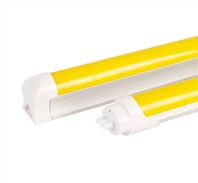
There is also a saying that yellow light with low color temperature has better ability to penetrate rain and fog, so it should be chosen. We do not deny the fact that yellow light is better at penetrating rain and fog than white light. However, we should understand that a large number of roads and street lights work under the condition that sunny days account for most of the time, and rain and fog weather account for a relatively small proportion after all. Choosing a warm color temperature lamp that adapts to rainy and foggy weather is not overwhelming and putting the cart before the horse? In specific occasions, such as foggy port occasions, it is a reasonable way to choose low color temperature lighting fixtures. Ordinary road lighting should choose a color temperature range close to the natural white light of the sun, which is a scientific and energy-saving approach.
Above, we only explained the reason why the color temperature of lighting should be close to natural white light from the recognition and response mechanism of the human brain. Below, we will further analyze this argument from the perspective of color rendering index.
4. The advantages of high color rendering index of natural white light
The natural white light of the sun, after being refracted by the Mitsubishi mirror, can be decomposed into seven kinds of rays of continuous spectrum, such as red, orange, yellow, green, cyan, blue, and purple, with a wavelength of 380nm-760nm. The natural white light of the sun contains a complete and continuous visible spectrum.
The human eye can see an object because the light diverging or reflected from the object enters our eyes and perceives it. The basic mechanism of lighting is to irradiate light onto an object, absorb and reflect it, and then reflect from the outer surface of the object into the human eye, allowing people to perceive the color and appearance of the object. However, if the light of this illumination is only a single color of light, then all we can see are objects with that color. It goes without saying that if the beam of light has a complete continuous light
5. The price of low color rendering index for low color temperature
The sun's rays illuminate the earth from morning to night, and not the sunlight we feel at every moment is necessarily natural white light. Because it is also interfered by the absorption, refraction, and reflection of clouds of varying thickness, the composition and proportions of the various spectral lines that make up natural white light will change. The sunlight in the morning and evening is also severely affected by the heavy clouds, the angle of illumination, and the refraction. Therefore, the color rendering index of the golden sunlight at this time has been far away from 100, and it cannot be regarded as natural white light.
According to Kevlin's definition of color temperature, 2800K-10000K belong to the color temperature range of sunlight, which is the broad definition range of sunlight color temperature. However, only light with a color temperature of 6500K (also known as D65) is set as the standard color temperature of white light, which is also CIE's standard illuminating body D65. The light with a color temperature of 6500K contains the most complete spectrum, which is the closest to natural white light. The farther the light source deviates from the color temperature of natural white light, the lower its color rendering index.
Obviously, the lower the color temperature of the LED, the color rendering index will be lower than the white LED. Under the light of low color rendering index, to see the true original appearance of the object clearly, higher light illuminance is needed to make up for the lack of color rendering index. This means that people have to increase the energy input of the light source in order to obtain the true original appearance close to the object displayed under natural white light.
Practice has proved that the use of a light source close to natural white light only needs far less illuminance than other light sources to allow people to truly perceive the true color and original appearance of the object. Low illumination means low energy input, which means energy saving. Therefore, we recommend using a light source close to natural white light as our lighting source.
Due to LED packaging technology, LEDs mixed with red and yellow pigments have a faster light decay than white LEDs, that is, their luminous intensity must drop faster than white LEDs. The cost of making up for this loss of light intensity is to increase the number of LEDs in the lamp, which means an increase in cost and energy, which is also a helpless result.
6. The price of light intensity drop of low color temperature LED
Due to LED packaging technology, LEDs mixed with red and yellow pigments have a faster light decay than white LEDs, that is, their luminous intensity must drop faster than white LEDs. The cost of making up for this loss of light intensity is to increase the number of LEDs in the lamp, which means an increase in cost and energy, which is also a helpless result.
Light color temperature
7. The inevitability of revising lighting standards
The ultimate goal of lighting is to allow people to obtain the clarity of observation of real images of motion and still life. Nowadays, the emergence of LED lamps with a color rendering index of 70-90 and close to the natural white light of the sun is a good opportunity for us to improve the quality of lighting and reduce energy consumption.
The color rendering index of high-pressure sodium lamps is only 20-30. In the era when it dominated the street light system, in order to achieve the recognition and clarity of observing objects under its light, the only way to achieve the goal was to increase the illuminance value. The "Urban Road Lighting Design Standards" of the Ministry of Construction were formulated under the background of low color rendering index sodium lamps as the dominant lighting source. These standards were originally understandable. However, under the condition that LEDs with high color rendering index are used as lighting sources, this standard is too high. Because, under the high color rendering index LED light source, to obtain the recognition and observation clarity of the real image of the object, it only needs to be far less than the standard required for the illumination of the high pressure sodium lamp. According to our many years of practical experience, only need less than 30% of the illuminance intensity of the Ministry of Construction "Urban Road Lighting Design Standards", you can achieve the same as high-pressure sodium lamps, or even better identification and clarity of the lighting effect.
Using the same illuminance standard as the high-pressure sodium lamp to standardize the LED light source means unnecessary waste of energy. Excessively high-intensity LED lighting may even lead to complaints that the LED lighting is too "glaring"; reducing the intensity of the illumination can not only save energy, but also get a "soft" lighting environment.
For high-pressure sodium lamps and LED lamps, the color rendering index of the two lamps are 2-3 times different, the revision of the illuminance standard is definitely an inevitable outcome. In the case that our country has not implemented changes to the road lighting standards, only the experts who have brought the implementation to the attention of this issue. On the premise of not offending the existing national lighting standards, it is advisable to adopt the low-end value of the standard.
Therefore, the color temperature range of LED lighting fixtures and the selection of lighting standards are closely related to lighting quality, energy saving and consumption reduction. Choosing LED lighting fixtures close to the sun's natural white light color temperature and appropriate lighting standards is a wise, scientific, and energy-saving choice.