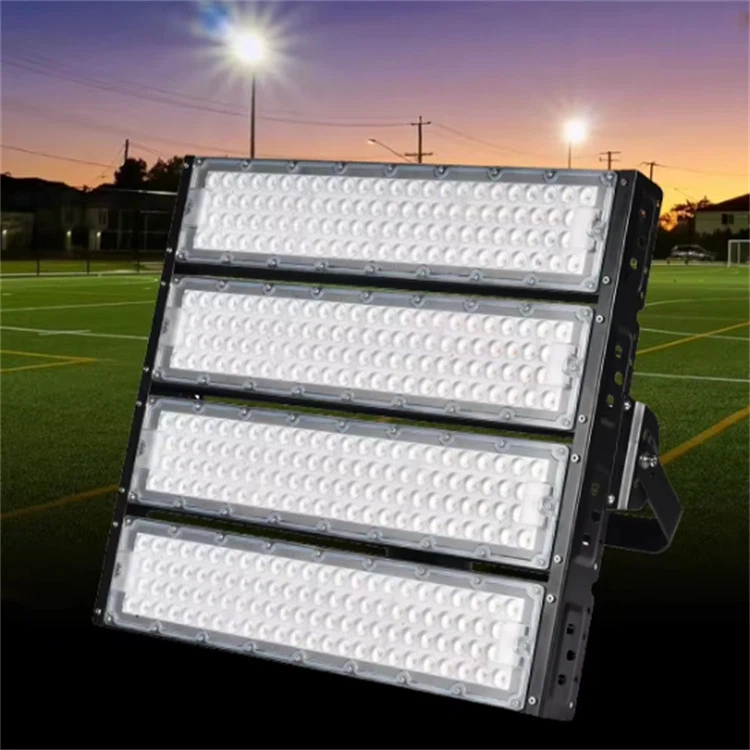
Modern stadiums are imposing buildings made to accommodate big events in a variety of settings. Lighting is an essential part of their infrastructure, and it must function consistently under harsh weather and environmental conditions. Due to their exceptional longevity and durability, as well as their energy economy, LED stadium lights have become the go-to option. In order to ensure dependability in even the most demanding settings, this study investigates the technological and design elements that contribute to the longer lifespan of LED stadium lights as well as how they resist severe weather.
Stadium Lighting's Need for Durability and Longevity
Stadium lighting systems must meet particular requirements.
Operational hours: During maintenance, training, and events, lights frequently operate for long stretches of time.
Environmental exposure: Rain, snow, high temperatures, and corrosive substances are all present in fixtures.
Performance requirements: Player safety, audience satisfaction, and broadcast quality all depend on consistent brightness and colour accuracy.
Conventional lighting systems, such metal halide bulbs, need regular maintenance and have an average lifespan of 6,000–15,000 hours. LED stadium lights, on the other hand, have lifespans of 50,000–100,000 hours, which lowers downtime and replacement expenses. Their ability to withstand harsh weather conditions makes them even more desirable for outdoor settings.
Elements That Increase the LED Stadium Lights' Lifespan
Sophisticated Thermal Control
The biggest threat to LED lifetime is heat. LEDs produce less heat than conventional lamps, however components can deteriorate in extreme heat. Contemporary systems fight this by:
Heat sinks: LED chips' heat is dispersed via copper or aluminium fins.
Thermal interface materials (TIMs): Heat transmission between components is enhanced by thermally conductive pads or pastes.
Active cooling: To maintain ideal temperatures, use fans or, in more severe situations, liquid cooling systems.
LEDs prevent fast lumen degradation by maintaining junction temperatures below 85°C, guaranteeing that they maintain >90% brightness for 50,000 hours.
Superior Components
LED Chips: High-end semiconductors from companies like Osram or Cree provide greater stability and effectiveness (lumens per watt).
Drivers: Sturdy drivers, like Mean Well, control voltage and current to avoid flicker and power spikes. Because they prevent thermal runaway, constant-current drivers have a longer lifespan.
Optics: Sturdy polycarbonate or glass reflectors and lenses preserve the effectiveness of light dispersion.
Effective Electrical Architecture
Surge Protection: Integrated circuits protect against lightning-induced or grid-wide voltage surges.
Power Factor Correction (PFC): Lowers component stress and energy waste.
Intelligent Control Mechanisms
Dimming Capabilities: Thermal stress is decreased by lowering brightness during off-peak hours.
Predictive Upkeep Sensors: Track performance indicators (such as output and temperature) to identify problems before they become serious.
Strict Manufacturing
Quality Control: Reliability is ensured by rigorous testing (ISTMT for thermal cycling, for example).
Modular Design: Repairs may be made without replacing complete fixtures because to interchangeable parts (such drivers).
Weather Resistance: Developing Technologies to Address Environmental Issues
Sealing and IP Ratings
The Ingress Protection (IP) code is used to grade LED fixtures:
IP65: Water jet protection and dust resistance.
IP66/IP67: Able to withstand brief immersion or strong jets.
To do this, you must:
O-rings and gaskets: Silicone seals stop moisture from getting inside.
Welded Joints: Close up housing gaps.
Materials Resistant to Corrosion
Housings: Marine-grade stainless steel or aluminium resists pollution, salt, and humidity.
Coatings: Anodised layers or powder-coated finishes offer rust resistance.
Adaptability to Heat
Operating Range: Thanks to materials with low thermal expansion coefficients, high-quality LEDs can operate in temperatures ranging from -40°C to 50°C.
Circuit boards are shielded from moisture and thermal cycling by conformal coatings.
Resistance to Impact and Vibration
IK Ratings: Fixtures with IK08–IK10 ratings are guaranteed to withstand hits of 5–20 joules (such as hail and debris).
Rubber mounts act as vibration dampeners, absorbing shocks from crowds or wind.
Resistance to Chemicals and UV
UV-Stable Lenses: UV-inhibited polycarbonate avoids brittleness and yellowing.
Chemical Guards: Coatings are used on industrial fixtures to protect them from acidic contaminants.
Examples: LEDs in Harsh Conditions
Qatar's Lusail Stadium
This desert stadium, which will host the 2022 FIFA World Cup, is equipped with copper-core heat sinks and IP66-rated LEDs to withstand sandstorms and temperatures of up to 45°C.
Minnesota's TCF Bank Stadium
The system uses heated drivers to avoid cold-start failures and has been retrofitted with LEDs suitable for -30°C winters.
National Stadium in Singapore
Fixtures with stainless steel housings and conformal-coated PCBs resist corrosion in a tropical environment with 90% humidity.
Issues and Things to Think About
Durability vs. Cost: Long-term benefits are outweighed by the high initial cost of ruggedised designs.
Maintenance Access: Modular designs are required because sealed fittings make repairs more difficult.
Light Pollution: Directional LEDs have to strike a compromise between environmental requirements and glare management.
Upcoming Developments
Heat spreaders made of graphene: increase heat conductivity while lowering weight.
Self-Healing Coatings: These coatings automatically fix small dings or rust.
Solar Integration: LEDs may be used with solar panels and battery storage in off-grid stadiums.
LED stadium lights' long lifespan and resilience to weather are the result of careful engineering, which includes corrosion-proof materials and temperature control. These developments guarantee dependable, excellent illumination while lowering operating and environmental expenses in venues that progressively function in harsh climates. LEDs are revolutionising stadium lighting by fusing smart technology with durability, opening the door for robust, sustainable sports and entertainment infrastructure throughout the globe.