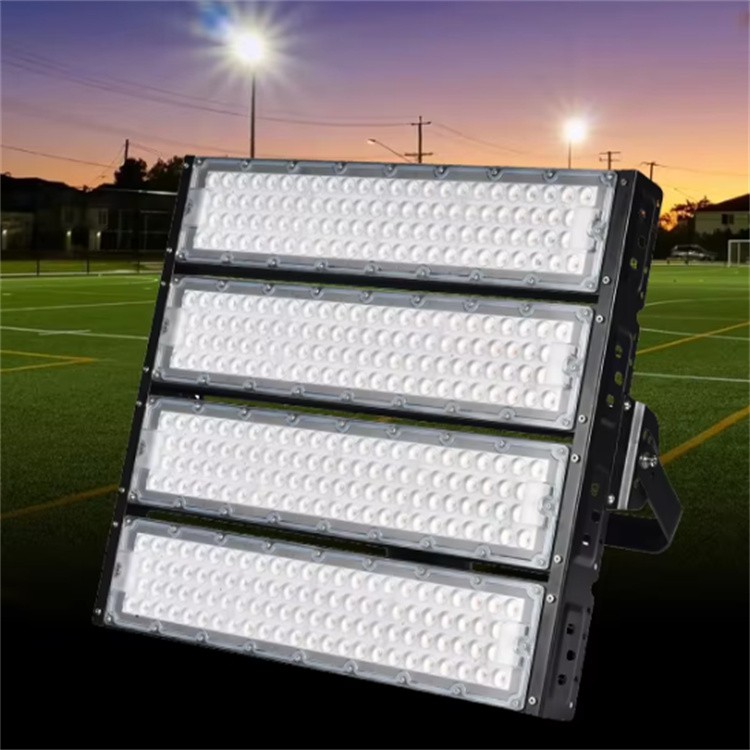
As famous venues for entertainment and sports, stadiums are coming under more and more criticism for their effects on the environment. Metal halide lamps and other conventional lighting systems have long been linked to excessive energy use and light pollution. The use of LED (Light Emitting Diode) technology is a revolutionary step in the direction of sustainability. This article examines how LED stadium lighting reduces carbon emissions and fights light pollution, supporting international initiatives to support environmentally friendly facilities.
LED Technology: An Ecological Development
LEDs and conventional illumination are quite different. They use semiconductors instead of heated filaments or gas to turn power into light more effectively. Among the main benefits are:
Energy Efficiency: Compared to metal halide lights, LEDs use 50–70% less energy.
Longevity: 50,000–100,000 hours as opposed to standard bulbs' 6,000–15,000 hours.
Precision: Waste is reduced by directional light output.
LEDs are essential to sustainable stadium design because of these characteristics.
Cutting Down on Carbon Emissions
Reduced Emissions and Energy Efficiency
LEDs significantly reduce energy consumption. For instance, after converting to LEDs, Atlanta's Mercedes-Benz Stadium's lighting energy use was cut by 60%. If grid dependence on fossil fuels is assumed, this amounts to thousands of metric tonnes of CO₂ averted yearly. Important elements:
Lumens per Watt: LEDs emit 150 lumens per watt of electricity, compared to 50 lumens per watt for metal halide.
Instant Operation: By eliminating idle energy utilisation, there is no warm-up period.
Greater Durability and Less Waste
Lower manufacturing and disposal consequences result from fewer replacements. One LED light fixture that lasts more than ten years lowers:
Resource Extraction: Less raw material is extracted for substitutes.
Landfill Waste: Mercury-containing metal halide lamps provide disposal risks.
Integration of Renewable Energy
LEDs' low power requirements make them a perfect match for solar and wind systems. For example, Taiwan's Taipei Arena achieves near-net-zero lighting operations by using solar panels to offset LED energy demand.
Fighting Light Pollution
Reduced Spill and Directional Lighting
Up to 30% of the brightness of conventional lights is scattered aloft. LEDs direct light downward using optics, as demonstrated by:
Full-Cutoff Fixtures: These fixtures only let light into the stands and field.
Beam Angle Control: Horizontal glare is reduced by narrow angles (10° to 30°).
Smart Systems and Adaptive Controls
LEDs with IoT capabilities change brightness in response to current demands:
Dimming During Downtime: When spaces are empty, lights run at 30% of their full potential.
Event-Specific Profiles: Softer music for concerts, brighter settings for gaming.
Adherence to Dark Sky Guidelines
Warmer colour temperatures (≤3000K) are recommended by groups such as the International Dark-Sky Association (IDA) in order to lower emissions of blue light. These requirements are met while maintaining visibility by LEDs with adjustable spectra, such as Philips' Colour Kinetics.
Case Studies
Munich, Germany's Allianz Arena
The LED façade of this stadium may be illuminated in team colours while still adhering to dark-sky regulations. Adaptive controls safeguard neighbouring ecosystems by reducing spills by 40%.
Los Angeles, USA's SoFi Stadium
Utilising 70,000 LEDs with motion sensors, SoFi, the site of the Super Bowl LVI, reduces energy consumption by 25% and gets rid of skyglow.
Sports Hub in Singapore
Its LED system, which is integrated with solar panels, employs shielding to prevent maritime light pollution and lowers yearly CO₂ emissions by 1,200 tonnes.
Issues and Things to Think About
Blue Light Issues: Early LEDs disturbed animals by emitting too many blue wavelengths. Warmer tones (2700K–3000K) are used in modern fixtures after sunset.
High upfront costs that are mitigated by energy savings over a five to seven-year payback period.
Complexity of Maintenance: Sealed designs improve weather resistance but need for specific maintenance.
Upcoming Developments
Li-Fi Integration: Using LED lights to transmit data in order to lessen dependency on energy-intensive Wi-Fi.
AI Optimisation: Machine learning modifies lights according to weather and population density.
Self-Powered Systems: Off-grid solar-storage hybrids.
LED stadium lighting is essential for balancing environmental responsibility with major events. They raise the bar for environmentally friendly venues by reducing energy use, reducing light pollution, and facilitating the incorporation of renewable energy sources. LEDs will solidify their place in designing environmentally responsible, community-friendly environments as technology develops.