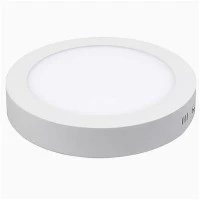
LED panel lights' extended lifespan, elegant design, and energy efficiency have completely changed modern lighting. Although manufacturers frequently advertise lifespans of 50,000 hours or more, actual performance is dependent on a number of variables. By being aware of these factors, users can extend their lifespan and prevent untimely failure. The main factors that affect an LED panel light's lifespan are examined here.
LED Chip Quality
The core of the panel light is the LED chip. Advanced semiconductor materials used in high-quality chips from reliable companies (such as Cree and Nichia) guarantee steady operation and less lumen degradation. Chips of lower quality may deteriorate more quickly, resulting in colour changes or dimming.
The L70 standard, which calculates the time it takes for output to return to 70% of its initial brightness, measures lumen degradation in LEDs. While less expensive chips may stop working after 25,000 hours, high-end chips can stay brilliant for 50,000 to 100,000 hours. Reliability is ensured by purchasing panels with LM-80-tested LEDs, which are approved for lumen maintenance at various temperatures.
Performance of the Driver
The driver serves as the power source for the LED by controlling voltage and current. A badly constructed driver with subpar capacitors or insufficient surge protection may malfunction early and shorten the light's life. Drivers without thermal protection, for example, run the risk of overheating and producing irregular current flow, which strains LEDs.
The best drivers are those with a 10-year lifetime and high efficiency. Features including power factor correction (PFC), steady current output, and adherence to safety regulations (such as UL and CE) should be sought for. Choosing modular designs enables simple repairs without throwing away the complete fixture because drivers frequently fail before LEDs.
Control of Heat
The enemy of LEDs is heat. Overheating speeds up lumen degradation by accelerating electron migration in the semiconductor. Low junction temperatures are maintained via efficient thermal management, which can be achieved with passive cooling designs, heat sinks, or thermal pads.
An LED running at 25°C, for instance, would last 50,000 hours, but at 75°C, its lifespan might be cut in half. Finned aluminium heat sinks improve heat dissipation, but poorly ventilated fixtures retain heat and deteriorate quickly.
Environment of Operation
Lifespan is directly impacted by environmental factors. While humidity or corrosive environments (like coastal locations) can degrade interior components, high ambient temperatures (such those seen in industrial settings) put stress on cooling systems. Heat is insulated and light output is blocked by dust collection.
Select fixtures with the proper IP ratings: IP20 for dry indoor applications, and IP65 for moist settings. Sensitive electronics are protected in severe environments by sealed housings and anti-corrosion coatings.
Patterns of Usage
The lifetime is impacted by prolonged operation or frequent switching. In 24/7 applications, LEDs with a 50,000-hour rating may only last 5–7 years when used 8 hours a day. Solder joint fatigue is brought on by thermal cycling, which is repetitive heating and cooling during on/off cycles. Another factor is dimming: using incompatible dimmers causes electrical stress, whereas operating LEDs at 50% brightness lowers heat and prolongs life.
Quality of Installation
A poorly installed system degrades performance. Poorly ventilated enclosed ceilings retain heat, and unsecured wiring can result in voltage dips or arcing. Observe the mounting height and spacing recommendations provided by the manufacturer. Air should be able to circulate around the panel in suspended installations.
Stability of the Power Supply
Drivers and LEDs are harmed by voltage spikes and variations. Voltage stabilisers or surge protectors are crucial in areas with erratic grids. For instance, driver components can be immediately fried by an abrupt 220V surge in a 110V system.
Upkeep Procedures
Dust accumulation on heat sinks and LEDs is avoided with routine cleaning. Every year, check connections for looseness or corrosion. To prevent cascade failures, replace malfunctioning drivers as soon as possible.
Quality of Manufacturing
Early failures are caused by insufficient quality control, inferior soldering, or inferior materials. Choose brands that have ISO certification and warranties since they demonstrate their belief in the longevity of their products.
Design of Fixtures
Strong temperature control, long-lasting materials (such aluminium alloy), and environmental protection are all integrated into a well-designed fixture. While thin profiles may compromise cooling efficiency, modular designs make part replacement easier.
An LED panel light's lifespan depends on how well user habits, ambient conditions, and component quality are balanced. LED investments may be fully realised by consumers by choosing high-quality items, making sure they are installed correctly, and keeping steady operation conditions. Following these guidelines will guarantee that LED panels continue to be an affordable, environmentally friendly lighting option for many years to come, even as technology develops.