What is 395nm UV Light?
Before we learn about UV395nm, let's first understand the UV spectrum.
The UV spectrum is the band of ultraviolet radiation within the electromagnetic spectrum, with wavelengths ranging from approximately 10 nanometers to 400 nanometers, falling between visible light and X-rays. Based on biological effects and physical properties, it is typically divided into three bands:
UVA (315-400nm): Longest wavelength, strong penetrating power, mainly used for curing, banknote detection, and medical applications.
UVB (280-315nm): Medium wavelength, promotes vitamin D synthesis, and is also the main band causing sunburn.
UVC (100-280nm): Shortest wavelength, highest energy, absorbed by the ozone layer; artificially created UVC is used for sterilization and disinfection.
It's possible that you've heard quite a bit about 395nm UV radiation, but what precisely is it?
The field of study known as photochemistry contains the information necessary to address this issue. When we speak of ultraviolet (UV) light, we are referring to wavelengths between 100 and 400 nanometers. 395 nanometers (nm) is the wavelength that is most frequently utilised for curing dental resin. This is due to the fact that if you examine the spectrum of sunshine, you will notice that there is an excess of energy between the wavelengths of 200 and 400 nm that will successfully cure your resin.
But the thing that we are focusing on in this particular instance is the wavelength. The wavelength of 395 nanometers is ideal for eliminating pathogens including bacteria and germs. UV light with a wavelength of 395 nm is an example of UV light. It is not just any old UV light; rather, it is tailored to our requirements specifically.
Why do we have to make use of ultraviolet light? Why don't we just use the common illumination options like fluorescent or daylight? Now, let's take a more in-depth look at that:
Daylight encompasses a wide range of the visible light spectrum. If you shined a white light on something, different wavelengths of light would be reflected back at you since visible light encompasses all of the colours of the rainbow. The colours red, orange, yellow, green, blue, indigo, and violet are included in this spectrum of wavelengths. Because the sun contains every one of these colours, one would wonder why other sources of light wouldn't be as effective.
The use of natural light presents a challenge due to the fact that the light is not sufficiently focused to eliminate germs and bacteria. In order for us to get the same results, we will need to focus on the light. Fluorescent lights, which likewise have a wide spectrum of visible wavelengths, are not very successful at destroying microbes and germs, despite the fact that they too have a broad spectrum. They only produce a single colour of light, which is typically blue, and as a result, they do not offer us with the appropriate concentration of light that is required to eliminate germs.
What exactly is this UV Light?
UV light is imperceptible to our eyes, but it plays a very significant part in the functioning of the body. We are able to synthesise vitamin D, which contributes to the development of healthy bones and teeth, thanks to the sun's UV radiation. In addition to this, they eliminate bacteria and viruses, which helps prevent skin cancer.
The electromagnetic spectrum contains not only visible light but also infrared radiation, microwaves, radio waves, X-rays, and gamma rays, as well as other types of energy. UV light is a subset of the electromagnetic spectrum.
UV light has a range of wavelengths that spans from 100 nanometers (100 angstroms) to 400 nanometers (400 angstroms). This range of wavelengths is known as the ultraviolet spectrum. This particular wavelength is referred to as UVA, which stands for ultraviolet A. Tannins are produced as a result of its application to the skin.
UVB, often known as ultraviolet B, refers to wavelengths that are longer. Sunburns are almost often the result of exposure to these UV radiation.
UVC, often known as ultraviolet C, refers to wavelengths that are shorter. Although they are not harmful to people, they may cause some polymers to degrade.
It is essential to be aware that, despite the fact that all of these wavelengths are hazardous to human health, the vast majority of individuals are only subjected to UVA and UVB.
The epidermis is responsible for absorbing UVA, which then travels deeper into the dermis and derma, where it can damage DNA. In order to reach the dermal layer, UVB must first break through the epidermis. Once there, it causes damage to the collagen fibres.
Why Do We Use UV Light With a Wavelength of 395nm?
So why would you want to use ultraviolet light with a wavelength of 395 nm? Here are some of the reasons why:
You have an interest in eliminating pathogens and microbes. Germs and other types of microbes find it easiest to thrive in dimly lit environments including basements, restrooms, kitchens, closets, and areas beneath sinks. If you give them enough time to reproduce on their own, they will grow resistant to the antibiotics that are used to treat them.
You should sterilise whatever surfaces you can. Without even being aware of it, we frequently come into contact with surfaces that may harbour germs and other types of microbes. For instance, you could touch a door handle after someone else has already touched it in the same location. It's also possible that you touched a dirty handrail before contacting a clean countertop.
You need to sterilise various pieces of medical equipment. In order to prevent the transmission of infections, medical tools should be cleaned on a regular basis. However, cleaning them too frequently may encourage the growth of bacteria. Because of this, many hospitals clean their medical equipment with ultraviolet radiation (UV light).
You are going to require a blacklight. A blacklight is a type of device that can be used to detect otherwise undetectable chemicals. Blacklights are based on the idea that various types of materials reflect back different colours of light compared to other types of materials. When illuminated with a blacklight, certain substances do not absorb any light, which causes them to look white in this setting. Some of them take in red light, which gives them a pinkish appearance.
How does UV light with a wavelength of 395 nm work?
UV light with a wavelength of 395 nanometers is effective at killing germs and bacteria by damaging their DNA. DNA loses its ability to proliferate when it is damaged. Therefore, if you subject microbes and germs to ultraviolet radiation with a wavelength of 395 nanometers, they will perish.
This process is currently taking place before your very eyes. Take a look at the washbasin you use in the kitchen. It's likely that there are a lot of germs swimming about in that area. You might observe, through the use of a microscope, how they respond when subjected to 395nm UV radiation. When you switch on the light, you will see that the germs immediately begin to shrivel up and fall apart. This happens almost instantaneously.
Do not be concerned about what becomes to the water that is left in the washbasin while you are pondering this question. In the same way as bacteria do, water molecules are able to absorb UV radiation. And because water is see-through, you won't have any trouble observing the outcomes of your experiment.
The following experiment is one that you can try out if you are interested in learning how long it takes to eradicate infectious bacteria and germs. After adding a few drops of food colouring to some water in a glass, cover the surface of the liquid with a piece of paper towel. Turn on the 395nm UV light, and observe the gradual transformation in colour. You'll notice that the colour has totally vanished in fewer than ten seconds' time.
Is UV Light with a 395nm Wavelength Safe?
Yes, human beings can be exposed to UV light of 395nm. Having said that, if you work in a hospital, you are required to wear protective clothes and eye protection at all times.
The Food and Drug Administration has given its approval for the use of 395nm UV light for disinfecting purposes. It further states that the use of UV lights with wavelengths below 400 nm, which fall within the visible range, does not put humans at risk.
UV light with a wavelength of 395 nanometers does not immediately harm individuals. In point of fact, it has been utilised in a risk-free manner for several decades in a variety of contexts, including hospitals.
However, the brightness of the light may be bothersome to certain people. According to the findings of a study that was completed and published in 2003, prolonged exposure to high-intensity UV light caused the skin to become red and swollen.
Why Should I Use UV Light with a Wavelength of 395nm?
There are two primary factors to consider when deciding whether or not to employ 395nm UV lights as an alternative to more conventional germicidal approaches. To begin, their usefulness cannot be overstated. Second, they offer greater protection.
They're More Efficient In Their Work
UV radiation with a wavelength of 395 nm is more effective at killing bacteria and viruses than more conventional germicidal approaches. This translates into a reduced amount of time spent cleaning and disinfecting your house or place of business.
They present less risk.
When you clean and disinfect surfaces with traditional methods, you run the risk of spreading germs and other types of pathogens throughout your house or place of business. These bacteria and microbes have the potential to cause major problems with one's health.
If you touch a dirty surface, like the handle of a door, for instance, you run the risk of transferring germs from that surface onto your hands. After that, you are free to introduce those bacteria to any part of your body, including your mouth, nose, eyes, or even your vagina. That is why it is essential to use UV light with a wavelength of 395 nm. It enables you to eradicate pathogens before they have the opportunity to multiply.
One Last Thought...
You now know the answer! Everything you need to know about UV lights with a wavelength of 395nm, including the reason why this is the greatest UV wavelength currently available. It is the most effective method for eliminating microorganisms and can also be used as a blacklight. We really hope this was helpful!
Features:
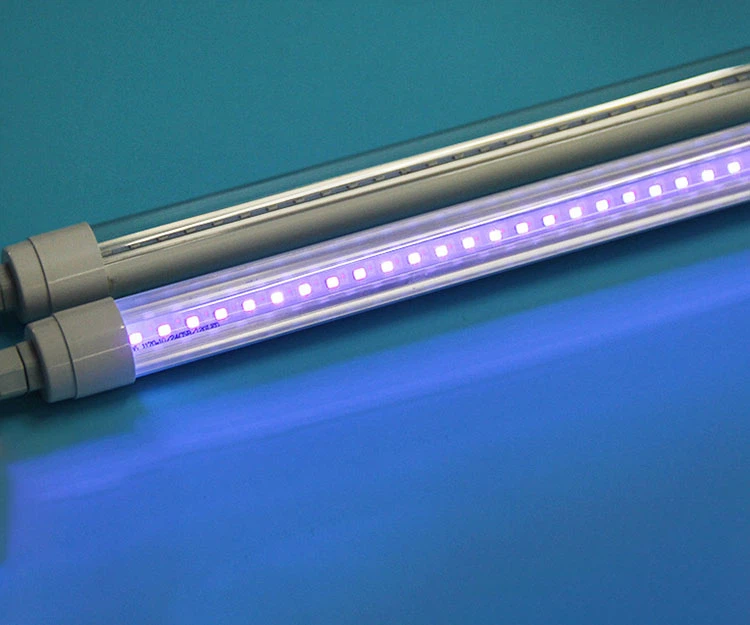
● Length: 0.3m, 0.6m, 0.9m,1.2m for options
● Wavelength: 365nm, 395nm for options
● Cord length: 1.2m, 1.5m, 1.8m, 2.4m for options
● Plug: US, EU, UK plugs for options
Specification:
| Product Name | 395nm UV light tubes |
| Wavelength | 395nm |
| Power | 5 Watt |
| Power Supply | AC85V-265V |
| Luminous Efficacy(lm/w) | 80 |
| Color | White |
| Lifespan (hours) | 20000 |
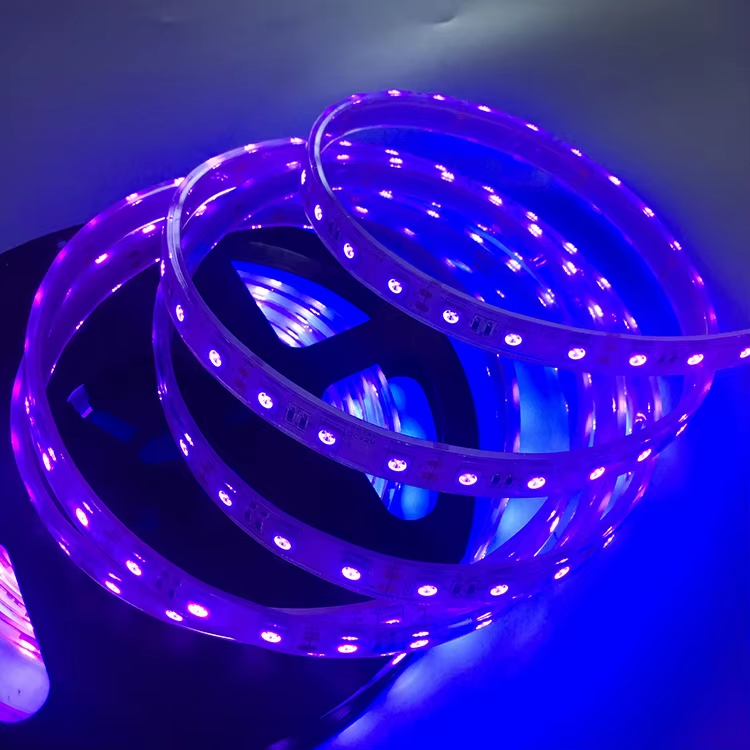
UV Strip light
Applications