What is the difference between edge-lit and back-lit LED panels?
A row of LEDs that are fixed to the panel's frame (or perimeter) and shine horizontally into a light-guide plate (LGP) make up an edge-lit LED panel. Through the use of a diffuser, the LGP focuses light downward into the area below. Side-lit panels are another name for edge-lit panels.
An array of LEDs mounted on a horizontal plate and directed vertically downward through a diffuser into the area to be lit makes up a back-lit LED panel. Direct-lit panels are another name for back-lit panels.
Are back-lit or edge-lit LED panels preferable?
Both designs have benefits and shortcomings. The first panels to be mass-produced were edge-lit ones.
For a number of reasons, the edge-lit design was utilised initially.
To diffuse the light very evenly and reduce the possibility of bright spots, employ a light-guide plate (LGP). The best LGPs are constructed from acrylic (PMMA), which has a very high light transmission rate and does not deteriorate over time.
Low-cost materials can be used in the diffuser as long as they don't turn dingy with age because the LGP means that it's not just the diffuser's job to disperse the light equally.
The edge-lit design works well with a number of different LED beam angles and doesn't require any lenses.
The rear may be lightweight and won't become hot because heat from the LED chips is drained via the frame, allowing the driver to be put here if necessary.
Some producers introduced inferior materials and assembly techniques that had an influence on the quality of edge-lit panels in an effort to lower their price. This mainly involved the LGP. Some manufacturers now employ polystyrene (PS) LGPs, but if UV stabilisers are not applied, these will age yellow and the panel will become dull in the centre while remaining brilliant on the outside. PS also transmits light at a lesser percentage than PMMA.
Back-lit LED panels have been made possible by technological advancements.
Since LEDs are now more energy-efficient, the side-lit design's intrinsic thermal advantage has diminished but is still present.
Modern adhesives enable lenses to be securely connected to each LED to generate an even light distribution without running the risk of falling off, which was a flaw with certain older and less expensive back-lit panels. Lens production has become more affordable.
The dual action of the LGP/diffuser combo is no longer necessary as micro-prismatic diffusers have become more widespread, affordable, and efficient.
Back-lit panels have a reputation for being more efficient because cheaper edge-lit panels employed LGPs with low light transmission. This is because back-lit panels completely do away with the LGP.
Back-lit panels are currently accepted by the lighting industry almost as readily as edge-lit panels. Both designs are currently available in our product line at NVC, however we have decided that edge-lit is somewhat superior. This is because the driver can access the rear of the panel the easiest, and because we provide 5 and 7 years of warranties, we care that the driver stays as cool as possible.
What drawbacks exist with inexpensive back-lit LED panels?
Back-lit panels can be produced rather cheaply because they lack LGP. As a result, several manufacturers advertise back-lit panels as a cheap alternative.
What to watch out for is this.
Use of too few LEDs. A low number of LEDs (usually 36 or less) means that a high current must be used to drive them in order to produce the required light output. This is less effective than designs utilising more LEDs (LEDs operate most effectively at low driving currents), produces more heat, reduces the lifespan of the LEDs, and hastens the brightness degradation.
body made of plastic. Metal bodies are used in the better back-lit panels. Compared to a (less expensive) plastic body, this is a better heat sink. LEDs produce some heat, which must be removed if their lifespan is not to be further lowered.
Not overlapping dispersion of light. Each LED is individually lensed in a high-quality back-lit panel, and the lenses are created so that the light from each LED crosses over the light from its neighbours. In the case that one LED fails, this will result in an even lighting effect and some resilience. Low LED count and poor lens design are likely to reduce LED overlap and raise the possibility of bright and dark areas on the fitting's front.
Are the lenses positioned securely? Only time will tell, however there is a chance that the lenses will come out due to the heat produced by the LEDs and improper application of cheap adhesive. Uneven lighting distribution and sometimes glare will result.
Integrated driver. By integrating the driver into the body, manufacturers can reduce costs, but this has several disadvantages. There will not be any emergency or dimming choices, and it cannot be changed in the event of an issue. It is a fairly rigid strategy.
Verify the frame's corners. There will be a visible unattractive joint on the less expensive panels.
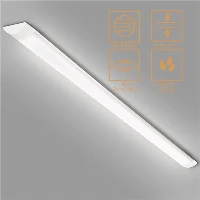
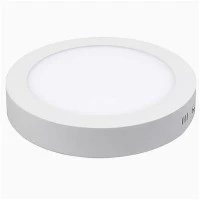
UGR 19 features LED panels that are edge- and back-lit.
Feature:
● Ultra Slim Diesign
● Contemporary & Elegant Design
● Higher Light Transmission Rate
● Exterior shell,cannot easily damaged
● No infrared,does not attract flies
● Easy to install
● No Lead or mercury content hence Environment friendly
● Dimmable options available in selected models
Specification:
| Product Name | Backlit Panel Light |
| Power | 36W 40W 48W |
| Rated Voltage | 185-265V/220-240V |
| CCT | 2700K-6500K |
| CRI | 95 |
| Power Factor | >0.9 |
| Body Material | Aluminum |
| Life span | 50000hrs |
| Warranty | 5years |