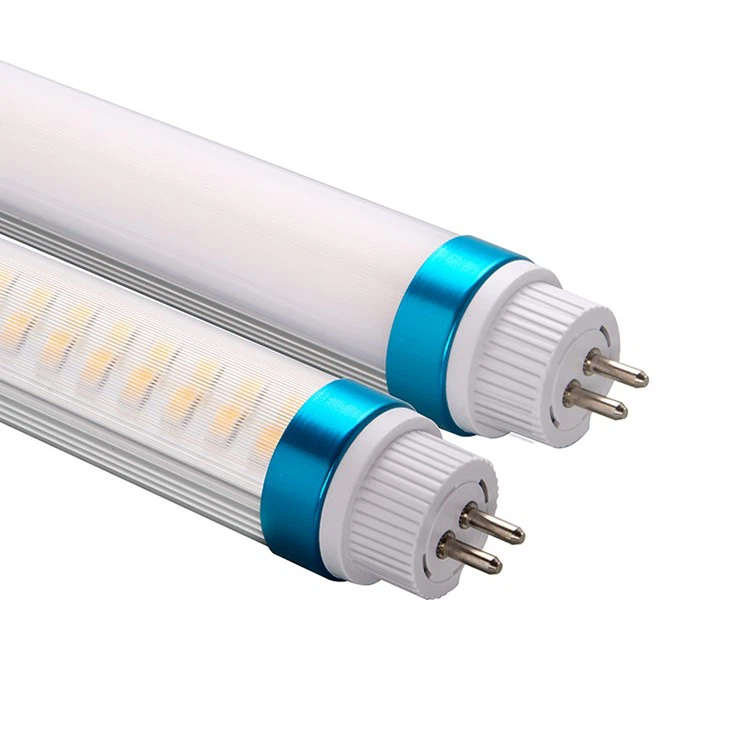
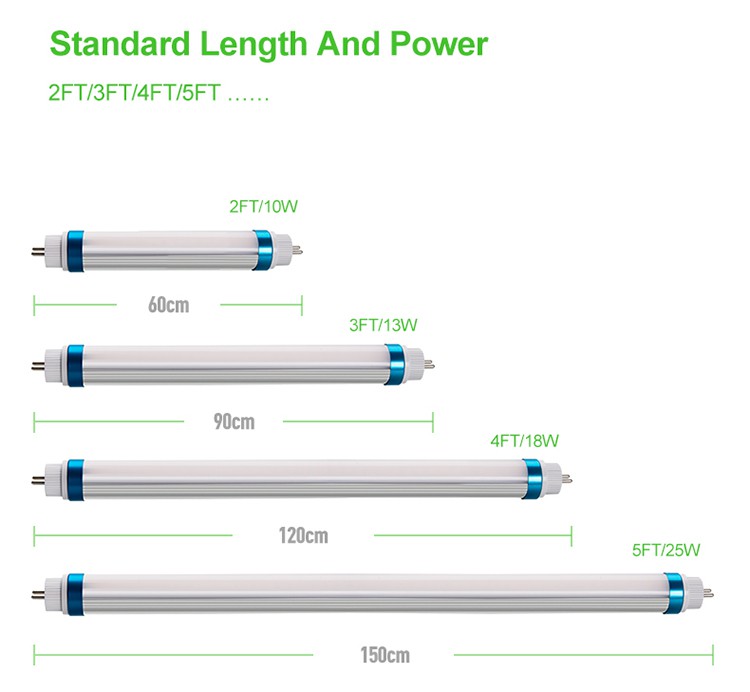
The two most common types of tubes used in LED lighting are T5 and T6. However, there are some important differences between the two.
The primary difference is size. T5 tubes have a diameter of 5/8 inch, whereas T6 tubes have a larger diameter of ¾ inch. This may not seem to be a significant alteration; nonetheless, it has the capacity to affect both the amount and quality of the light created.
T5 tubes are more energy efficient than T6 tubes because they need less energy to operate. This is owing to T5 tubes' reduced size. Furthermore, they have a longer lifespan, with an average of roughly 30,000 hours of use, as opposed to 20,000 hours for T6 tubes.
Another notable difference between T5 and T6 tubes is the kind of ballast required for each type. T5 tubes typically need electronic ballasts, but T6 tubes may use either electronic or magnetic ballasts. Ballasts govern the flow of electricity to the tube by controlling the flow of power. Because electronic ballasts are frequently more effective and have a longer lifetime than magnetic ballasts, T5 tubes are generally thought to be more energy-efficient and have a longer lifespan overall.
T5 tubes are often regarded to be brighter than T6 tubes, with more lumens per watt. This is due to T5 tubes' greater lumen density ratio. As a consequence, T5 tubes may produce more light with less energy than T6 tubes.
Additionally, there is the issue of colour temperature to consider. T5 and T6 tubes are available in a number of colour temperatures, including warm (2700K) and cold (6500K). T5 tubes, on the other hand, often provide a wider range of colour temperature options than other choices.
In general, your specific illumination needs will dictate whether you use a T5 or T6 tube. T5 tubes may be the perfect choice for you if you want a tube that is not only more energy-efficient but also brighter, lasts longer, and is easy to install. If, on the other hand, you want a tube that is not just larger but also capable of generating a broader range of hues and is compatible with both electrical and magnetic ballasts, a T6 tube is a better option.