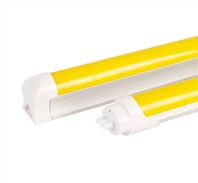
When it comes to lighting your home or business, there are many options available to you. Two popular choices are track lighting and rail lighting, but what is the difference between the two?
Track lighting is a popular choice for both residential and commercial spaces. It consists of a track mounted to the ceiling or wall, with adjustable fixtures that can be moved along the track to direct light where it is needed. Track lighting can be used to highlight specific areas or objects, and is a great choice for accent lighting or task lighting.
Rail lighting, on the other hand, is a more versatile option. Rather than a straight track, rail lighting consists of a flexible rail that can be shaped and bent to fit any space. Like track lighting, rail lighting fixtures can be moved along the rail to direct light where it is needed. The flexibility of rail lighting makes it a popular choice for curved or irregular spaces, or for creating unique lighting designs.
Both track and rail lighting offer a range of customization options, with fixtures available in a variety of styles and finishes to match any decor. However, there are some differences to consider when choosing between the two. Track lighting is generally easier to install and is a good choice for spaces with a more consistent layout. Rail lighting, while more flexible, can be harder to install and may be more expensive than track lighting.
When deciding between track and rail lighting, consider the overall design and layout of your space. If you have a straightforward layout and simply need to highlight specific areas, track lighting may be the best choice. However, if you have a more complex space with irregular shapes or curves, or if you want to create a more unique lighting design, rail lighting may be the way to go.
Ultimately, the choice between track and rail lighting comes down to your personal preference and the specific needs of your space. Both options offer versatile and customizable lighting solutions that can enhance any room or space.
When it comes to lighting your home or business, there are many options available to you. Two popular choices are track lighting and rail lighting, but what is the difference between the two?
Track lighting is a popular choice for both residential and commercial spaces. It consists of a track mounted to the ceiling or wall, with adjustable fixtures that can be moved along the track to direct light where it is needed. Track lighting can be used to highlight specific areas or objects, and is a great choice for accent lighting or task lighting.
Rail lighting, on the other hand, is a more versatile option. Rather than a straight track, rail lighting consists of a flexible rail that can be shaped and bent to fit any space. Like track lighting, rail lighting fixtures can be moved along the rail to direct light where it is needed. The flexibility of rail lighting makes it a popular choice for curved or irregular spaces, or for creating unique lighting designs.
Both track and rail lighting offer a range of customization options, with fixtures available in a variety of styles and finishes to match any decor. However, there are some differences to consider when choosing between the two. Track lighting is generally easier to install and is a good choice for spaces with a more consistent layout. Rail lighting, while more flexible, can be harder to install and may be more expensive than track lighting.
When deciding between track and rail lighting, consider the overall design and layout of your space. If you have a straightforward layout and simply need to highlight specific areas, track lighting may be the best choice. However, if you have a more complex space with irregular shapes or curves, or if you want to create a more unique lighting design, rail lighting may be the way to go.
Ultimately, the choice between track and rail lighting comes down to your personal preference and the specific needs of your space. Both options offer versatile and customizable lighting solutions that can enhance any room or space.