What Key Points Should You Know When Choosing Industrial-Grade High-Temperature LED T8 Tubes for Tropical Countries?
In tropical countries with year-round high temperatures, high humidity, and strong ultraviolet radiation, ordinary LED T8 tubes often experience light decay, burnout, and high maintenance costs. What exactly is an industrial-grade high-temperature LED T8 tube? Why can it adapt to the extreme tropical environment? What pitfalls should be avoided in selection and use? Today, we will thoroughly explain it with professional knowledge and real data to help you choose the right tube and avoid wasting money!
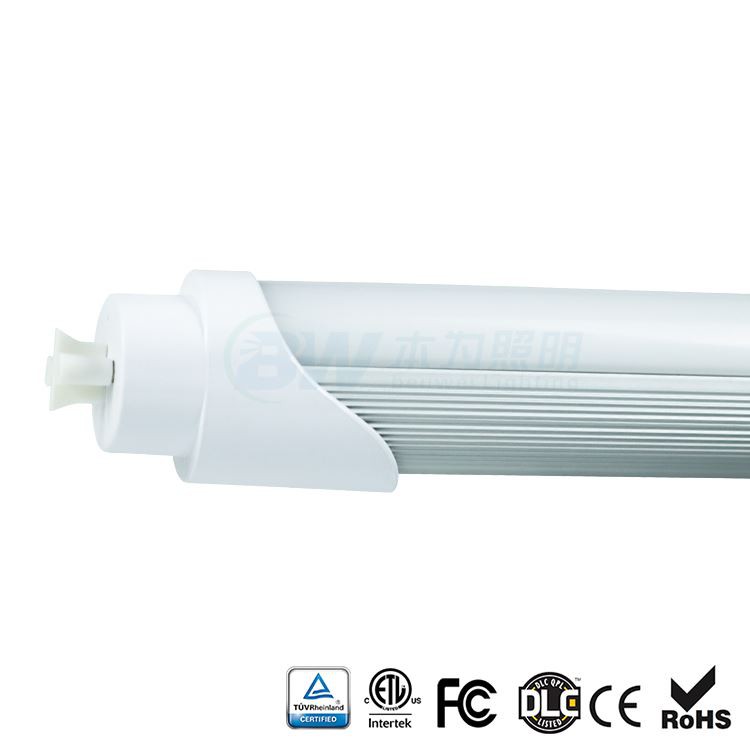
1. First, Understand: Is There an Essential Difference Between Industrial-Grade High-Temperature LED T8 Tubes and Ordinary LED T8 Tubes?
Many customers mistakenly believe that "high-temperature LED" is just an "enhanced version" of ordinary LED. In fact, they are completely different in core technology and material selection. Especially industrial-grade products adapted to tropical environments, every parameter has been specially optimized. For specific differences, refer to the professional comparison table below, where data speaks more intuitively:
|
Comparison Dimension (Professional Parameters) |
Industrial-Grade High-Temperature LED T8 (Tropical-Adapted Model) |
Ordinary LED T8 (Normal Temperature Model) |
Failure Performance in Tropical Environment |
|
Rated Ambient Temperature (Ta) |
50℃~80℃ (Mainstream 65℃) |
≤40℃ |
For ordinary models, light decay reaches 30%+ within 3~6 months, and the driver burns out |
|
LED Chip Substrate Material |
Ceramic Substrate (High Temperature Resistance, Moisture Resistance) |
Resin Substrate |
Resin softens at high temperatures, leading to LED chip desoldering and short circuits |
|
Driver Temperature Resistance/Specification |
105℃ High-Temperature Electrolytic Capacitor, AC85~265V Wide Voltage |
85℃ Ordinary Capacitor, AC170~240V Narrow Voltage |
Frequent flickering when voltage fluctuates, driver life shortened to within 3 months |
|
Heat Dissipation Structure/Thermal Conductivity |
6063 Aviation Aluminum Profile + Fins, ≥1.8W/(m·K) |
Plastic/Thin Aluminum Shell, ≤1.0W/(m·K) |
Heat accumulation, the tube shell becomes hot, accelerating light decay |
|
Protection Level (IP) |
IP65~IP67 (Full Dustproof, Rainproof, Salt Spray Resistant) |
IP20~IP40 (Dustproof Only, Not Waterproof) |
In high humidity/salt spray environments, circuit water ingress and metal corrosion cause short circuits |
|
Lampshade Material/UV Resistance |
High Borosilicate Glass/UV-Resistant PC (No Yellowing for 3 Years) |
Ordinary PC Lampshade |
Yellowing within 6 months under strong UV irradiation, light transmittance drops to below 50% |
|
Service Life (Tropical Environment) |
50,000 Hours+ (Actually 5~8 Years Maintenance-Free) |
8,000~15,000 Hours (Actually Need Replacement Every 1~2 Years) |
Frequent replacement, doubling labor and consumable costs |
2. Core Question: What Parameters Are "Must-See" When Choosing High-Temperature LED T8 for Tropical Countries?
For tropical users, the key to choosing the right tube is "adapting to extreme environments" rather than just brightness. The following 3 core professional parameters are indispensable, with specific selection standards and data references:
2.1.Temperature Parameter: Ta≥50℃ is the Bottom Line, 65℃ is More Reliable
The annual ambient temperature in tropical countries is 35℃~45℃, and the internal temperature of iron sheet workshops and closed warehouses can reach 55℃+. Ordinary LED T8 (Ta≤40℃) will fail quickly due to "high-temperature overload". Industrial-grade products must clearly mark "rated ambient temperature Ta=50℃/65℃/80℃", among which the 65℃ model is suitable for most tropical scenarios, and the 80℃ model is suitable for special high-temperature areas such as drying rooms and ovens.
2.2.Protection Level: IP65 as the Starting Point, IP67 is a Must for Coastal Areas
The humidity in tropical areas is 80%~95% all year round, and there is also salt spray erosion in coastal countries. The protection level directly determines the service life of the tube:
- Indoor Dry Workshops/Warehouses: IP65 (Dustproof, Rainproof Spray), which can cope with daily humidity
- Outdoor/Coastal/High Humidity Areas: IP67 (Dustproof, Rainproof, Temporary Water Immersion), which can resist salt spray corrosion and avoid circuit short circuits
2.3Driver Specification: Wide Voltage AC85~265V, Reject Narrow Voltage Models
The power grid in most tropical countries is unstable (such as some areas in Southeast Asia and Africa, with a voltage fluctuation range of 160V~240V). Narrow voltage LED T8 (AC170~240V) will flicker frequently and burn out the driver. Wide voltage models can adapt to different power grids of 110V/220V/230V, and can still work stably when the voltage fluctuates, which is a "necessary configuration" in tropical areas.

3. Practical Tips: How Much Cost Can You Save by Using High-Temperature LED T8 in Tropical Areas? (Data Tested)
Many customers are worried that the unit price of industrial-grade high-temperature LED T8 is higher than that of ordinary models, but from the perspective of long-term use, the advantages of energy saving and low maintenance can quickly recover the price difference. The specific cost comparison is as follows (taking 1.2m tube, 12 hours of use per day, and the average industrial electricity price in tropical areas of 0.8 yuan/kWh as an example):
|
Product Type |
Power |
Annual Power Consumption (kWh) |
Annual Electricity Fee (Yuan) |
Annual Maintenance Times |
Annual Maintenance Cost (Yuan) |
Annual Total Cost (Yuan) |
|
Industrial-Grade High-Temperature LED T8 |
16W |
70.08 |
56.06 |
0 (5 Years Maintenance-Free) |
0 |
56.06 |
|
Ordinary LED T8 |
18W |
78.84 |
63.07 |
2 Times |
80 (Including Labor + Consumables) |
143.07 |
|
Traditional Fluorescent Lamp (40W) |
40W |
175.2 |
140.16 |
4 Times |
160 |
300.16 |
Conclusion: The annual total cost of industrial-grade high-temperature LED T8 is only 39% of that of ordinary LED T8 and 19% of that of traditional fluorescent lamps. The price difference can be recovered in 3~6 months, and a lot of costs can be saved in long-term use.
4. Pitfall Reminder: Don't Step on These 3 Mistakes When Choosing High-Temperature LED T8 in Tropical Areas!
- Mistake 1: "Marked as high-temperature resistant means industrial-grade" - Guard against "false propaganda". You must check the Ta (rated ambient temperature) parameter. Models with Ta<50℃ are all ordinary models and will definitely fail when used in tropical areas;
- Mistake 2: "Only focus on brightness, not heat dissipation" - In tropical environments, heat dissipation is more important than brightness. Tubes without aluminum fins and with plastic heat dissipation will experience rapid light decay even if they are bright;
- Mistake 3: "Ignore certification" - For tropical countries, you need to choose products with CE and RoHS certifications, as well as local certifications of the target country (such as Thailand TISI, Indonesia SNI), to avoid failure to pass customs or lack of after-sales guarantee.
5. Summary: Industrial-Grade High-Temperature LED T8 is the Optimal Solution for Lighting in Tropical Countries
Industrial-grade high-temperature LED T8 tubes, with the core advantages of high temperature resistance, moisture resistance, wide voltage stability, and long service life, perfectly solve the pain points of ordinary tubes in tropical countries such as "easy to break, high power consumption, and high maintenance". Choosing the right product (recognizing Ta≥50℃, IP65+, wide voltage) can not only ensure stable lighting but also greatly reduce costs. It is a standard choice for tropical industrial workshops, warehouses, outdoor and other scenarios.