Where Sunlight Saves the Night-Blooming Bright, Wire-Free, and Wildly Wonderful
As dusk paints the sky in soft hues of pink and purple, something magical happens in gardens around the world. Without a flick of a switch or a hum of electricity, tiny beacons begin to glow-petals of light unfurling, paths shimmering, and borders coming alive with gentle radiance. These are solar garden lights: quiet, clever, and full of charm, they turn ordinary gardens into nighttime wonderlands using nothing but the power of the sun. More than just decorative trinkets, they're symbols of sustainability, blending beauty with eco-consciousness to prove that lighting up the night doesn't have to cost the earth. From whimsical fairy lights twinkling in shrubbery to sturdy path lights guiding footsteps, solar garden lights have reimagined how we experience our outdoor spaces after dark, turning gardens into 24-hour havens where nature and technology dance in perfect harmony.
Solar garden lights are a marriage of simplicity and ingenuity, working with the sun's rhythm to brighten the night. At their core, each light holds a small but mighty secret: a photovoltaic (PV) panel that soaks up sunlight during the day, converting it into electricity stored in a rechargeable battery. As darkness falls, a light sensor triggers the battery to power an LED bulb, casting a warm or cool glow that lasts well into the night. It's a beautifully efficient cycle-no wires, no plugs, no monthly bills, just sunlight transformed into light, day after day. Early solar garden lights, though pioneering, had their limitations: dim bulbs, short runtime, and clunky designs that often felt more functional than beautiful. But over the past decade, advancements in technology have revolutionized them. Modern PV panels are smaller yet more efficient, capturing sunlight even on cloudy days. Rechargeable batteries, often lithium-ion, store more energy and last longer, keeping lights glowing for 8–12 hours after sunset. LEDs, or light-emitting diodes, have replaced dim incandescent bulbs, offering brighter light in a spectrum of colors-warm white for cozy evenings, cool white for crisp illumination, or even soft pastels that mimic fireflies. These upgrades haven't just made solar garden lights more reliable; they've turned them into design statements, with styles ranging from minimalist stake lights to intricate lanterns, fairy string lights, and even solar-powered fountains that glow as they flow.
What makes solar garden lights truly special is how they transform the feel of a garden after dark. A daytime garden is a feast for the senses-blooms in vibrant hues, the rustle of leaves, the buzz of bees-but nighttime brings a different kind of magic, one that solar lights enhance rather than overpower. Imagine stepping into your garden at dusk: as the sky darkens, tiny lights along the path flicker to life, guiding your steps without harsh glare. A solar-powered lantern hangs from a tree, casting dappled light on a wooden bench, inviting you to sit and listen to crickets. String lights drape over a pergola, their soft glow highlighting climbing roses that release their fragrance as the air cools. This isn't just illumination-it's ambiance, creating spaces that feel intimate, peaceful, and alive. Unlike traditional wired lights, which require careful planning to hide cords or avoid damaging plants, solar garden lights offer freedom. You can tuck a stake light beside a new sapling, hang string lights in a tree without drilling, or move a lantern to light up a late-blooming flower bed-all without worrying about outlets or wiring. This flexibility lets gardeners and homeowners design their night gardens as freely as they do their daytime ones, adapting to the changing seasons and the growth of their plants.
Beyond beauty, solar garden lights play a quiet role in supporting wildlife, turning gardens into nighttime sanctuaries for creatures that thrive after dark. Many modern solar lights use warm, low-intensity LEDs that don't disrupt the natural rhythms of birds, bats, and insects. Unlike bright floodlights that can confuse nocturnal animals, these gentle lights guide pollinators like moths to night-blooming flowers, such as moonflowers or evening primroses, helping them feed and pollinate. Bats, which rely on darkness to hunt mosquitoes, benefit from solar lights that don't create harsh shadows or disorienting glare. Even birds nesting in shrubs find safety in the soft glow, as it helps them spot predators without exposing them to excessive light. Gardeners like Thomas Wright, who tends a wildlife-friendly garden in Oregon, have noticed the difference. "I switched to solar lights three years ago, and the change was remarkable," he says. "Moths started visiting my night-blooming jasmine in droves, and I've seen more bats at dusk than ever before. The lights don't scare them away-they complement the garden's ecosystem. It's like the garden comes alive in a whole new way after dark." Solar lights also avoid the light pollution that plagues urban areas, allowing stars to shine brighter and creating a connection to the night sky that's increasingly rare in cities.


The environmental benefits of solar garden lights are impossible to ignore, making them a small but powerful choice for sustainable living. Traditional garden lights rely on electricity from the grid, much of which comes from fossil fuels like coal or natural gas, contributing to carbon emissions and climate change. Solar lights, by contrast, run on energy from the sun-a renewable resource that produces no pollution or greenhouse gases. Over their lifespan, a single solar garden light can save hundreds of kilowatt-hours of electricity, reducing both utility bills and environmental impact. Even the materials used in modern solar lights are becoming more eco-friendly: manufacturers now use recycled plastics for casings, and some offer take-back programs to recycle old panels and batteries. For homeowners looking to reduce their carbon footprint, solar garden lights are an accessible step-no major installation required, just placing lights in sunny spots and letting them work their magic. This accessibility has made them popular in community gardens too, where volunteers use solar string lights to illuminate shared gathering spaces, hosting evening workshops or potlucks without increasing the garden's energy costs.
Technological advancements continue to make solar garden lights more efficient and versatile, opening up new possibilities for night gardening. One key innovation is improved battery technology. Early solar lights often used basic nickel-cadmium batteries that faded quickly, especially in cloudy weather, but modern models use lithium-ion or nickel-metal hydride batteries that store more energy and last longer-some can stay lit for 12–16 hours on a full charge, even after a cloudy day. PV panels have also gotten better: thinner, more flexible, and more efficient at converting sunlight into electricity, they work even in partial shade, making solar lights viable for gardens with trees or tall shrubs. Smart features are another frontier. Some solar garden lights now include motion sensors, brightening temporarily when someone approaches a path before dimming back to a soft glow, saving energy while enhancing safety. Others have timers or remote controls, letting users set lights to turn on at sunset or dim during certain hours. There are even solar lights with built-in Bluetooth speakers, playing soft music as you enjoy your garden, or color-changing LEDs that shift hues to match the season-warm oranges for autumn, cool blues for winter. These innovations aren't just about convenience; they're about making solar garden lights fit seamlessly into how we live, work, and relax outdoors.
The stories of people whose lives have been touched by solar garden lights highlight their emotional impact, turning ordinary moments into cherished memories. For Maria and Juan Carlos, a retired couple in Arizona, their solar-lit garden has become a gathering spot for family. "Our grandchildren love visiting in the evening now," Maria says. "They chase fireflies under the string lights, and we sit on the patio, watching the garden glow. Before, we rarely used the garden after dark because the wired lights were too dim or we forgot to turn them on. Now, the solar lights come on automatically, and it feels like the garden is welcoming us home every night." For others, solar garden lights mark milestones. A young couple in New York used solar string lights to decorate their backyard for their wedding, choosing them not just for their beauty but for their meaning. "We wanted our day to be as sustainable as possible," the bride explains. "The solar lights felt perfect-powered by the sun, no waste, and they looked magical. Our guests kept talking about how cozy and intimate the garden felt, all lit up by those little lights. It's a memory we'll carry forever." Even small moments-a late-night stroll to check on a sick plant, a quiet cup of tea under a lit tree, or a child's delight at seeing their favorite flower glowing in the dark-are made sweeter by the gentle light of solar garden lights.
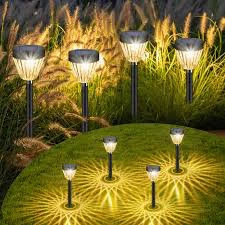


Looking to the future, solar garden lights are poised to become even more integrated with nature and technology, blurring the line between function and art. Researchers are developing solar panels that look like leaves or petals, allowing lights to blend seamlessly into plants. Imagine a rose bush with solar "blossoms" that absorb sunlight by day and glow softly by night, or a hedge where each leaf-shaped panel powers a tiny light, turning the entire bush into a glowing wall. Battery technology will continue to improve, with longer lifespans and faster charging, even in low light. Smart features will become more intuitive, with lights that learn from user habits-brightening when kids are playing, dimming when it's time for quiet, or syncing with weather apps to store extra energy before a storm. Sustainability will remain a focus, with more brands using biodegradable materials or designing lights that can be easily repaired, reducing waste. There's also potential for solar garden lights to connect with community projects, such as neighborhood gardens that share excess solar energy to power lights in public parks, or schools using solar garden lights as teaching tools, showing students how renewable energy works while beautifying outdoor spaces.
In the end, solar garden lights are more than just gadgets-they're a celebration of harmony: between technology and nature, light and darkness, sustainability and beauty. They remind us that even small choices, like swapping out wired lights for solar ones, can have a ripple effect, making our homes more joyful, our gardens more alive, and our planet a little healthier. They turn night into a time to cherish the garden, not just retreat from it, inviting us to slow down, connect with nature, and find magic in the quiet moments after sunset. Whether you're a seasoned gardener, a busy parent, or someone who simply loves the outdoors, solar garden lights offer a simple pleasure: the ability to step outside at night and see your garden in a new light-one that's powered by the sun, designed with care, and full of possibility. So the next time you see a solar garden light glowing in the dark, take a moment to appreciate it. It's not just a light-it's a little piece of sunlight saved for the night, a reminder that even in darkness, there's beauty, life, and hope. And in that glow, you might just find your own garden's nighttime magic, waiting to be explored.