When choosing eye-protection LED lights, you need to focus on key indicators such as light source quality, flicker control, blue light hazards, color rendering and light comfort. The following is a scientific purchase guide:
I. Core standards of eye-protection LED lights
1. No flicker ( key Factor !)
Hazard: Flicker can cause visual fatigue and headaches, especially for children and sensitive people.
Detection method:
Point the mobile phone camera at the light, and if there are ripples on the screen, there is flicker.
Choose products marked "no visible flicker" or "high-frequency dimming (>3125Hz)".
Recommended technology: DC power supply (DC) or high-quality constant current driver chip.
2. Low blue light hazard (RG0 level)
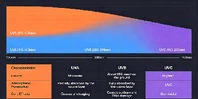
Hazard: Short-wave blue light (400-450nm) may damage the retina.
Certification standard:
RG0 (no blue light hazard) or RG1 (low hazard) in IEC 62471 certification.
Prefer warm white light with a color temperature of ≤4000K (lower proportion of blue light).
3. High color rendering index (CRI≥95)
Function: restore the true color of objects and reduce the burden of eye adjustment to color difference.
Standard:
Ordinary LEDs have a CRI≥80, and eye protection lamps require a CRI≥95 (such as Ra95).
Special needs (such as painting) can choose R9>90 (red color rendering index).

4. Adjustable color temperature (2700K~5000K)
Recommended scenarios:
Reading/learning: 4000K neutral light (balance concentration and comfort).
Night rest: 2700K~3000K warm yellow light (reduce melatonin suppression).
5. Illumination uniformity (AA or A grade)
National standard (GB/T 9473-2017):
AA grade: illumination ≥500lx, uniformity ≤3.
Grade A: Illumination ≥ 300lx, uniformity ≤ 3.
you can consult more eye protection lamp on https://www.benweilight.com/ceiling-lighting/square-led-panel/led-panel-cri-95-120x30.html