Choosing between downlights and panel lights depends on your specific lighting needs, the space you're illuminating, and the aesthetic you want to achieve. Both have their advantages and disadvantages, so let's break it down to help you decide which is better for your situation.
Downlights
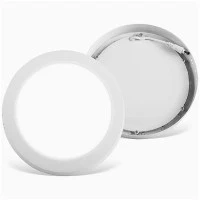
Downlights are recessed into the ceiling and emit light in a downward direction. They are commonly used for focused or accent lighting.
Advantages of Downlights:
Sleek and Modern Design:
Downlights are unobtrusive and blend seamlessly into the ceiling, making them ideal for modern or minimalist interiors.
Versatility:
Can be used for ambient, task, or accent lighting depending on the trim and placement.
Available in adjustable versions to direct light where needed.
Space-Saving:
Perfect for rooms with low ceilings or where hanging fixtures might be impractical.
Wide Range of Sizes:
Available in 4-inch, 6-inch, and larger diameters to suit different spaces.
Dimmable Options:
Many LED downlights are dimmable, allowing for customizable lighting levels.
Outdoor Use:
Outdoor-rated downlights can be used for patios, walkways, and soffits.
Disadvantages of Downlights:
Installation Complexity:
Recessed downlights require cutting into the ceiling, which can be more labor-intensive, especially in existing ceilings.
Limited Spread of Light:
Downlights provide focused lighting, so you may need multiple fixtures to evenly illuminate a large area.
Heat Management:
While LED downlights produce less heat, proper insulation and housing are still required to prevent overheating.
Panel Lights
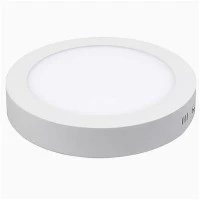
Panel lights are flat, surface-mounted or recessed fixtures that provide uniform, diffused light. They are often used in offices, commercial spaces, and modern homes.
Advantages of Panel Lights:
Uniform Light Distribution:
Panel lights provide even, glare-free illumination across a wide area, making them ideal for general lighting.
Energy Efficiency:
LED panel lights are highly energy-efficient and can replace traditional fluorescent fixtures.
Slim and Modern Design:
Ultra-thin panels (as thin as 0.5 inches) offer a sleek, contemporary look.
Easy Installation:
Many panel lights are designed for simple installation, especially retrofit models that fit into existing fluorescent fixtures.
Wide Coverage:
A single panel light can illuminate a large area, reducing the number of fixtures needed.
Low Maintenance:
LED panels have a long lifespan and require minimal upkeep.
Disadvantages of Panel Lights:
Less Focused Light:
Panel lights are not ideal for task or accent lighting, as they provide broad, diffused light.
Aesthetic Limitations:
While modern, panel lights may not suit all interior styles, especially traditional or rustic designs.
Size Constraints:
Larger panels may not fit well in smaller rooms or spaces with low ceilings.
When to Choose Downlights
Focused Lighting: If you need task lighting (e.g., over a kitchen counter) or accent lighting (e.g., to highlight artwork).
Low Ceilings: Downlights are ideal for rooms with limited ceiling height.
Modern Aesthetics: For a sleek, minimalist look.
Outdoor Use: Downlights are better suited for outdoor applications like patios and walkways.
When to Choose Panel Lights
General Lighting: If you need even, ambient lighting for large spaces like offices, living rooms, or hallways.
Energy Efficiency: For commercial or residential spaces where energy savings are a priority.
Easy Installation: If you're retrofitting existing fluorescent fixtures.
Uniform Illumination: For spaces where consistent light distribution is important, such as classrooms or retail stores.
Comparison Table
| Feature | Downlights | Panel Lights |
|---|---|---|
| Light Distribution | Focused, directional | Broad, uniform |
| Aesthetic | Sleek, modern, minimal | Contemporary, flat design |
| Installation | Requires cutting into ceiling | Easy, especially for retrofits |
| Best Use | Task, accent, or outdoor lighting | General or ambient lighting |
| Energy Efficiency | High (LED) | Very high (LED) |
| Coverage | Smaller area per fixture | Larger area per fixture |
| Dimmable Options | Yes (many models) | Yes (some models) |
Which is Better?
Downlights are better if:
You need focused or adjustable lighting.
You want a modern, minimalist look.
You're lighting small or specific areas (e.g., kitchens, bathrooms, or hallways).
Panel Lights are better if:
You need even, broad illumination for large spaces.
You're retrofitting existing fluorescent fixtures.
Energy efficiency and low maintenance are priorities.
Final Recommendation
For Homes: Use a combination of both. Downlights work well in kitchens, bathrooms, and living rooms for task and accent lighting, while panel lights are great for general lighting in larger areas like living rooms or basements.
For Offices or Commercial Spaces: Panel lights are typically the better choice due to their uniform light distribution and energy efficiency.
Ultimately, the best choice depends on your specific lighting needs, the size and function of the space, and your design preferences.