Which Lumens Are Ideal for Floodlights? A Useful Manual for All Situations
One of the most frequent queries while looking for LED floodlights is: What are the ideal floodlight lumens? Lumens are the most important statistic for selecting a floodlight that meets your demands because they measure a light's actual brightness, as opposed to wattage, which measures power usage. The "best" lumens, however, vary depending on the location of the floodlight (a residential backyard, business parking lot, or industrial warehouse), the purpose of the floodlight (security, ambiance, task lighting), and even environmental factors like ambient light and the area to be illuminated. In order to do this, we must explain how floodlight lumens operate, examine lumen ranges for typical situations, and list important considerations for choosing the ideal brightness-making sure your floodlight is neither too bright to be wasteful or disruptive nor too dim to be beneficial.
First and foremost, it's critical to comprehend the meaning of lumens for floodlights and how they vary from other measurements. Lumens (lm), often known as "light output," are a unit of measurement for the total amount of visible light that a fixture emits. Lumens have a direct bearing on how well a floodlight can illuminate the target location because these fixtures are made to cast a wide, diffused beam over big areas. While lower lumen floodlights are preferable for subtle or focused illumination, higher lumen floodlights will cover a bigger area or offer more light over a smaller area. Compared to conventional incandescent floodlights, which used wattage as a stand-in for brightness (a 100W incandescent floodlight outputs around 1,600 lumens), this is a significant change. Wattage and brightness are no longer correlated with LEDs; a 20W LED floodlight can produce 2,000 lumens or more, hence lumens are the only accurate indicator of the fixture's brightness. Lumens and "lux", another brightness metric, should be distinguished from one another. Lumens per square meter, or lux, measures the intensity of light on a surface, whereas lumens measure the overall amount of light produced. Lumens are more helpful to floodlight buyers since they indicate the amount of light that the fixture can emit regardless of how far away it is positioned from the surface.
The "best" lumens for residential floodlights-whether they are used for gardens, driveways, porches, or backyards-vary according to the area and use. A floodlight with 500–1,000 lumens is perfect for small residential spaces (100–200 square feet), such as porches, entryways, or small patios. Without being harsh or disturbing neighbours, this brightness is sufficient to illuminate the area for safety (for example, unlocking a door at night). A 500-lumen LED floodlight, for instance, placed above a porch will illuminate the entryway with a gentle, inviting glow that doesn't blind guests. 1,000–2,000 lumens are ideal for medium-sized spaces (200–500 square feet), such as driveways, larger patios, or backyard gardens. Parking a car, holding outdoor events, or navigating the yard after dark is made simple by this range, which offers enough brightness to fill the entire area. A typical 400-square-foot two-car driveway can be brightly and evenly lit by a 1,500-lumen floodlight installed on the garage wall. 2,000–4,000 lumens are required for big residential spaces (500+ square feet) such as sports courts, pools, or broad backyards. The whole area is well-lit thanks to these higher-lumen floodlights, which is essential for nighttime swimming, basketball games, and keeping burglars away (strong light is a known theft deterrent). For example, a 600-square-foot backyard can be consistently illuminated with a 3,000-lumen floodlight atop a tall pole, eliminating any dark areas.
The function also influences the choice of lumens for residential floodlights. Brighter lumens (1,500–4,000) are preferable if security is the main objective since they produce a well-lit atmosphere that deters intruders. A lot of floodlights with security features also have motion sensors, which prevent continuous glare by only turning on the bright lights when movement is detected. Lower lumens (500–1,000) are better for ambience (e.g., highlighting garden features, creating a nice patio scene), and they are frequently used with warm colour temperatures (2700K–3000K) to provide an enticing glow. The medium range (1,000–2,000 lumens) is used for task-specific home purposes, such as lighting an outdoor workshop or grill; it is bright enough to view details without straining the eyes.
The optimal lumens are much higher for commercial floodlights, which are utilised in parking lots, building exteriors, signs, or retail locations. This is because these areas are larger and need constant brightness for both safety and functionality. Shopfronts, loading docks, and tiny parking lots (500–1,000 square feet) are examples of small business spaces that require 4,000–8,000 lumens. For instance, a shopfront can be made secure for patrons and staff after dark by installing a 6,000-lumen floodlight above it to light the door, walkway, and a small parking lot (around 800 square feet). 8,000–15,000 lumens are needed in medium-sized commercial spaces, such as sports fields (such as tennis courts), warehouses with outside yards, and mid-sized parking lots (1,000–5,000 square feet). In parking lots, where uneven lighting can result in hazards like potholes or concealed objects, these floodlights offer the brightness required to cover huge spaces evenly. For example, a 12,000-lumen floodlight may provide light intensity that satisfies safety requirements (usually 20 to 30 lux) over a 3,000-square-foot parking lot, which can accommodate roughly 50 cars. 15,000–30,000+ lumens are required for huge commercial spaces like stadiums, industrial yards, and parking lots of large shopping malls (5,000+ square feet). These powerful floodlights-often referred to as "high-bay" or "stadium" floodlights-display strong, consistent light over large areas using numerous LED chips and sophisticated optics. For instance, a soccer field in a small stadium can be illuminated with a 25,000-lumen floodlight, guaranteeing that players and fans can see each other clearly during night games.
In many situations, choosing a commercial lumen is also related to regulatory requirements. The National Fire Protection Association (NFPA), for instance, mandates that parking lots have a minimum light intensity of 10 lux in walkways and 20 lux in driving zones. These regulations have a direct impact on the number of lumens required, with larger or darker places requiring more lumens. Retail locations may also have brand-specific needs. For example, a warehouse may emphasise 10,000-lumen floodlights for loading areas' safety, while a high-end store may employ 6,000-lumen floodlights to draw attention to its facade and draw customers.

Because industrial floodlights are utilised in harsh, expansive settings where visibility is essential for both safety and productivity, they demand the maximum lumens. Examples of these locations include factories, building sites, ports, and oil refineries. 10,000–20,000 lumens are required in tiny industrial spaces such as maintenance yards, factory loading bays, and small building sites. Higher lumens guarantee that vision is maintained because these floodlights must penetrate the typical dust, fog, or smoke found in industrial environments. For instance, a 2,000-square-foot work area can be safely illuminated by a 15,000-lumen floodlight installed on a construction trailer, enabling workers to use power tools after dark. 20,000 to 40,000 lumens are needed in medium industrial spaces, such as big building sites, cargo docks, and manufacturing floors with high ceilings.
These floodlights, which are frequently "high-bay" types made for tall ceilings, cover enormous work areas with bright, wide-angle light. For example, a 4,000-square-foot factory floor can be illuminated with 50+ lux from a 30,000-lumen high-bay floodlight, which is bright enough for activities requiring precise production. Between 40,000 and 100,000 lumens or more are utilized for big industrial regions such as ports, oil refineries, or heavy building sites (such as highway projects). These ultra-high-lumen floodlights are made to withstand harsh environments; they can illuminate an area more than 100 feet away, are shock and vibration resistant, and are weatherproof (IP68 or above). For instance, a port's shipping container yard can be illuminated with a 60,000-lumen industrial floodlight, enabling cranes to work securely at night.
Beam angle is the first of numerous criteria that affect the ideal lumens for a floodlight, aside from usage scenario. The beam angles of floodlights range from short (15–30 degrees, more like spotlights) to wide (90–120 degrees, real floodlights). You may require fewer lumens to create strong illumination because a narrow beam angle concentrates light in a small area (e.g., a 1,000-lumen floodlight with a 20-degree beam angle can illuminate a small security camera area). More lumens are required to maintain brightness because a wide beam angle disperses light over a larger area (for example, a big patio requires a 2,000-lumen floodlight with a 120-degree beam angle). Always align the beam angle with the lumens; a narrow beam with too many lumens will produce strong glare, while a wide beam with too few lumens will produce low, uneven light.
Another important consideration is ambient light. Lower lumens are an option if you're installing a floodlight in an area with existing light, like next to a streetlight or another building. For instance, a residential backyard next to a streetlight might have 1,000–2,000 lumens. To make up for the lack of natural light in gloomy places (like a remote construction site or a rural backyard), you'll need more lumens-3,000 to 5,000 for a rural backyard, or more than 20,000 for a remote construction site.
Lumen requirements are also influenced by mounting height. More lumens are required to guarantee that the ground has adequate brightness because a floodlight positioned high (10+ feet) will disperse light over a wider region. A patio may be well-lit by a 2,000-lumen floodlight placed five feet away, but a floodlight fifteen feet away will be too dark and will need more than 4,000 lumens. Generally speaking, to retain the same surface brightness, increase lumens by 50–100% for every 5 feet of mounting height.
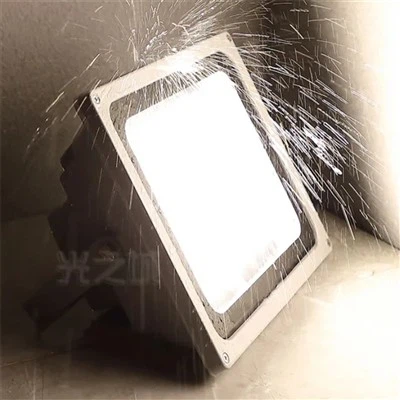
Lastly, practical factors include glare and energy efficiency. Select the lowest lumens that suit your needs to reduce electricity costs because higher lumens translate into increased power consumption (even if LEDs are still far more efficient than conventional bulbs). Another issue is glare: excessively bright floodlights, particularly those with wide beam angles, have the potential to dazzle pedestrians, cars, and neighbours. Choose floodlights with "soft glow" optics or dimming features to avoid this, and point them downward rather than at eye level. In order to lessen glare while preserving ambience, many contemporary floodlights also have "warm dimming", which lowers lumens and color temperature simultaneously.
In conclusion, selecting the ideal floodlight lumens necessitates matching brightness to your particular use case:
Homes: 500–4,000 lumens (500–1,000 for small areas, 1,000–2,000 for medium areas, and 2,000–4,000 for big areas).
Large: 15,000–30,000+ lumens; medium: 8,000–15,000; medium: 4,000–8,000; commercial: 4,000–30,000+ lumens
Large: 40,000–100,000+ lumens; medium: 20,000–40,000; medium: 10,000–20,000; industrial: 10,000–100,000+ lumens
Prioritise energy efficiency and glare reduction, always match lumens with beam angle, and take mounting height and ambient light into account. These tips will help you choose a floodlight that is safe, practical, and customised for your area while offering the ideal amount of brightness. The "best" lumens are those that satisfy your particular requirements without wasting energy or creating a disturbance, whether you're lighting an industrial warehouse or a patio in your garden.
FAQ About LED Flood Lights
Q: Can we get a LED floodlight sample for reference?
A: We are glad to send samples for your inspection. Standard samples can be free, but you may need to pay the express fees.
Q: How to confirm the LED spotlight quality with us before starting to produce?
A: 1) We can provide samples and you can choose one or more, and then we will manufacture products according to the quality of the selected sample(s).
2) Send us your existing samples, and we will produce LED floodlights that match the quality of your provided samples.
Q: How to solve the quality problems about LED floodlight after sales?
A: Please take photos of the quality issues and send them to us. After we confirm the problems, we will provide a satisfactory solution within three days.
Q: What is the lead time of recessed floodlight?
A: The lead time is 20-25 days after the sample is confirmed.
Q: Can you print our brand on the flush mounted floodlight?
A: Yes, of course. We can print your brand logo on the flush mounted floodlight as per your requirements.
Q: What is the typical lifespan of your LED floodlights, and how is it measured?
A: Our high-quality LED floodlights typically have a lifespan of 50,000-100,000 hours, measured by the industry-standard L70 benchmark. This means the floodlight will retain 70% of its initial brightness after that time (not complete failure).
Q: Do your LED floodlights work well in extreme temperatures, like hot deserts or cold areas?
A: Our LED floodlights are designed to withstand a wide temperature range (-20°C to 45°C for standard models; -30°C to 55°C for heavy-duty models). For extreme environments (e.g., deserts or frigid regions), we recommend our IP68-rated heavy-duty series, which have enhanced heat sinks and cold-resistant drivers to avoid performance issues.
Q: What IP rating do your outdoor LED floodlights have, and is it suitable for coastal areas with salt spray?
A: Most of our outdoor LED floodlights have an IP65 rating (dust-tight and water-resistant for rain/splashes). For coastal areas, we offer IP68-rated models with anti-corrosive aluminum housings-these resist salt spray corrosion and ensure long-term use near the ocean.
Shenzhen Benwei Lighting Technology Co.,Ltd
Telephone: +86 0755 27186329
Mobile(+86)18673599565
Whatsapp :19113306783
Email:bwzm15@benweilighting.com
Skype: benweilight88
Web: www.benweilight.com