Why a Filament Bulb Fails to Light Despite a Powered Socket?
A common frustration for many homeowners is encountering a filament bulb that refuses to light even when the socket has power. This issue, while seemingly straightforward, often stems from one of several underlying causes related to the bulb's structure, electrical connections, or external factors.
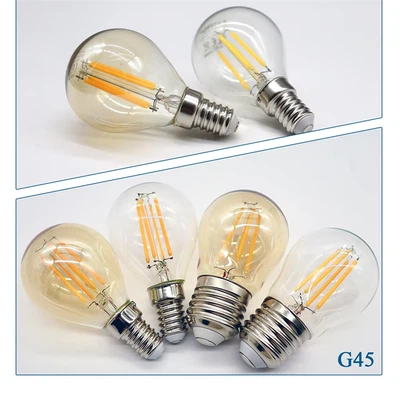
The most frequent culprit is a broken filament. Inside every incandescent bulb, a thin tungsten wire heats up to produce light. Over time, this filament can weaken due to repeated heating and cooling cycles, eventually snapping. A simple visual inspection-holding the bulb up to light and checking for a gap or loose segment in the filament-can often confirm this. Even minor vibrations, such as those from closing a door nearby, can cause a worn filament to break.
Poor electrical contact is another likely reason. The bulb's base contains metal prongs or a screw thread that must make secure contact with the socket's terminals. If these metal parts are dirty, corroded, or bent, they may fail to conduct electricity. For screw-in bulbs, loose installation can create a similar issue: the bulb might appear seated but not make full contact with the socket's brass tab at the bottom. Cleaning the bulb's base with a dry cloth or gently straightening bent prongs can often restore connectivity.
Socket-related problems, despite confirming power, can also prevent the bulb from lighting. Over time, socket terminals may become bent, rusted, or coated with dust, interrupting the circuit. Additionally, internal wiring issues-such as a loose wire connection behind the socket-can cause power to register on a tester but fail to reach the bulb. Wiggling the bulb slightly while it's in the socket might temporarily fix the light, indicating a loose terminal that needs adjustment or repair.
Less commonly, a mismatched bulb wattage can lead to immediate failure. Using a bulb with a higher wattage than the socket or fixture is rated for can overload the circuit, causing the filament to burn out instantly upon installation. Always check the fixture's wattage rating before replacing a bulb to avoid this issue.
In summary, a filament bulb's failure to light with a powered socket typically traces back to a broken filament, poor electrical contact, socket damage, or wattage mismatch. Troubleshooting involves inspecting the filament, cleaning connections, checking socket terminals, and ensuring proper wattage. Addressing these factors systematically can usually resolve the problem without requiring professional assistance.