The reasons for this phenomenon are generally as follows:
①Different light source efficiency:
LED lamps consume electricity and emit light. This involves the issue of conversion efficiency. The form of light efficiency index is lm/w. This refers to how many lumens of luminous flux per W of electric power can be converted. When the LED was first born, the time efficiency was only a few tenths of lumens per watt. Nowadays, good quality LED lamp beads can reach 200 lm/w, which is a difference of several thousand times. Until now, the luminous efficiency of LED has been constantly refreshed every year. Therefore, it is not surprising that the brightness of the same specifications of bulbs assembled with lamp beads from different periods or different manufacturers is not the same.
②The power efficiency is different:
LED lamp beads are non-linear components with negative temperature coefficients and are extremely sensitive to changes in temperature and voltage. Therefore, neither the AC nor the DC power supply can directly supply power to the LED, but a constant current drive is used to work. The efficiency of constant current drives of different masses varies greatly, ranging from 50% to 90%. Therefore, even if a high-efficiency light source is selected, such as the low efficiency of constant current drive, it will also cause insufficient brightness.
③The power labeling is based on different:
At present, the power labeling in the LED lighting market is rather chaotic. Some are based on the actual power consumption of the entire lamp, while others are based on the power of the lamp beads. Since the efficiency of the power supply cannot be 100%, the LED bulbs of the same power may be marked by different manufacturers with different power.
④Different areas of light-emitting parts:
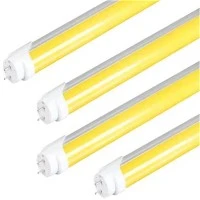
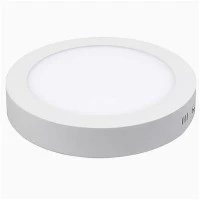
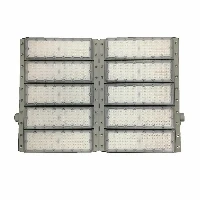
Two different-shaped bulbs of the same wattage sometimes seem to have very different brightness. For example, a small light bulb looks brighter than a large light bulb. The light bulb looks brighter than the tube, etc.
This is because the area of the light-emitting part is different. When the same light energy is distributed on different areas, the luminous intensity per unit area is inversely proportional to the area. Therefore, although the brightness of the light source itself is different due to the different light-emitting area, the lighting effect is still very close.
⑤Different color temperature:
Color temperature is an important indicator of lighting fixtures. What is color temperature? In popular terms, it is like a heated iron block (actually an idealized black body), which is red at first, and gradually changes to yellow and white to blue as the temperature rises. Therefore, we call reddish light as low color temperature, and bluish light as high color temperature.
In this way, temperature can be used to express "hue." The unit of color temperature is "K", which is 273.15 different from the commonly used "℃". That is: 0°C is equivalent to 273.15K.
The human eye's ability to perceive light of different color temperatures is different. Under the premise of the same luminous flux, high color temperature light will look brighter.