In commercial lighting renovation projects, an increasing number of purchasers and contractors are choosing LED corn bulbs as the preferred alternative to traditional high-intensity discharge (HID), high-pressure sodium (HPS), and metal halide lamps. Whether for warehouses, factories, parking lots, or street and courtyard lighting, LED corn bulbs, with their unique structural design and comprehensive performance advantages, are redefining the standards for commercial lighting upgrades. This article will analyze the core reasons for the market's favor towards LED corn bulbs from the perspectives of product structure, performance, and application scenarios, helping purchasers make more rational judgments in selection and project renovation.
What is an LED Corn Bulb?
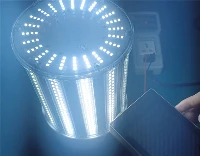
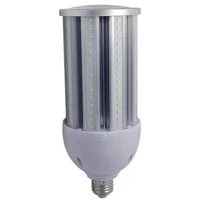
LED corn bulbs are named for their resemblance to a corn cob. Multiple LED beads are arranged in a ring around the bulb body, typically mounted on standard E26/E27, E39/E40 bulb bases, directly replacing the light source in traditional lamps. This structural design is not merely for aesthetics, but to achieve a near-omnidirectional light emission angle, a key feature that distinguishes it from ordinary LED bulbs or LED tubes.
Lighting Advantages of a 360° Light-Emitting Structure
While traditional HID bulbs offer high brightness, their uneven light distribution easily creates noticeable shadows and dark corners in the illuminated area. LED corn lights, with their ring-shaped arrangement of LED beads, achieve a near 360° uniform light-emitting angle, which is especially important in large spaces such as warehouses with high ceilings, stadiums, and parking lots. This uniform light distribution not only improves overall lighting quality but also reduces safety hazards caused by areas of darkness.
Higher Energy Efficiency and Energy-Saving Potential
Under the same illuminance requirements, LED corn lights typically consume only 30%-50% of the energy of traditional HID lamps. For example, replacing a 400W metal halide lamp with a 150W LED corn light results in a significant reduction in electricity costs over the long term. For commercial spaces requiring long-term lighting (such as warehouses or factories operating 24 hours a day), this energy efficiency difference translates into considerable cost savings over time. This is a direct reason why many buyers prefer LED corn lights during the budget evaluation phase.
Excellent Heat Dissipation Design and Lifespan
The lifespan of LED lights largely depends on heat dissipation, which is particularly evident in the structural design of corn lights. Most commercial-grade LED corn lights employ aluminum bodies or split heat sink designs. Combined with the natural heat dissipation area provided by the even distribution of LED chips, this effectively controls the chip's operating temperature, thereby reducing the rate of light decay. The rated lifespan of typical commercial-grade products can reach 30,000-50,000 hours, compared to the approximately 10,000-15,000 hours of traditional HID lighting. This significantly reduces replacement frequency and maintenance costs, which is especially significant for commercial spaces where lights are installed high and maintenance is inconvenient (such as factories with high ceilings).
Compatibility and Ease of Retrofitting with Traditional Lighting Fixtures
A frequently overlooked but crucial advantage of LED corn lamp upgrades is their compatibility with existing lighting fixture structures. Due to their standard lamp base design, in most cases, it's unnecessary to replace the entire fixture housing or rewiring. Simply remove the existing HID/HPS bulbs and install the LED corn lamp to complete the replacement (some may require bypassing the ballast or replacing with a direct-drive model). This "plug-and-play" approach significantly shortens project timelines and reduces labor and material costs, making it one of the most cost-effective solutions for commercial lighting upgrades.
Applicable Commercial Lighting Scenarios
LED corn lights have a wide range of applications, with common scenarios including:
High-ceiling lighting in warehouses and logistics centers
Workshop lighting in industrial plants
Parking lot and underground garage lighting
Outdoor courtyard lights and street light upgrades
Lighting for high-ceiling areas such as commercial showrooms and supermarkets
Different scenarios have slightly different requirements for luminous flux, color temperature, and protection rating (IP rating). Therefore, when selecting a model, it is necessary to comprehensively consider the specific installation height, environmental conditions (whether waterproof and dustproof), and lighting standard requirements.
Summary
The core reasons why LED corn lights have become a popular choice for commercial lighting upgrades can be summarized in four points: 360° light distribution for more uniform lighting effects, significant energy-saving performance reducing long-term operating costs, excellent heat dissipation design extending lifespan, and good compatibility with traditional luminaires simplifying the retrofit process. These advantages collectively constitute the competitiveness of LED corn lights in the commercial lighting field and explain why more and more projects are prioritizing this solution during the lighting retrofit phase.
If you are planning a lighting upgrade solution for your warehouse, factory, or commercial space, please contact us. We can provide suitable LED corn light selection advice and bulk purchase quotations based on your specific installation environment, power requirements, and budget, helping you complete your lighting renovation project more efficiently.