Why Designers Love L-Type Rotatable Track Lights & How You Can Choose Them Wisely
In the world of interior lighting, trends come and go. But some tools earn a permanent place in the design hall of fame, not as fleeting trends, but as timeless solutions. Among these, the L-type rotatable track light stands out as an undisputed champion. Its prevalence in modern galleries, chic retail spaces, and stylish homes is no accident. It is the result of a perfect marriage between unparalleled functionality and minimalist aesthetics. So, what makes this lighting fixture so irresistible to designers, and how can you, as a consumer, make an informed choice to bring this professional tool into your own space?
Part 1: The Designer's Secret Weapon - Unleashing Ultimate Flexibility
Ask any interior or lighting designer about their go-to tool for accent lighting, and the L-type rotatable track light will invariably be at the top of the list. The reasons are multifaceted, but they all boil down to one core concept: controlled flexibility.
1. Precision Sculpting with Light:
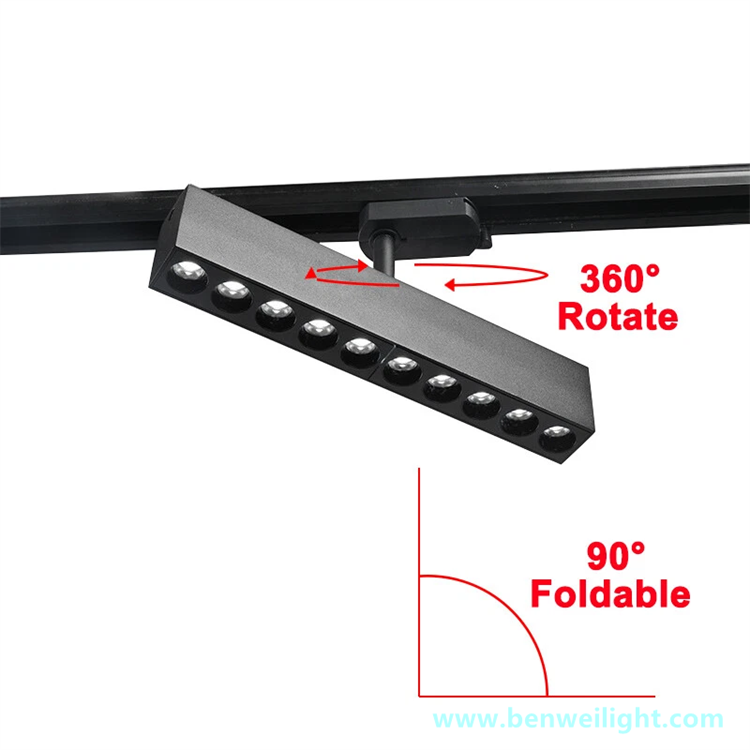
Designers don't just illuminate a room; they sculpt it. The unique L-shaped arm of these fixtures is a game-changer. It allows the light head to be extended away from the track, providing crucial clearance to avoid shadows and achieve a perfect, unimpeded beam angle. Coupled with 360-degree rotation and 90-degree tilt functionality, a single fixture can be aimed with surgical precision. This means a designer can highlight a specific painting on a wall, graze light across a textured surface to create drama, or wash a corridor with an even, inviting glow-all from the same track system. The light is no longer fixed; it becomes a dynamic element of the design itself.
2. The Minimalist's Dream:
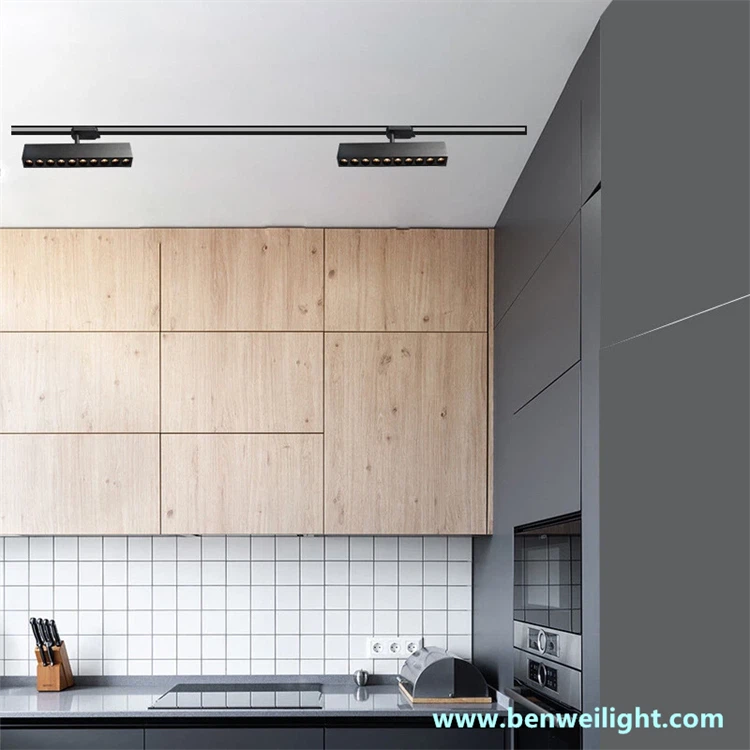
In contemporary design, less is more. Clutter is the enemy of style. The L-type track system is inherently minimalist. A single, clean line of track running across the ceiling is far less obtrusive than multiple fixed ceiling lights. The fixtures themselves are often sleek, with heads that are compact and finished in neutral colors like black, white, or chrome. This allows them to almost disappear when not in use, ensuring that the focus remains solely on the objects being illuminated, not the light source. This "quiet" aesthetic is crucial for creating a curated, high-end look where the lighting feels intentional and integrated, not like an afterthought.
3. Future-Proof Adaptability:
A designer's worst nightmare is creating a space that becomes obsolete. Furniture gets rearranged, art collections change, and room functions evolve. Traditional fixed lighting can make these changes costly and complex. This is where the track system shines. Fixtures can be easily added, removed, or slid along the track. The L-type rotating heads can be repositioned in an instant to accommodate a new layout. A home office can be transformed into a guest room, or a store's merchandise display can be completely changed, all without requiring an electrician. This adaptability makes it an incredibly smart, sustainable, and cost-effective long-term investment.
Part 2: The Informed Buyer's Guide - 5 Key Points to Choose Wisely
Inspired to bring this design magic into your own home? Navigating the market can be tricky. Here are the five critical points to consider to ensure you invest in a system that performs beautifully and lasts for years.
1. Material and Heat Dissipation:
This is the most crucial factor for longevity. Avoid cheap plastic housings. Instead, look for fixtures made from aluminum alloy. Aluminum is not only durable and premium to the touch, but it is also an excellent conductor of heat. LEDs generate heat, and effective dissipation is essential to prevent the light output from degrading prematurely. A well-designed aluminum body acts as a heat sink, directly protecting the LED chips and ensuring a lifespan that can reach 50,000 hours.
2. Track System Compatibility (The Deal-Breaker):
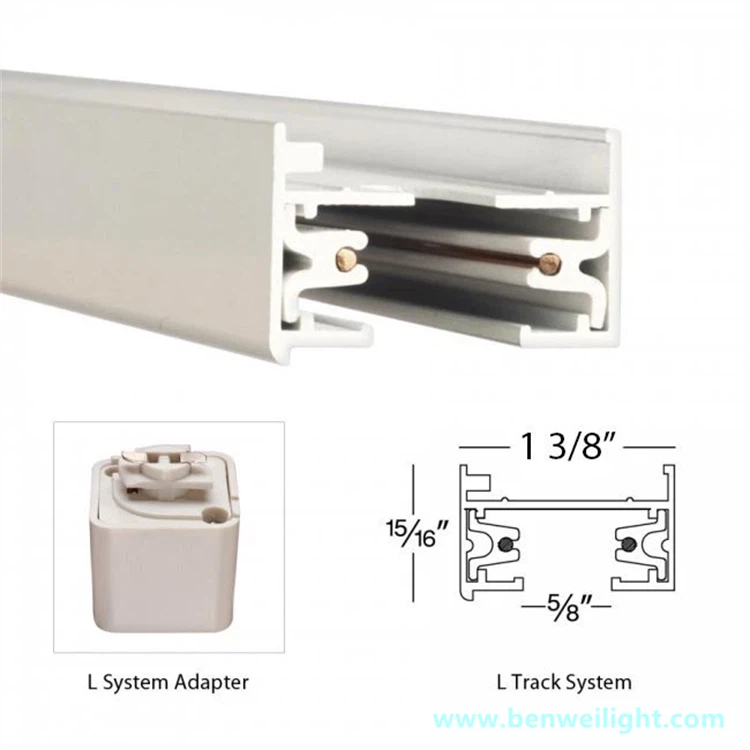
This is the most common mistake buyers make. Not all tracks are created equal. The term "L-type" most commonly refers to the Lytton-style two-circuit track system, which has distinct connectors. Other popular types include J-type and H-type. The fixtures you buy must be compatible with your installed track. Before purchasing anything, identify your existing track system or, if installing new, ensure the track and the fixtures are from a compatible ecosystem. Buying the wrong type will result in fixtures that simply cannot be installed.
3. Light Quality is Everything:
The whole point of these lights is to make things look beautiful. Two metrics define quality light:
CRI (Color Rendering Index): This measures how accurately a light source reveals the true colors of an object compared to natural light. For accent lighting, never settle for anything below CRI 90. A high CRI (90+ and up to 98) is essential for making art, food, and fabrics look vibrant and true-to-life.
Color Temperature: This defines the warmth or coolness of the light, measured in Kelvins (K). 2700K-3000K provides a warm, cozy glow ideal for homes. 3500K-4000K is a neutral white perfect for offices and retail spaces where task lighting is needed. Choose a temperature that suits your space's ambiance.
4. The Mechanics of Movement:
The "rotatable" feature is useless if it's flimsy. When evaluating products, pay attention to the build quality of the rotation and tilt mechanisms. They should feel smooth and offer just enough resistance to hold their position firmly once set. Avoid lights that feel loose, gritty, or prone to drooping over time. The joints should be solid metal, not plastic, to withstand frequent adjustments.
5. Beam Angle and Power:
Consider what you are lighting. A narrow beam angle (e.g., 24°-30°) is perfect for creating a dramatic spotlight on a single object. A wider beam (e.g., 36°-60°) is better for washing a wall with light. Wattage (e.g., 10W, 15W) correlates with brightness. For most accent lighting purposes, 7W-12W LEDs are sufficient and highly efficient.
Conclusion: A Worthy Investment in Design and Function
The L-type rotatable track light is more than a simple fixture; it is a philosophy of lighting. It represents a shift from static illumination to dynamic storytelling, giving you the power to shape your environment with light. By understanding why professionals swear by it and armed with the knowledge to choose wisely, you can confidently invest in a system that offers unparalleled flexibility, enduring style, and the sublime quality of light that your space deserves.