Do you enjoy skating on wheels? Why not try bowling? Did you know that performing each of those hobbies under a black light in the dark might make them much more enjoyable? You're then ready for some glow-in-the-dark excitement!
If you've ever participated in glow bowling, seen your clothing flash radioactively in a funhouse at an amusement park, or experienced the glow-in-the-dark effects of a black light at a skating rink, you know what a cool and unsettling feeling it is.
What is happening here? Black lights—are they magical? Nope! They are straightforward instruments that benefit from science. Let's examine black lights in more detail and discover why they cause objects to glow.
Black lights are created in a manner similar to that of conventional incandescent or fluorescent lighting. The glass, coatings, or filters used in black lights constitute the main distinction.
With the help of these various materials, black lights emit primarily ultraviolet (UV) light with a little amount of visible light that is closest to the UV spectrum (indigo and violet). Black lights typically seem dark blue or purple because of this.
The human eye is incapable of detecting ultraviolet light. Every day while we bask in the Sun's beams, UV light is all around us. While UV light has some amusing uses, we must be careful to limit our exposure to prevent skin cancer, eye damage, and premature aging of the skin.
Interesting things happen when UV light reflects off materials that contain unique chemicals called phosphors. In reaction to radiation, phosphors are compounds that emit visible light.
When phosphors are exposed to UV light, they become stimulated and spontaneously fluoresce, or shine. In addition, part of the UV light that is reflected back to your eyes after striking the phosphors now has less energy and is in the visible range, even though your eyes cannot perceive the UV light as it exits the black light. These elements work together to create the famous glow-in-the-dark effects.
There are several natural and artificial phosphors. For instance, phosphors are present in your teeth and fingernails, which explains why they glow when exposed to a black light. Additionally, a lot of man-made phosphors are present in textiles, paints, and construction supplies. That explains why some items of apparel and neon decor appear so cool in a dark light.
Beyond just having fun when bowling, dancing, or roller skating, black lights have numerous useful applications. Black lights are a tool that forensic professionals can employ to search crime scenes for blood or other bodily fluid traces. Black lights may be used by law enforcement to spot counterfeit currency as well as fake artwork and antiquities.

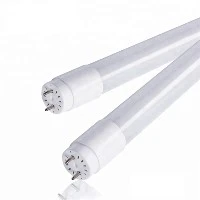
Benwei UV 120cm led tube black light Product Specification:
|
Item |
UV led light tube bulb T8 |
|
Input Volt |
AC85-265V |
|
Power |
10W,18W,24W |
|
Length |
60cm/2ft, 120cm/4ft, 150cm/5ft |
|
Bean Angle |
120°, 180° |
|
Lifespan |
50000 hrs |
|
Wavelength |
365nm 395nm 254nm 280nm |
|
Warranty |
3-5 years |