Why LED lights are energy-saving and environmentally friendly
Our technology is developing rapidly and changing with each passing day. The lamps we use every day are also being updated, from incandescent lamps to energy-saving lamps, and then to today's LED lamps. After several generations of different lamps and lanterns have been replaced and replaced, our lives are constantly changing It has become more and more convenient and more energy-saving. Here, I will discuss with you the difference between these three lamps, and why LED lamps are more energy-saving and environmentally friendly than the other two lamps.
The light efficiency of the incandescent lamp is 10lm/w, and the life span is about 1000 hours. The working principle of the incandescent lamp: when the incandescent lamp is connected to the circuit and the current flows through the filament, the thermal effect causes the incandescent lamp to emit visible light and infrared light. When the temperature of the filament reaches 700K, we can see the light of the incandescent lamp, but the filament is working The temperature is 2200K-2700K, which is much higher than 700K, so a large part of the energy is wasted, and when the filament continues to be at a high temperature, the lifespan is rapidly shortened, so the general lifespan of incandescent lamps is about 1000 hours. A large part of the waste is generated, so the elimination of incandescent lamps is also an inevitable trend of technological development.
Energy-saving lamps mainly rely on phosphors to emit light. The energy conversion efficiency of phosphors is very high, so the efficiency of energy-saving lamps can reach more than 50lm/w. The working principle of the energy-saving lamp is to heat the filament through the ballast. When the temperature reaches 1160K, the filament can emit electrons (the filament is coated with electron powder), the electrons collide with argon atoms, the argon atoms hit the mercury atoms, and the mercury atoms generate ionization after absorbing energy. It can emit ultraviolet rays of 253.7nm, thereby exciting the phosphor to emit light. Therefore, the working temperature of the filament of the energy-saving lamp is about 1160K, which is much lower than that of the incandescent lamp, so the energy loss is also reduced, and the energy-saving effect is better than that of the incandescent lamp.
LED lights use solid semiconductors as luminescent materials and use electric field to emit light, which converts electrical energy into visible light. A red LED needs to consume 15 watts to emit light to reach a certain brightness, while traditional light bulbs need to consume 150 watts of capacity. In addition, when the LED is energized to emit light, 10% of the electrical energy can be converted into light energy, while incandescent lamps cannot achieve such an effect.
The spectrum of LEDs is almost all concentrated in the visible light frequency band, which shows that the energy loss is very small, and the luminous efficiency of energy-saving lamps can exceed 150lm/w (2010). Compared with ordinary incandescent lamps and spiral energy-saving lamps, the luminous efficiency of incandescent lamps is 12lm/W and the lifespan is less than 2000 hours. The luminous efficiency of energy-saving lamps is 60lm/W and the lifespan is less than 8000 hours. The light efficiency can exceed 150lm/W, and the lifespan can be more than 100,000 hours. It can be seen that compared with incandescent lamps and energy-saving lamps, the energy-saving effect of LEDs is unparalleled. In recent years, LEDs have gradually occupied the market, become the leader and development trend of lamps, and will eventually become popular in thousands of households.
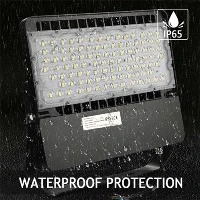
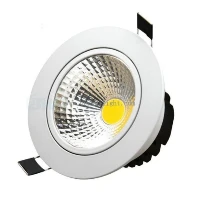
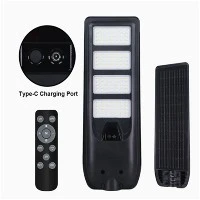
BENWEI Lighting integrates the research and development, production, sales and service of LED indoor and outdoor lighting products, including LED downlights, panel lights, lamps, spotlights, wall washers, flood lights, track lights, grille lights, ball lights Light bulbs, high bay lights, light bars, etc., cover many application fields such as LED commercial, office, industrial and outdoor lighting. All products have passed international safety certifications such as CE, RoHS and FCC, and the products are sold well in Europe, America and other countries.