Will T12 LEDs Fit T12 Fixtures? Do They Need New Tombstones?
The transition from traditional T12 fluorescent tubes to T12 LED replacements raises important questions about compatibility with existing fixtures, particularly regarding their larger diameter and the need for new tombstone holders. These considerations are crucial for users seeking to upgrade lighting systems without incurring excessive costs or extensive modifications.
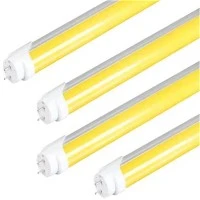
First, the diameter difference between T12 LEDs and their fluorescent counterparts is a key factor. T12 fluorescent tubes have a diameter of 38mm, and T12 LEDs are designed to match this dimension, ensuring they fit within the physical constraints of existing T12 fixtures. Unlike T8 LEDs, which must adapt to a smaller 25.4mm diameter, T12 LEDs maintain the same outer size as their predecessors. This means they generally fit into the fixture housing without issues related to clearance. The structural frame of T12 fixtures, including the internal space and mounting brackets, is engineered to accommodate 38mm tubes, so the physical fit of T12 LEDs is typically seamless. However, there are rare exceptions: fixtures with unusually narrow internal channels or custom modifications may pose challenges, but such cases are uncommon in standard commercial or residential setups.
Next, the question of tombstone holders (socket fixtures) is more nuanced. Traditional T12 fluorescent tubes use a G13 base, which is also employed by most T12 LEDs. This shared base design suggests that existing tombstone holders should be compatible, as they are engineered to grip the pins of G13-based tubes. However, the functionality of these holders depends on their condition and design. Older tombstone holders, especially those used with magnetic ballasts, may have worn contacts or spring mechanisms that struggle to maintain a secure connection with T12 LEDs. LEDs require a consistent electrical connection to operate efficiently, and loose contacts can cause flickering, reduced performance, or even damage to the LED driver.
Another consideration is whether the tombstone holders are shunted or non-shunted. Traditional T12 fluorescent systems often use non-shunted tombstone holders, which separate the electrical paths to accommodate the ballast's current regulation. T12 LEDs, particularly those designed for ballast-bypass installations, may require shunted tombstone holders, which connect the two pins at each end to allow direct wiring to the mains. This is because ballast-bypass T12 LEDs operate on direct current (DC) or low-voltage alternating current (AC) without the need for a ballast, making a continuous electrical path necessary. In such cases, existing non-shunted holders would need to be replaced with shunted ones to ensure proper functionality and safety.
Moreover, some T12 LEDs are designed to be compatible with existing ballasts, similar to certain T8 LED models. These ballast-compatible T12 LEDs can work with non-shunted tombstone holders, as they rely on the ballast to regulate current, mimicking the operation of traditional fluorescent tubes. However, compatibility with magnetic ballasts (common in older T12 systems) is limited. Magnetic ballasts generate high initial voltages that can damage LED components, leading to premature failure. Electronic ballasts, while more efficient, may still require verification against the LED manufacturer's specifications to ensure proper voltage and current matching.
The age and condition of existing tombstone holders also play a role. Over time, the metal contacts in tombstone holders can corrode or lose tension, especially in environments with high humidity or dust. Even if the physical fit is correct, poor electrical contact can compromise the performance of T12 LEDs. In such cases, replacing the tombstone holders-even if they are technically compatible-can improve reliability and extend the lifespan of the LED tubes. Manufacturers often recommend inspecting and, if necessary, replacing tombstone holders during the upgrade to T12 LEDs, particularly in fixtures that have been in use for a decade or more.
In summary, T12 LEDs are designed to fit the physical dimensions of existing T12 fluorescent fixtures, thanks to their matching 38mm diameter. However, the need for new tombstone holders depends on factors such as the type of holders (shunted vs. non-shunted), the LED's design (ballast-compatible vs. ballast-bypass), and the condition of existing components. Ballast-bypass T12 LEDs typically require shunted tombstone holders, while ballast-compatible models may work with non-shunted ones, provided the ballast is compatible. For optimal performance and safety, users should check the manufacturer's guidelines, inspect existing tombstone holders for wear, and replace them if necessary. By addressing these factors, the transition to T12 LEDs can be both cost-effective and technically sound, leveraging existing fixtures while gaining the benefits of LED technology.