Will UV light in bug zapper hurt your eyes?

What you will discover
A one-stop shop for getting rid of insect pests is a bug zapper. In the house, bothersome flying insects can cause a lot of trouble. It might be difficult to choose the appropriate gadget to get rid of these pests, but bug zappers are available to make your life simpler.
There are several benefits to using bug zappers instead of other insect killing tools. However, we frequently take their ability to kill insects for granted and fail to consider any potential negative impacts on people.
Do your eyes feel any different than before you used the insect zapper?
To learn what consequences it could have, continue reading.
It begins to feel like someone threw a pail of sand behind your eyes if you stare straight into the insect zapper for an extended period of time. This might develop into a severe migraine that will make you feel like a bullet just passed through your brain. Nevertheless, it is accurate to say that extended exposure to the UV light of insect zappers will cause eyesight issues.
Bug zappers use intense UV light to draw insects to them.
The insect pests are drawn to the device's centre, which is often between two metal grids, where they are shocked to death.
Even while it might be interesting to watch insects that fly at night get zapped and destroyed, you should avoid staring directly into the bug zapper for a number of reasons.
Let's first examine what ultraviolet light is and the many UV light bulb kinds;
What does UV light entail?
The electromagnetic radiation known as ultraviolet light has longer wavelengths than Xrays but shorter wavelengths than visible light.
Since UV light is so tiny, it is measured in nanometers (nm), as opposed to electromagnetic waves, which are normally measured in metres. Since they are at the short end of the visible spectrum, our eyes cannot see them.
UV light types
There are three different forms of UV light, as we've already discussed, based on their wavelengths;
UV-A rays
The wavelengths of UV-A are the longest and range from 350 to 400 nm. It is responsible for around 95% of the UV radiation that reaches the surface of the earth.
Blacklight blue (BLB) and Blacklight (BL350/BL 368) UV-A light are available. Blacklight Blue is frequently used in UV nail lights, nightclub illumination, anti-theft prevention, spotting fake bank checks, and scorpion detection.
Due to its small wavelength, blacklight UV light is suitable for use in bug zappers, polymerization, and tanning beds.
UV-B spectrum
The median wavelength of ultraviolet light is known as UV-B radiation.
The atmosphere filters out the majority of UV-B radiation. It facilitates sunburn in tanning salons and helps some animals absorb calcium and produce vitamin D3. Additionally, it hastens the ageing process of the skin and the growth of skin cancer. The thinned or depleted ozone layer causes exposure to UV-B radiation.
UV-C rays
Since it has the shortest wavelength of any UV radiation, it does the most harm. They go under the name "germicidal UV lights" as well. It primarily attacks microorganisms' DNA, leading to cell death. It renders bacteria inactive or fatal. When handling germicidal UV lights, one should use considerable caution.
They are ideal for disinfecting the air in operating rooms and hospitals, cleaning wastewater, sanitising food preparation surfaces, and sterilising medical equipment.
Overall, each of these UV lamps has a specialised purpose, and combining them might be extremely harmful to your health, particularly your eyes.
According to a convincing assessment from an internal inquiry by the health physics society, the UV lights used in insect zappers are not powerful enough to harm your eyes.
Only when the incorrect UV bulbs are used or combined, which is uncommon with the appropriate manufacturers, may harm occur. Your eyes ought to be secure.
Is insect zapper UV light dangerous?
Although UV radiation has many advantages, too much UV exposure can be harmful to your health. Unless someone approaches the bug zapper too closely, directly faces it, or is exposed to it for an extended period of time, the UV light it emits won't pose a serious threat to them.
Because UV-A has longer wavelengths, it penetrates more effectively and consumes less energy. This light can enter the skin and has been linked to a higher risk of skin cancer development.
Additionally, UV-A radiation has been shown to result in sunburns. The majority of sunscreens were first designed to shield the skin against UV-B rays. Since they discovered how harmful UV-A rays can be, sunscreen producers now include chemicals that shield you from both UV-A and UV-B rays.
Despite UV-A photons having a somewhat lower intensity than the other UV light types, extended exposure to this light can cause more serious skin damage. This may harm the cells in the deepest layer of your skin, which is where skin cancer generally develops.
The skin darkens in an effort to stop more harm as this continues. The tanning result is caused by this. The majority of tanning beds employ UV-A for this reason, although frequent usage of tanning beds is bad for your skin over time.
Other skin problems are caused by UV-A in large quantities. It hastens ageing, collagen loss, skin discolouration, elasticity loss, and the formation of deep creases on the face. Carcinoma may result from this skin cellular damage.
In conclusion, the UV light intensity utilised in insect zappers cannot cause any of these problems despite all the negative effects linked to UV-A. Bug zappers' UV light won't endanger you or your family because they are not dangerous.
The UV-A light intensity declines with increasing distance from the bulb, much like all other forms of energy. Because they pose no risk to people, bug zappers are installed high up in homes to capture more insects.
How to shield your skin from UV rays
Sometimes being exposed to UV rays is unavoidable.
Due to their thinner skin than adults, children are especially susceptible to UV exposure. A severe case of sunburn may necessitate hospitalisation.
Therefore, if you find yourself in a situation where UV rays are being employed, such as in bug zappers, it is imperative to protect both yourself and any children present.
Here are some precautions to take in order to shield oneself from UV light:
When exposed to UV radiation, use protective clothes. Avoid wearing clothing that exposes the majority of your skin. Wear long sleeves, long skirts and long trousers to block the sun. The darker the clothes, the better. Additionally, make sure the fabric is dry since dry fabric gives additional protection. Ultraviolet protection factor (UPF) apparel is the standard protective attire and offers the greatest level of protection.
If you must stare straight at a bug zapper while it is on, protect your eyes by using sunglasses with 100% UV protection.
At least 15 minutes before entering an area with UV radiation exposure, liberally apply sunscreen. Make sure the sunscreen you choose has an SPF of 30 or higher. Invest on a broad-spectrum sunscreen. These have undergone testing and have been shown to block UV-A and UV-B rays.
To preserve the delicate skin of your lips, apply lip balm with an SPF of 30 or higher.
Wool, polyester, nylon, and silk are among the fabrics that offer the best UV protection.
So, besides ultraviolet light for mosquito control, are there any other methods?
Yellow Light / Low Color Temperature LED (Passive Defense)
Principle: Utilizes the visual characteristics of mosquitoes. Scientific research shows that mosquitoes are sensitive to short-wavelength light (such as ultraviolet and blue light) and are easily attracted; however, they are weakly perceived and uninterested in long-wavelength light (yellow and red light, wavelengths above approximately 570-600nm). Therefore, yellow lights or LED lights with a color temperature ≤3000K can significantly reduce mosquito gathering around the light source.
Effect: Only "does not attract insects," does not kill mosquitoes. However, the carbon dioxide and heat emitted by the human body are still the main targets of mosquitoes, so people may still be bitten under the light.
Suitable Scenarios: Courtyards, balconies, terraces, and other places that need lighting but do not want to attract insects.
Ultraviolet Mosquito Killer Lamp (Active Attraction and Killing)
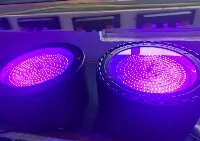
Principle: Utilizes the phototaxis of mosquitoes, emitting ultraviolet light of a specific wavelength (such as 365nm) to actively attract mosquitoes, then killing them through electric shock, sticky traps, or drying.
Effect: Directly reduces local mosquito density, but may also kill a large number of non-target beneficial insects (such as bees and moths).
Applicable Scenarios: Corners away from activity areas, warehouses, farms, and other places requiring active mosquito control.
Best Solutions: For primary lighting, minimizing insect attraction → Choose yellow lights/low color temperature LEDs
For primary mosquito control, not concerned about accidental killing → Choose UV mosquito killer lamps
Optimal Combination: Use yellow light in activity areas to reduce nuisance, and place UV lamps in corners for active trapping and killing, achieving dual protection.
UV365NM Mosquito Killer Lamp


Yellow cover&590nm Amber Light Type


https://www.benweilight.com/professional-lighting/amber-light/5w-e27-led-light-bulb.html