Your LED downlights, halogen lights, or perhaps your bulbs only flicker when they are dimmed are just a few of the numerous causes of flickering lights. We discuss the ten most common causes of flickering lights and provide some solutions to help them return to normal.
Even though LED lights are amazing, problems can still arise. Many people, especially those with recently installed LED bulbs, complain that their lights continue to flicker.
Does that sound familiar? If so, you might be curious as to why your LED lights are flickering. Keep reading as we've compiled a list of some of the best justifications!
1. Downlight & Dimmer Compatibility
When dimmed, do LED lights flicker? See below.
The most frequent cause of flickering is incompatibilities between downlights and dimmers. The downlights and dimmer need to communicate in unison. Flickering is likely to occur when LED downlights are dimmed using outdated dimmers made for halogen lights. This is not to suggest that they won't function; you just need to give it a try.
When using LED dimmers for LED downlights, it is best to use the same brand that has been tested; if there are any problems, you may ask the provider to resolve them. Digital's MEDM is the best LED dimmer available; it's so good that it can dim certain non-dimmable items. Invest in high-quality dimmers; purchasing low-quality dimmers will ultimately cost you more money.
2. The Ripple Effect
A type of energy load control called "ripple control" has the ripple effect as a byproduct. In Australia, ripple control is widely used, particularly in NSW and QLD. It enables power providers to control the peak demand for electricity.
Electricity networks will not be able to meet everyone's demands if ripple control is not implemented. Furthermore, power plant infrastructure may sustain harm if loads are not controlled. They may take a long time to go back online if this occurs.
Reducing the energy supply to certain regions of AU is a crucial component of ripple control. Whenever the demand is at its highest, this decline often happens at the same time every day. There are locations where it may be anywhere from 7 to 10 a.m. and 5 to 10 p.m.
One of the first things ripple control can do is make LED lights flicker since it lowers the energy supply. Once more, this is because the lamps use very little energy.
However, the ripple effect may be more noticeable if you have a lot of household appliances. These gadgets will continue to use the same amount of energy even if the electricity source is cut off. Thus, you would have very little, if any, energy remaining to run your LED lights.
3. Loose Connections
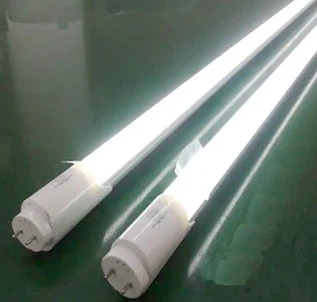
Sometimes, flickering LED tube lights are a simple case of loosely-fitting bulbs. In this case, the socket isn't getting enough proper contact with the bulb itself. Because of this, even the slightest bulb movement can lead to intermittent flickering.
Please note that even LED downlights (or "recessed lights") can also loosen over time.
With that said, the first thing to do with flickering downlights is to screw their bulbs in tighter. Be careful when handling the bulbs, as excessive force can still cause them to crack. Don a glove too, to stay on the safe side, even if LED bulbs don't generate a lot of infrared radiation.
4. Dusty or Dirty Sockets
Dust can build up on your LED bulbs' surfaces over time and seep into the socket. Dirt may be the cause of your flickering light bulbs if you haven't cleaned your lighting fixtures in a while. This is a great opportunity to clean and remove any dirt that has accumulated in and around the sockets.
To thoroughly clean the sockets, it is preferable to unscrew the bulbs first. Additionally, before cleaning the light sockets, be sure to switch off the electricity!
5. Loose Electrical Wiring
Fun fact: Australia's home renovations market is a $32 billion sector. Why? Because many of the homes in the Land Down Under have been around since the early 1980s.
With that said, many of these older homes have developed a wide array of electrical problems. If you live in one of these houses, they might be the reason your LED lights keep flickering.
If cleaning the sockets and securing the bulbs don't fix the flicker, call an electrician. You may be dealing with malfunctioning electrical wiring that can pose fire hazards.
6. Incompatible Dimmers
When buying light dimmers , LED compatibility is a crucial factor for consideration. That's because many LED globes will fail early or won't work at all when hooked up to traditional dimmers. Even if they do light up, it won't be long before you see your dimmable light bulb flicker.
Dimmers for traditional lights are specifically for high wattage load incandescent bulbs. They work by evenly changing the amount of current that flows into the bulbs. They also go through a rapid on/off cycle to cut down the amount of energy that flows into the circuit.
The dimming effect is a result of the "persistence" of older light bulbs. When these bulbs get switched off, they go through a gradual "shut" down process. Since the dimmer quickly turns on and off, though, the lights never go out entirely.
Instead, they stay somewhere between, thus; the dimmed effect.
LED bulbs, on the other hand, don't have this permanence. They stop emitting light almost right after they stop receiving current. As such, dimmers designed for older types of bulbs may cause LED lights to flicker when dimmed.
7. Installing Non-Dimmable LED Bulbs in LED Dimmers
Even if you put dimmable LED lights in a standard socket without a dimming option, they will still function. Nevertheless, this negates the benefit of purchasing dimmable lights.
Conversely, non-dimmable LED lights in dimmers are prone to hum and flicker. If you set the dimmer to 100%, they could still dim like the real dimmable ones.
Additionally, the service life of dimmers may be impacted by the usage of non-dimmable LED lights. Their longevity will decrease as they flash more frequently.
8. Inrush Current From Other Appliances
Do your LED bulbs flicker whenever you turn on high-voltage/wattage appliances? These include the electric stove, wall or room air conditioners, heaters, or washers.
In such cases, these "ghostly" experiences with your LED tube lights have to do with inrush current. This is the initial energy drawn by appliances when you first switch them on. Because they suck a lot of power, they can cause a voltage reduction.
If your LED lights hook up to the same circuit as the appliances, they may flicker or dim. Keep in mind that LED lights are already up to 75% more energy-efficient than old halogens lights. Since they use much less energy, further reducing the flow of current to them can make them turn on and off.
This is why appliances that require a lot of power should have their own circuits. This way, they won't interrupt the flow of electricity to other devices, like your LED bulbs.
9. Overloaded Circuits
As long as your meter box can hold all of your appliances, it's okay to have a lot of them. After all, this is the section that distributes energy throughout your house. Flickering LED lights would be the first indication that your current one isn't meeting your increasing energy needs.
Inrush current occurs when an appliance is turned on for the first time, as was previously explained. However, a circuit overload may already happen if you continue to add items to your house. They are requesting more current than your electrical system can manage.
An electrician can assist you in determining whether your meter box can still serve your needs, just like with defective wiring. You would probably need to switch to one with a better rating if not. This not only fixes your flickering LED lights but also keeps electrical risks at bay.
10. Other Things You Can Do If Your LED Lights Keep Flickering
You can lessen the frequency of LED lights flashing by using less electricity. This is particularly true for circumstances like ripple control that are beyond your control. Although there is little you can do about it, switching to solar power can help lessen its impact.
Solar lights make use of the sun's energy, which is essentially endless and free. Your house may be illuminated with these lighting options without using the power grid. Therefore, your solar lights stay illuminated even if the ripple effect makes its way to your house.
In the event of a power outage, certain solar lamps may also be used as portable flashlights. Additionally, compared to power generated from fossil fuels, solar energy is greener and cleaner.
You can also have an electrician install a ripple signal filter on your meter box. The ripple effect that causes your LED lights to flicker may be eliminated with the aid of this gadget.
Make Your LED Lights Last Longer by Fixing Flickering Issues
At least 25,000 hours is already an amazing lifespan for LED lights. That is five to ten times longer than halogen lamps and 25 to 50 times longer than incandescent bulbs. However, their life may be cut short if they are exposed to circumstances that cause them to flicker.
Therefore, if your LED lights continue to flicker, it's better to identify the problem and address it right away. Your LED bulbs can live longer if you take action sooner.
prevent LED flickering
Use a high-quality, constant-current LED driver with stable output current and low ripple, ensuring consistent power delivery to the LED chips.
Adopt a driver with a high PWM dimming frequency (above 20 kHz) to avoid visible flicker perceived by the human eye and cameras.
Select stable-performance LED chips with good consistency in voltage and current, reducing light output fluctuation.
Optimize the circuit design with sufficient filtering capacitors and inductors to suppress voltage spikes and current noise from the power supply.
Ensure good heat dissipation structure; overheating causes driver and chip performance degradation, which directly leads to flickering.