LED High Bay Light

LED High Bay Lights are specialized lighting fixtures engineered explicitly for tall indoor spaces-typically defined as areas with ceilings 15 feet (4.5 meters) or higher-and are designed to deliver powerful, uniform illumination across large, open areas. Unlike standard ceiling lights, which struggle to project light effectively over long distances, LED High Bay Lights leverage advanced light-emitting diode (LED) technology and optimized optical designs to overcome the unique challenges of high-ceiling environments: ensuring consistent brightness without dark spots, minimizing energy waste, and withstanding the harsh conditions of industrial or commercial settings (such as dust, humidity, or temperature fluctuations). These fixtures have become the gold standard in sectors ranging from manufacturing and warehousing to sports facilities and large-scale retail, replacing outdated traditional options like metal halide (MH) lamps, high-pressure sodium (HPS) lights, and fluorescent high bays. Their rise is driven by a confluence of benefits: unmatched energy efficiency, long lifespan, superior light quality, and adaptability to smart lighting systems-all of which address the evolving needs of businesses seeking to reduce operational costs, enhance safety, and improve productivity.
At the heart of LED High Bay Lights' appeal is their exceptional energy efficiency, a critical advantage in spaces that require 12–24 hours of continuous illumination (e.g., 24/7 warehouses or manufacturing plants). Traditional metal halide high bays, for instance, are notoriously inefficient: a 400W MH fixture converts only 20–30% of its energy into usable light, with the remaining 70–80% wasted as heat. In contrast, a 200W LED High Bay Light-capable of producing the same or brighter light (24,000–30,000 lumens) as the 400W MH model-converts 85–90% of energy into light, cutting energy consumption by 50–70%. To quantify this, consider a 100,000-square-foot warehouse equipped with 100 400W MH fixtures. Operating 16 hours daily at an average electricity cost of \(0.12 per kWh, the warehouse would spend approximately \)28,032 annually on lighting. Replacing these with 100 200W LED High Bay Lights would reduce annual lighting costs to just \(12,672-a savings of \)15,360 per year. Over the 5–7-year lifespan of LED fixtures, this translates to \(76,800–\)107,520 in energy savings alone. Additionally, the reduced heat output of LED High Bay Lights eases the load on HVAC systems: in warm climates, this can lower cooling costs by an extra 8–15%, while in cold storage facilities (where temperatures drop to -20°C or lower), LED fixtures avoid the heat-related inefficiencies of MH lamps, which often require additional cooling to prevent overheating sensitive goods.

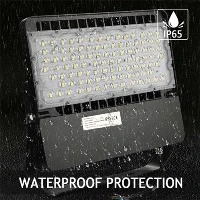
Another defining benefit of LED High Bay Lights is their longevity and low maintenance requirements-factors that drastically reduce operational downtime and long-term costs. Traditional MH lamps have a lifespan of just 10,000–15,000 hours (roughly 1–2 years of 16-hour daily use) and are prone to premature failure due to their fragile glass bulbs and complex ballasts. Fluorescent high bays fare slightly better (15,000–20,000 hours) but degrade quickly in dusty or humid environments, leading to frequent replacements. LED High Bay Lights, by contrast, boast a lifespan of 50,000–80,000 hours (5–8 years of 16-hour daily use) and are built with rugged components to withstand industrial wear and tear. Most models feature die-cast aluminum housings that resist corrosion and impact, shatterproof polycarbonate lenses that block dust and debris, and sealed drivers that prevent moisture ingress-often earning them ingress protection (IP) ratings of IP65 or IP66 (dust-tight and resistant to water jets). This durability means LED fixtures need replacement only a fraction of the time traditional lights do: a warehouse with 50 fixtures would spend ~\(2,500 annually on replacing MH bulbs and labor; with LED High Bay Lights, this cost drops to ~\)500 every 5 years-a 90% reduction in maintenance expenses. For businesses operating 24/7 (such as e-commerce fulfillment centers), the lack of downtime from lighting failures is even more valuable: a single MH bulb replacement in a high-traffic aisle can disrupt forklift operations and order picking for hours, whereas LED fixtures rarely require urgent maintenance.
Superior light quality is a third key advantage of LED High Bay Lights, directly impacting safety, productivity, and user comfort. Unlike MH lamps, which produce uneven light with hotspots and glare, or HPS lights, which emit a yellowish glow that distorts colors, LED High Bay Lights use precision optical systems-including tailored reflectors, diffusers, and lens designs-to distribute light evenly across large areas. This uniformity eliminates dark corners or overly bright spots, reducing the risk of accidents (e.g., trips, falls, or forklift collisions) in industrial settings. Additionally, LED High Bay Lights are available in a range of color temperatures (from 3000K warm white to 6000K daylight white) to suit specific needs: 3000K is ideal for retail spaces (e.g., home goods stores) where a cozy ambiance boosts customer comfort, while 6000K-mimicking natural sunlight-is preferred for warehouses and manufacturing plants, as it enhances detail visibility (e.g., reading barcode labels, inspecting product defects) and reduces eye strain during long shifts. Studies by the Illuminating Engineering Society (IES) have shown that warehouses using 6000K LED High Bay Lights report a 15–20% reduction in picking errors compared to those with MH lamps, as the daylight-like light makes small text and colors more distinguishable. LED fixtures also offer instant-on functionality (no warm-up time, unlike MH lamps, which take 5–10 minutes to reach full brightness) and flicker-free operation, further improving worker alertness and reducing fatigue.
Adaptability to smart lighting systems has made LED High Bay Lights even more versatile in modern commercial and industrial environments, as businesses increasingly adopt automation and data-driven operations. Most modern LED High Bay Lights are compatible with sensors (motion, occupancy, daylight), dimming controls (0–10V, DALI, or wireless), and Internet of Things (IoT) platforms, enabling dynamic lighting management. For example, motion sensors can dim or turn off lights in low-traffic areas (e.g., unused warehouse aisles) when no workers or equipment are present, saving an additional 20–30% on energy. Daylight sensors adjust brightness in spaces with skylights or windows, maintaining a consistent light level (typically 500–1000 lux, the IES-recommended standard for warehouses) without over-illuminating during sunny hours. IoT integration takes this a step further: warehouse managers can monitor lighting performance in real time via a mobile app or dashboard, tracking energy usage, identifying faulty fixtures, and scheduling maintenance proactively. Some LED High Bay Lights even integrate with warehouse management systems (WMS), allowing lighting to sync with operational tasks-e.g., brightening specific aisles when a forklift is scheduled to pick up a pallet, or dimming areas during inventory counts to reduce glare on scanners. This level of control not only optimizes efficiency but also provides valuable data insights: for instance, energy usage trends can help managers identify opportunities to further reduce costs, while occupancy data can inform decisions about space utilization.
LED High Bay Lights are also highly adaptable in terms of installation and design, catering to diverse space requirements. They are available in several form factors, including the popular "UFO" design (compact, disc-shaped fixtures ideal for spaces with low clearance or ventilation ducts) and linear designs (long, narrow fixtures suited for wide aisles or manufacturing lines). Installation options are equally flexible: most fixtures can be mounted via chains, hooks, or surface mounts, depending on ceiling type (metal, concrete, or wood). For retrofitting existing spaces, many manufacturers offer "drop-in" LED replacements that fit into existing MH or fluorescent housings, eliminating the need for extensive rewiring and reducing installation time by 30–50%. This flexibility makes LED High Bay Lights suitable for nearly any tall indoor space: from small auto repair shops (using 100W UFO models) to large indoor sports stadiums (using 400W+ linear models) and cold storage warehouses (using cold-resistant LED drivers that operate reliably at -30°C).
Sustainability is another critical factor driving the adoption of LED High Bay Lights, as businesses seek to reduce their environmental footprint and comply with global energy regulations (e.g., the EU's ErP Directive or the U.S. Energy Star program). Unlike MH and HPS lamps, which contain toxic substances like mercury, LED High Bay Lights are mercury-free and fully recyclable, reducing hazardous waste. Their energy efficiency also lowers greenhouse gas emissions: a single 200W LED High Bay Light replacing a 400W MH lamp reduces annual CO₂ emissions by approximately 1,200 pounds (544 kg)-equivalent to planting 20 trees. For large facilities with hundreds of fixtures, this environmental impact is substantial: a warehouse with 200 LED High Bay Lights would cut CO₂ emissions by 240,000 pounds annually, aligning with corporate sustainability goals and enhancing brand reputation.
In conclusion, LED High Bay Lights have redefined lighting for tall indoor spaces by combining energy efficiency, durability, superior light quality, and smart adaptability. They outperform traditional lighting solutions in every key metric-cost, lifespan, safety, and sustainability-making them an indispensable investment for businesses in manufacturing, warehousing, retail, and sports. As LED technology continues to evolve (with advancements like micro-LED chips and UV-C disinfection integration), LED High Bay Lights will only become more efficient and versatile, further solidifying their role as the future of high-ceiling illumination. Whether retrofitting an aging facility or building a new space, choosing LED High Bay Lights is not just a practical decision-it is a strategic one that delivers long-term value, improves operational efficiency, and contributes to a more sustainable future.
https://www.benweilight.com/industrial-lighting/led-high-bay-light/6000-kufo-led-high-bay.html
Together, we make it better.
Shenzhen Benwei Lighting Technology Co.,Ltd
Mobile/Whatsapp :(+86)18673599565
Email:http://bwzm15@benweilighting.com
Skype: benweilight88
Web: http://www.benweilight.com
Add:F Building,Yuanfen Industrial Zone,Longhua,Bao'an District,Shenzhen, China