A Comprehensive Guide to Light Bulb Sizes, Types, and Shapes

Navigating the world of light bulbs can be challenging with countless options available. This guide simplifies the process by explaining how to identify and select the right bulbs based on their unique characteristics, helping you coordinate both style and functionality in your lighting design.
Understanding Light Bulb Identification
Light bulbs are classified using specific codes found on their packaging. These codes consist of letters indicating the bulb's shape and special features, followed by numbers representing its size. The numerical value corresponds to the bulb's diameter at its widest point, measured in eighths of an inch. For example, an A19 bulb has a standard household shape (A) and measures 19/8 inches (approximately 2.375 inches) in diameter.
Common Light Bulb Shapes
A (Standard Household/Arbitrary): The most common shape for general household lighting
B & C (Candle): Tapered shapes resembling candle flames, ideal for decorative fixtures
R & BR (Reflector & Bulged Reflector): Designed for directional lighting in recessed fixtures and floodlights
PAR (Parabolic Aluminized Reflector): Features precise beam control for outdoor and spotlight applications
MR (Multifaceted Reflector): Compact reflectors commonly used in track lighting and display cases
G (Globe): Spherical bulbs perfect for bathroom vanities and decorative fixtures
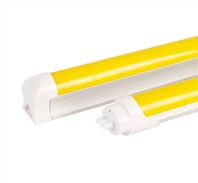
T (Tubular): Cylindrical shapes including linear fluorescent tubes
Light Bulb Base Types
Bulb bases are equally important and follow a similar coding system:
E26/E27 (Medium): Standard screw base for most household bulbs
E12 (Candelabra): Smaller screw base for chandeliers and decorative fixtures
E17 (Intermediate): Mid-sized screw base for certain appliances and fixtures
G4/GU24 (Bi-pin): Pin-style bases for compact fixtures and newer energy-efficient designs
GU10 (Twist-and-Lock): Bayonet-style base requiring a quarter-turn to secure
Primary Bulb Types
Four main technologies dominate the lighting market:
LED (Light-Emitting Diode): Energy-efficient, long-lasting option available in various color temperatures
CFL (Compact Fluorescent): Curled tube design offering good efficiency and brightness
Incandescent: Traditional technology providing warm light but lower efficiency
Halogen: Enhanced incandescent variant with better efficiency and color rendering


Detailed Bulb Type Breakdown
Type A Bulbs (A15, A19, A21, A25)
These standard household bulbs work well in most fixtures, including ceiling fans, table lamps, and general overhead lighting. The A19 represents the typical household bulb, with LED versions increasingly replacing traditional incandescent models due to superior energy efficiency.
Type B and C Bulbs (B10, C7, C9, C15, CA10)
Characterized by their candle-like appearance, these bulbs serve decorative purposes in chandeliers, sconces, and accent lighting. They typically use E12 candelabra bases or E26 medium bases.

Type BR Bulbs (BR20/R20, BR30, BR40)
Featuring reflective coatings, BR bulbs direct light forward, making them suitable for recessed ceiling fixtures and outdoor floodlights. The number indicates the diameter in eighths of an inch - BR30 measures 30/8 inches (3.75 inches) across.
Type PAR Bulbs (PAR16, PAR20, PAR30, PAR38)
With precise beam control and robust construction, PAR bulbs excel in outdoor applications and accent lighting. They produce more concentrated beams than BR bulbs and typically use E26/E27 bases or specialized pin bases.
Type MR Bulbs (MR11, MR16)
These multifaceted reflector bulbs create concentrated directional lighting perfect for track systems, display cases, and landscape lighting. MR16 bulbs particularly dominate indoor accent lighting for their precise spotlighting capabilities.
Type T and LFL Bulbs (T5, T8, T12)
Tubular and linear fluorescent lights come in standardized diameters (T5=5/8", T8=1", T12=1.5") with varying lengths. While traditionally fluorescent, LED replacements now offer improved efficiency and instant-on capability without ballasts.


Type G Bulbs (G25, G30, G50)
Globe bulbs provide aesthetic appeal for bathroom vanities, pendant fixtures, and decorative applications. Vintage-style models with visible filaments have gained popularity for their retro appeal.

Light Quality Considerations
When evaluating light quality, consider these factors:
Lumens: Measures total light output (higher lumens = brighter light)
Color Temperature: Ranges from warm yellow (2700K-3000K) to cool blue (5000K-6500K)
CRI (Color Rendering Index): Indicates how accurately colors appear under the light (higher CRI = better color accuracy)
LED technology typically provides the most advantages, offering the highest lumens per watt, excellent color rendering, and the longest lifespan while consuming less energy than other bulb types. Whether you need functional illumination or decorative accent lighting, understanding these bulb characteristics ensures you'll select the perfect solution for any application in your home.