A Guide to Different Types of Light Bulb Sockets
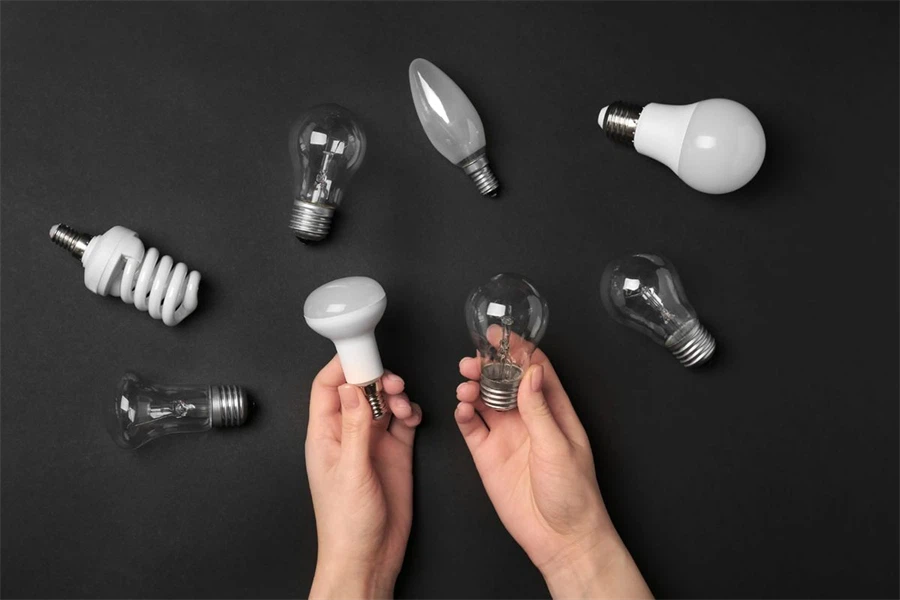
Selecting the right light bulb socket can be surprisingly complex due to the vast array of shapes, sizes, and materials available. While a few specialized types like axial or festoon sockets exist, the majority of residential and commercial sockets fall into four primary categories: screw, pin, wedge, and bayonet. Understanding the distinctions between these groups is essential for choosing the correct socket for any lighting application.
1. Screw Sockets (Edison Base)
The Edison screw socket is the most ubiquitous type, easily recognizable in most household lamps and fixtures. Named after its inventor, Thomas Edison, this socket type uses a threaded metal contact to secure the bulb. Its designation code begins with an "E" (for Edison), followed by a number indicating the diameter of the bulb's base in millimeters. The E26, for instance, is the standard base size in North America.
The housing of these sockets can be constructed from plastic, porcelain, or metal. Plastic and porcelain options are typically limited to basic black or white, while metal sockets-often made from brass, bronze, or nickel-offer a wider range of aesthetic finishes. The choice of material is largely visual, though it is important to note that plastic sockets may not be suitable for high-heat applications, making metal or porcelain a better choice for certain high-wattage or enclosed fixtures.
2. Pin Sockets
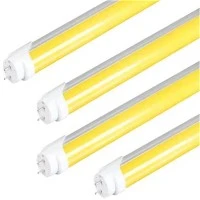
Pin sockets are predominantly used with fluorescent linear tubes, plug-in compact fluorescent lamps (CFLs), certain HID lamps, MR16 low-voltage bulbs, and their LED equivalents. Instead of screwing in, these bulbs have one to four pins that extend from the base and insert directly into the socket.
The designation for a pin socket usually starts with a letter (often "G") followed by a number that signifies the distance in millimeters between the center of each pin. A common example is the G13 base, which is standard for many T8 and T12 linear fluorescent tubes. Installation often involves inserting the pins into the socket (known as a "tombstone" in linear fixtures) and then rotating the bulb to lock it into place, ensuring a secure electrical connection.

3. Wedge Sockets
Wedge sockets are distinct from other types because the bulbs they accommodate do not have a traditional metal base or pins. Instead, the glass base of the bulb is tapered to a sealed, wedge-like point. Two lead wires extend from the bottom of this glass base to make direct contact with the socket.
This design is common in low-voltage miniature lighting applications, such as certain automotive lights, indicator lights, and decorative holiday string lights. The connection is maintained by the tension within the socket itself, which grips the tapered glass base and holds the contact wires in place.
4. Bayonet Sockets
Although less common in American household lighting, bayonet sockets are widely used in other parts of the world, as well as in specific automotive and marine applications. The name derives from the locking mechanism, which resembles that of a rifle bayonet.
A bulb designed for a bayonet socket is pushed into place and then given a slight turn, causing pins on the side of the bulb to lock into corresponding L-shaped slots in the socket. A small spring provides tension to keep the connection secure. This locking action makes bayonet sockets highly resistant to vibration and accidental loosening. They are designated with a "BA" code (for Bayonet Anchor), followed by a number for the diameter in millimeters and an "s" or "d" to indicate a single or double contact point at the base of the socket.
In summary, identifying the correct socket type requires attention to its mechanical design and alphanumeric code. Whether replacing a bulb or selecting a new fixture, understanding these four main socket families ensures compatibility, safety, and optimal performance for any lighting need.