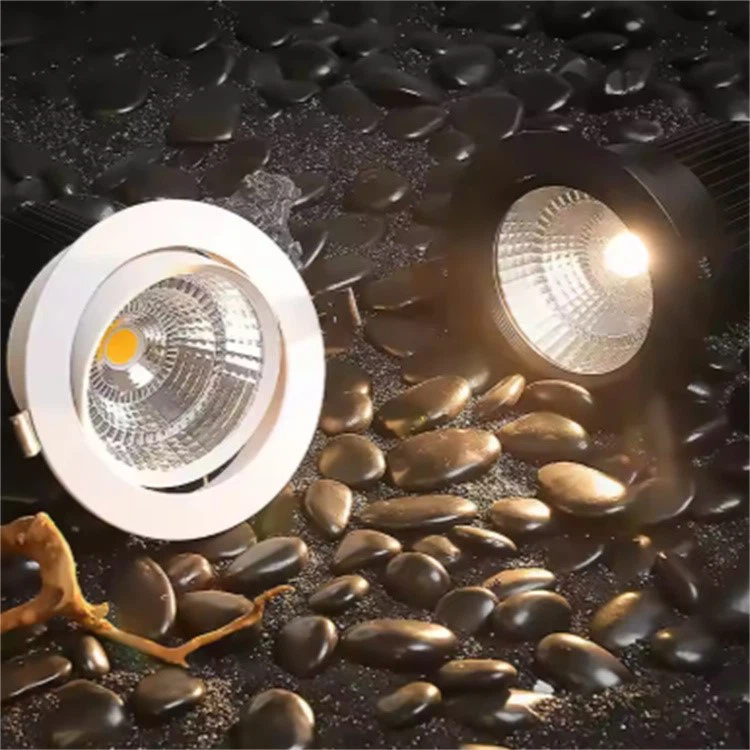
LED downlights' energy economy, adaptability, and stylish design have completely changed modern lighting. Dimmability, which enables users to change brightness levels to accommodate various activities and moods, is one of its most alluring characteristics. But not all LED downlights can be dimmed, and even those that can need suitable dimmer switches to work correctly. The subtleties of LED dimming, compatibility issues, and optimal techniques for obtaining faultless performance are all covered in this 1,500-word tutorial.
Knowing How Dimmable LED Down Lights Work
Not Every LED Can Be Dimmed
The idea that all LED downlights can be muted is a frequent one. In actuality, only "dimmable" types are made to be compatible with dimmer switches. When connected to a dimmer, non-dimmable LEDs may malfunction (such as flickering or buzzing) or even fail too soon since they lack the internal circuitry to control brightness.
Why Can't All LEDs Be Dimmed?
Driver Design: To control power flow during dimming, dimmable LEDs need certain drivers. Fixed output is provided by non-dimmable drivers.
Cost: Adding dimming functionality raises the cost and complexity of manufacture.
The Operation of LED Dimming
LEDs use either continuous current reduction (CCR) or pulse-width modulation (PWM) to dim, in contrast to incandescent lights, which do so by decreasing voltage. These techniques modify the duty cycle or current flow of the light, necessitating exact dimmer and LED compatibility.
Types of LED Downlight Dimmer Switches
Not every dimmer is compatible with LEDs. Due of their low power consumption, traditional dimmers made for halogen or incandescent lights sometimes don't work with LEDs. The main dimmer kinds that work with LED down lights are listed below:
TRIAC (leading-edge) dimmers
How They Operate: Cut the leading edge of the voltage waveform using a TRIAC (Triode for Alternating Current).
Advantages: Widely accessible and reasonably priced.
Cons:
Low-wattage LED loads are problematic, leading to flickering or dropout (lights going off at low dim levels).
Ideal for high-wattage, older bulbs; not the best choice for contemporary LEDs unless marked "LED-compatible."
ELV dimmers, or trailing-edge dimmers
How They Operate: Provide smoother control by cutting the trailing edge of the voltage waveform.
Advantages:
Better for LEDs that use less power.
improved dimming control and quieter operation.
Drawbacks: Costlier than TRIAC dimmers.
Intelligent Dimmers
How They Operate: To enable smartphone or voice control (e.g., Philips Hue, Lutron Caséta), use Wi-Fi, Zigbee, or Bluetooth.
Advantages:
Connect to systems for home automation.
frequently incorporate sophisticated elements like sceneries and timetables.
Cons: More expensive and perhaps incompatible with non-smart LEDs.
Dimmers with 0-10V
How They Operate: To change the brightness, use a separate low-voltage control cable (common in commercial settings).
Advantages: Compatible with a wide range of LED drivers and precise dimming.
Cons: Hard to retrofit as more wiring is needed.
Controllers for pulse-width modulation, or PWM
How They Operate: Quickly turn the LED on and off to change brightness.
Advantages: No colour change while dimming and high efficiency.
Cons: More frequently utilised in industrial settings than in residential ones.
Compatibility Issues and Fixes
The Importance of LED-Dimmer Compatibility
LEDs and dimmers that are not compatible can result in:
Strobing or flickering
Aural buzzing
restricted dimming range (lights won't go down below 20%, for example)
Dimmers or LEDs failing too soon
How to Make Sure They're Compatible
Examine the manufacturer's specifications:
Check the box of the LED or dimmer for compatibility lists (such as Lutron's compatibility tool).
If at all feasible, use LEDs and dimmers from the same manufacturer.
Align the kind of dimmer with the LED driver:
LEDs with a "leading-edge compatible" driver are the ideal candidates for cutting-edge dimmers.
"Universal" or "trailing-edge compatible" drivers are paired with trailing-edge dimmers.
Take into account the minimum load requirements:
Many dimmers have minimum power requirements (e.g., 25W). Because LEDs use less energy, you could require:
a low minimum load dimmer (e.g., 5W).
To handle the load, more LEDs are added to the circuit.
Employ a Test Kit for Dimming Compatibility:
Before completing the installation, several manufacturers provide test kits for dimmers.
A Comprehensive Guide to Setting Up a Dimmable LED Downlight System
Equipment and Supplies
LED downlights that can be dimmed
Dimmer switch compatibility
Wire strippers, voltage testers, and screwdrivers
Wire connections and junction boxes
Steps for Installation
Turn Off Power: Use a voltage tester to confirm after turning off the circuit breaker.
Change the current switch:
Connect the dimmer's line, load, neutral, and ground wires after removing the previous switch.
Pay close attention to the wiring schematic for the dimmer.
Put in LED downlights:
Make sure the lights fit the dimmer's criteria and can be dimmed.
Examine the system:
To check for problems and smooth transitions, turn the power back on and slowly adjust the dimmer.
Resolving Typical Dimming Problems
Issue 1: Flickering in Low Light
Cause: Inadequate load or an incompatible dimmer.
Correct:
To boost wattage, install a fake load, such as a resistor.
Use a trailing-edge dimmer instead.
Issue 2: The light or dimmer is buzzing.
Electrical noise from incompatible parts is the cause.
Correct:
Swap out the dimmer for one made specifically for LEDs.
Make sure every link is secure.
Issue 3: The lights won't completely dim
Cause: outdated dimmer design or driver restrictions.
Correct:
Update the firmware for the LED driver or dimmer (for smart systems).
To find a suitable driver, contact the manufacturer.
Upcoming Developments in LED Dimming Technologies
Universal Compatibility Standards: Zhaga and other initiatives seek to standardise interfaces between LEDs and drivers.
Integration with Smart Homes: Voice and app-controlled dimmers are becoming commonplace.
Advanced drivers with better PWM controls are known as flicker-free dimming.
Although not all LED downlights can be dimmed, choosing dimmable models and matching dimmers allows for greater flexibility and energy savings. The best performance is usually provided by trailing-edge and smart dimmers, but always make sure they are compatible with the LEDs you have. You may create a smooth dimming experience that improves any space's functioning and ambiance by being aware of the technical details and adhering to best practices. To prevent expensive errors, get advice from a lighting expert or electrician whenever in doubt.