Artificial Sunlight: How LED Lights Simulate Winter Sunlight to Boost Vitamin D and Fuel Plant Growth
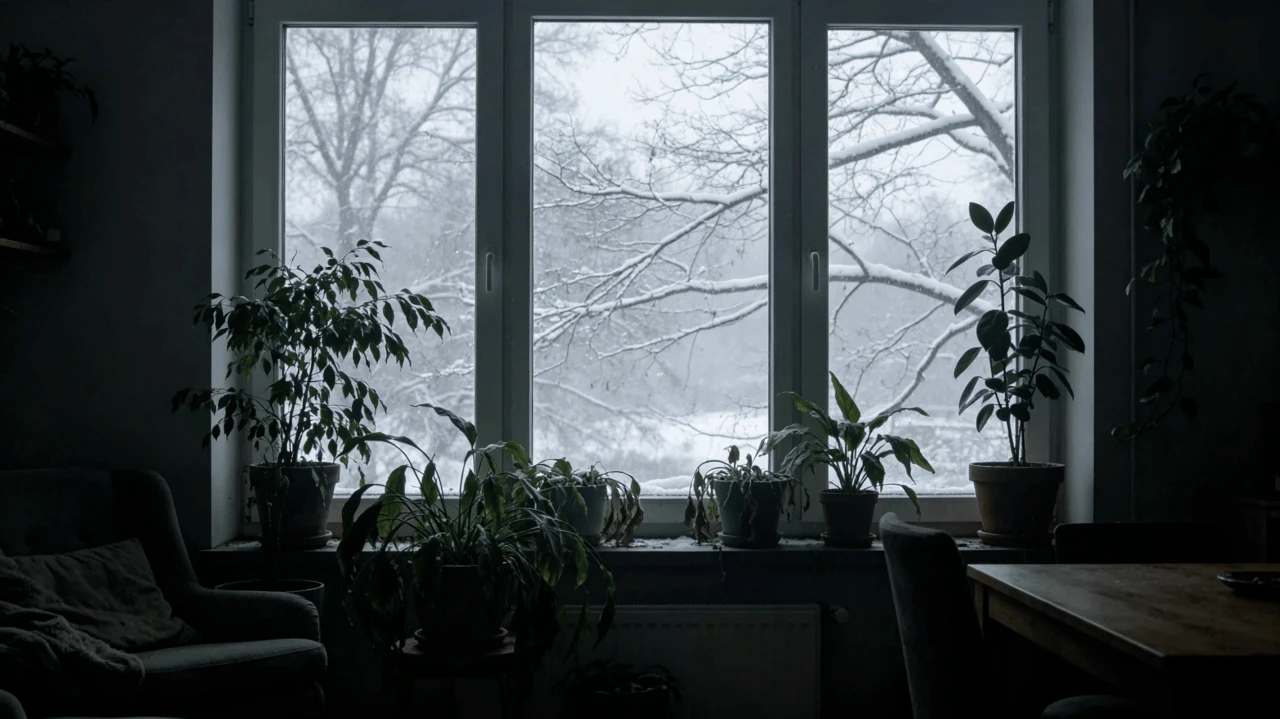
Winter sunlight is always precious. Shorter days, weaker light intensity – it not only dampens moods but also leaves indoor plants languishing. More critically, the human body relies on ultraviolet B (UVB) rays from sunlight to produce about 90% of its vitamin D. When winter sunshine is scarce, vitamin D deficiency becomes a widespread concern. So, can technology create a substitute for sunlight? LED lighting is providing increasingly mature answers.
1. Two "Magic" Functions of Sunlight
Producing vitamin D for the human body. When UVB rays (wavelengths roughly 290–315 nm) reach the skin, they convert 7‑dehydrocholesterol in the skin into previtamin D₃, which then becomes active vitamin D. This process is vital for bone health, immune function, and mood regulation. With reduced winter daylight, many people feel inexplicably low – and this is linked to lower production of serotonin, the "happiness hormone," which sunlight helps stimulate.
Driving plant photosynthesis. Plants convert light energy into chemical energy through photosynthesis to sustain growth. However, plants do not absorb all wavelengths equally. Experiments show that when a leaf is placed over a spectrometer, red, blue, and green light are noticeably reduced, indicating these wavelengths are absorbed and used. In particular, red light (about 600–700 nm) and blue light (about 400–500 nm) are the most critical for photosynthesis. While green light is absorbed less, it plays a unique role in penetrating dense canopies to reach lower leaves.
2. Why Ordinary LED Lights Fall Short
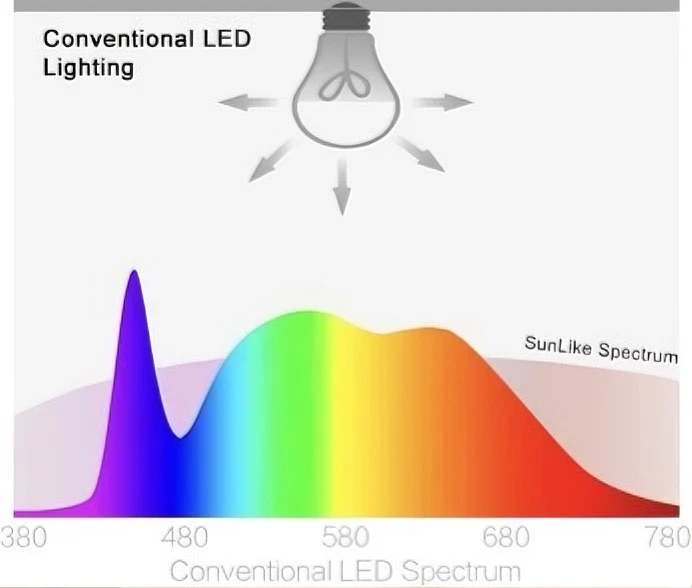
Though energy‑efficient and environmentally friendly, standard household LEDs have obvious shortcomings when it comes to mimicking sunlight. First, their spectrum is narrow and lacks the specific ultraviolet wavelengths needed to trigger vitamin D synthesis. Second, their light intensity is far lower than natural sunlight – achieving a comparable effect would require prolonged, close‑range exposure, which risks eye damage. So relying on ordinary indoor lighting to replace sunbathing is largely futile.
3. Breakthroughs in LED Technology: From "Illumination" to "Biomimicry"
In recent years, LED technology has made qualitative leaps. Scientists are no longer satisfied with LEDs that merely emit light – they want them to emit the right light.
3.1 For human vitamin D: The arrival of UVB‑LEDs
Conventional indoor lighting LEDs do not emit UVB. But recently, novel LED devices that efficiently emit UVB have been developed. Researchers have designed UVB modules that can be integrated into office luminaires, delivering extremely low‑dose UVB exposure throughout the workday.
Balancing safety and effectiveness is a core technical challenge. Studies indicate that 0.5–0.9 standard erythemal doses (SED) per week of UVB exposure is safe and well‑tolerated. A well‑designed UVB module can give office workers about 0.2 SED over an 8‑hour working day – enough to compensate for weekly vitamin D consumption.
In real‑world products, Signify launched its "Vita‑Up" healthy lighting solution at the Hong Kong International Autumn Lighting Fair in 2025, offering low‑intensity UVB illumination that simulates natural light to promote vitamin D production. Designed for spaces where people spend long hours indoors – offices, hospitals, and nursing homes – an 8‑hour exposure under the prototype fixture provides a vitamin D dose equivalent to a 15‑minute walk in midday sunlight, 2–3 times a week. In addition, some teams have developed narrowband UVB‑LED devices that synthesize vitamin D up to 3,200 times more efficiently than natural sunlight, while delivering an irradiance dose of only 8 μW/cm² – 95 times lower than the UVB in Beijing's winter sunlight.
3.2 For plant energy: LED "light recipes"
Plants have more complex light requirements than humans – different species and growth stages need different spectral combinations. This is what is known as a "light recipe." Because LEDs generate little heat and offer precisely tunable spectra, they are the ideal platform for light‑recipe technology.
Scientific research has clarified the specific roles of different light qualities:
- Red light promotes stem elongation, drives photosynthesis, and favours the synthesis of carbohydrates, sugars, and vitamin C.
- Blue light inhibits stem stretching, promotes chlorophyll synthesis, protein accumulation, and antioxidant compounds, resulting in more robust plants.
- Green light penetrates deeply, reaching lower leaves shaded by upper foliage, and sustains overall plant photosynthesis.
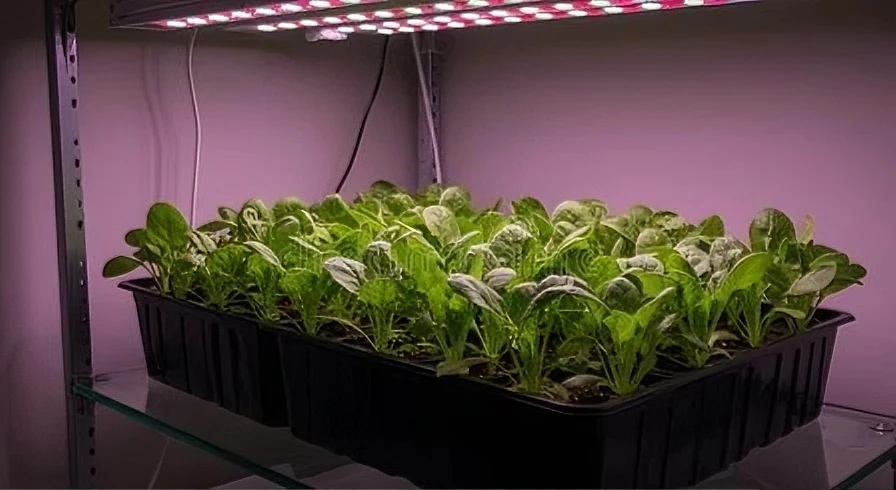
Different plants also require different red‑to‑blue ratios. Studies show that a combination of 660 nm red and 450 nm blue light offers synergistic regulatory advantages. For instance, a 3:2 red‑to‑blue ratio favours photosynthesis and light‑use efficiency in lettuce; a 4:1 ratio significantly promotes the growth of citrus seedlings. In winter, LED supplementation can compensate for insufficient natural light, markedly increasing plant height, leaf area, biomass, and root development. Research has even confirmed that winter LED supplementation can break winter dormancy in citrus saplings and promote early sprouting.
4. "Sun‑like Spectrum": The Ultimate Goal
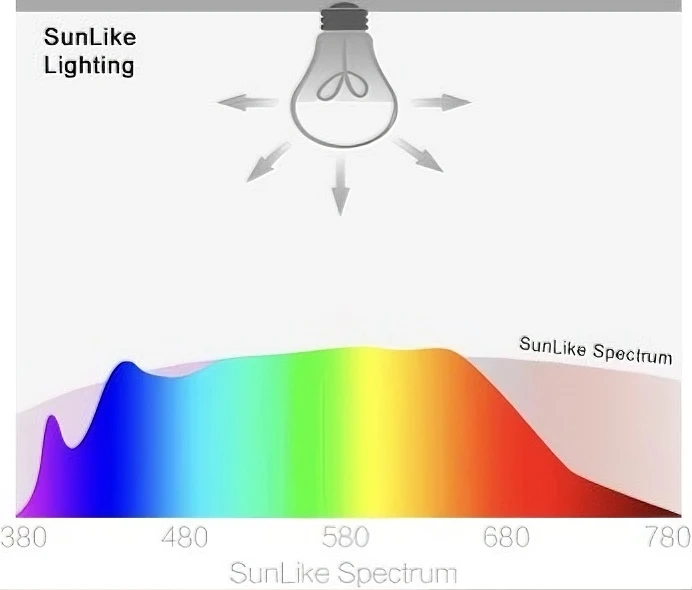
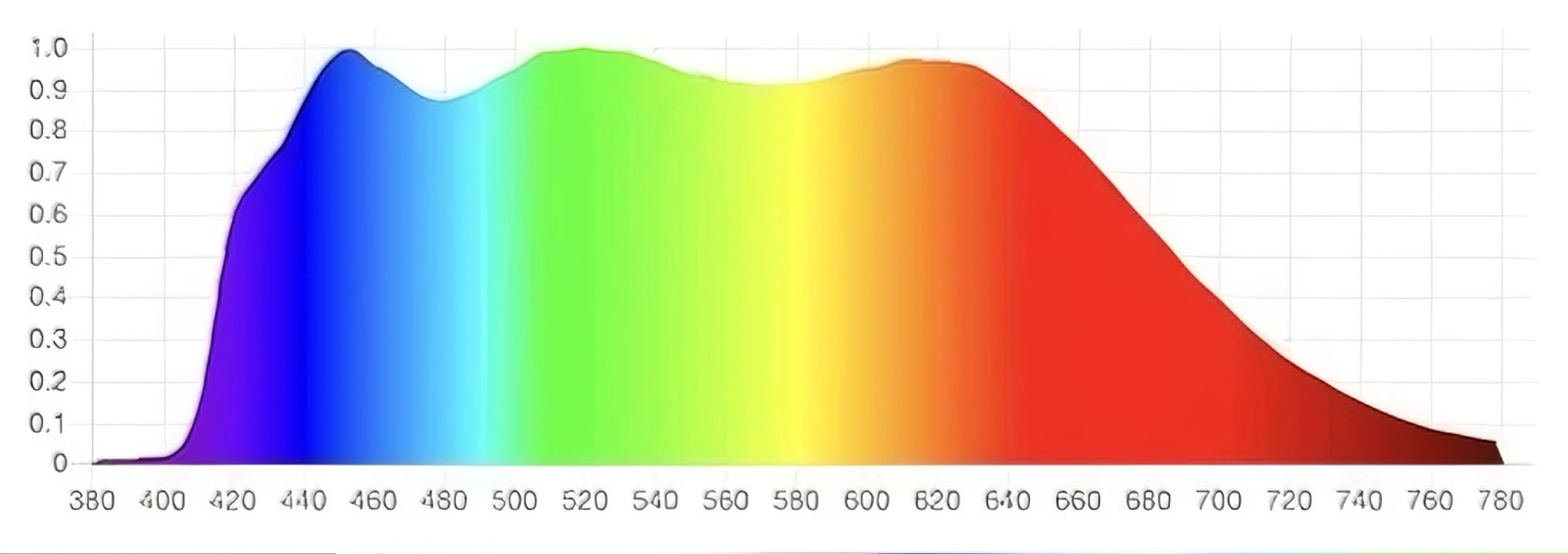
If UVB‑LEDs and plant‑growth lights are "specialists," then "sun‑like spectrum" LEDs are the "all‑rounders." This technology precisely mimics the full spectral distribution of natural sunlight – from ultraviolet to infrared – providing users with more natural, comfortable, and healthy illumination.
Today, over 20 leading LED packaging companies and more than 100 lighting product manufacturers worldwide have entered the sun‑like spectrum arena. Some advanced solar‑spectrum LED sources now cover the visible range of 380–780 nm along with part of the near‑infrared, achieving a colour rendering index above 98. In 2024, the Grading Specification for Full‑Spectrum LED Spectral Quality Evaluation was officially initiated, aiming to establish unified technical standards for this emerging field.
5. Conclusion
From UVB‑LEDs that replenish human vitamin D, to light recipes that tailor growth spectra for plants, to sun‑like illumination pursuing the full spectrum – LED technology is steadily breaking the limitations of artificial light, bringing the nourishing benefits of sunlight indoors even in winter. Of course, most of these technologies are still in professional applications or high‑end products; it is still too early for ordinary households to replace sunbathing with LED lights. But it is foreseeable that, as technology matures and costs decline, we may one day truly be able to "grow" sunlight indoors – nurturing both people and plants alike.