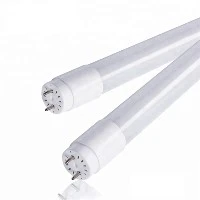
The subject of whether T8 LEDs can replace T12 fluorescent bulbs is frequently asked, particularly as the market for longer-lasting and more energy-efficient lighting options expands. The quick answer is that T8 LEDs can be used in place of T12 LEDs, but there are a number of crucial aspects and things to keep in mind during the process.
Technical Aspects and Compatibility
Electrical Interoperability
Electronic or magnetic ballasts are necessary for T12 fluorescent bulbs to function. Often seen in older lighting systems, magnetic ballasts function by first starting the lamp with a high-voltage impulse and then controlling the current. Compared to magnetic ballasts, electronic ballasts are more recent, run at higher frequencies, and use less energy.
Conversely, T8 LEDs require different electrical conditions. While some T8 LEDs are made to work with specific kinds of electrical ballasts, this compatibility is not always the case. When installing T8 LEDs, it is frequently advised to completely avoid the ballast, particularly when working with older magnetic ballasts. Ballast-bypass Because T8 LEDs are directly connected to the power source, the right current and voltage are sent to them for optimum performance. You can have problems like flickering, a shorter lifespan, or even the LED not working at all if you attempt to connect a T8 LED to an unsuitable ballast.
Fixture and Socket Compatibility
T12 and T8 lights have differing physical dimensions. T8 lights are smaller, with a diameter of roughly 1 inch, whereas T12 lamps are roughly 1.5 inches in diameter. Nonetheless, the majority of T8 LED tubes are made to be compatible with current T12 lights without requiring significant adjustments. Although some older fixtures may need slight alterations to provide a secure fit for the T8 LEDs, the sockets in the fixtures that hold the lights in place are typically made to support both T12 and T8 lamps.
Advantages of Using T8 LEDs Instead of T12
Efficiency of Energy
The increase in energy efficiency is one of the biggest benefits of switching from T12 to T8 LEDs. T12 fluorescent lights use a lot of power. On the other hand, T8 LEDs generate an equivalent or greater amount of light with a substantially lower electricity consumption. For instance, a 4-foot T8 LED tube can generate the same amount of light using as low as 18 to 22 watts, while a standard 4-foot T12 fluorescent bulb may use about 34 to 40 watts. Particularly in large-scale commercial or industrial settings where several bulbs are in use, these energy savings can eventually result in significant drops in electricity expenses.
Increased Lifespan
The lifespan of T8 LEDs is significantly longer than that of T12 fluorescent lights. The average lifespan of T12 lights is between 10,000 and 15,000 hours before they require replacement. T8 LEDs, on the other hand, have a lifespan of at least 25,000 to 50,000 hours. Because of their longer lifespan, fewer lamps will need to be replaced, which lowers maintenance expenses and the inconvenience of having to replace burned-out bulbs on a regular basis. Additionally, it reduces illumination disturbances, which is crucial in establishments like workplaces, medical facilities, and educational institutions.
Improved Lighting
Compared to T12 fluorescent bulbs, T8 LEDs provide better light quality. They offer a more natural color rendering, less flickering, and more constant illumination. This can improve the area's visual comfort, making it a more comfortable place to live, work, or study. Furthermore, LEDs may be made to emit light in particular directions, which lowers light waste and boosts lighting system efficiency.
Procedure for Installation
Switch off the electricity
It is essential to switch off the lighting fixture's power supply at the circuit breaker before beginning any installation work. This guards against any electrical mishaps and guarantees your safety throughout the replacement procedure.
If required, remove the ballast and T12 lamps
The fixture's current T12 fluorescent lights should be carefully removed. You will also need to remove the ballast if you are utilizing ballast-bypass T8 LEDs. To do this, carefully remove the ballast from the fixture housing by unplugging the wires that are attached to it.
Put the T8 LEDs in place
Place the T8 LED tubes into the fixture's existing sockets. Verify that they are firmly fastened in place and seated correctly. As directed by the manufacturer, connect the wires from the electrical supply straight to the corresponding terminals on the T8 LED tubes for ballast-bypass installations.
Test after restoring power
Restore the lighting fixture's electricity at the circuit breaker after the installation is finished. Make sure the T8 LEDs are functioning correctly by turning on the light switch. Check for flickering, uneven lighting, and other problems.
In conclusion, switching from T12 to T8 LEDs is not only feasible but also very advantageous in terms of reduced energy use, increased longevity, and better light quality. To guarantee a successful and secure replacement, it is crucial to carefully evaluate the electrical components' and fixtures' compatibility and adhere to the correct installation protocols. Making the switch from T12 to T8 LEDs can make your lighting system more dependable, economical, and efficient if done correctly.