Numerous considerations must be made when deciding between T5 and T8 LEDs because each kind has distinct qualities and uses. To assist you in choosing the one that best meets your needs, this article will compare them in a number of ways.
Dimensions and Setup
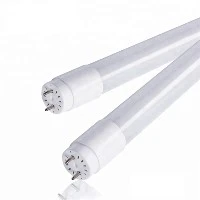
The sizes of T5 and T8 LEDs are where the most obvious differences may be found. T5 LEDs are comparatively thin, measuring about 16 millimeters in diameter. When installed, they appear sleek and unobtrusive due to their narrow form, which gives them a delicate and small appearance. T8 LEDs, on the other hand, have a 26 millimeter diameter and are thicker, giving them a more substantial and sturdy appearance.
The difference in size has a big impact on installation. T5 LEDs are easy to install in tight areas because of their small diameter. For example, they are perfect for use within small display shelves, kitchen cabinets, or other confined spaces where room is limited. They can provide lighting in areas where larger fixtures wouldn't fit because of their thin design, which allows them to fit into small spaces without sticking out too much. T8 LEDs, on the other hand, need more room for installation because of their greater size. The increased size of T8 LEDs, however, is not an issue in open and roomy settings like lofty factories, sizable warehouses, or broad commercial halls. Rather, they fit in nicely with these expansive spaces' overall magnitude.
Luminance
T8 LEDs were thought to have a brightness advantage in the past. T8 LEDs can hold more LED chips because of their greater diameter. Brighter illumination can be achieved with more chips since they can produce a larger luminous flux at the same power rating. Because of this, T8 LEDs are a common option for locations that need intense lighting, like big workshops or supermarkets.
However, T5 LEDs have significantly improved in brightness due to the quick development of LED technology. There are currently a lot of high-power T5 LEDs on the market. Their brightness can be on par with or even higher than that of conventional T8 LEDs because to improved chip luminous efficiency and better chip arrangement. Some high-end T5 LEDs, for instance, combine well crafted optical lenses with new-generation high-efficacy circuits. By increasing the rate of light use, these lenses enable T5 LEDs to operate at high brightness levels while using less power.
Efficiency of Energy
One of the most important factors in contemporary lighting equipment is energy efficiency. This is where T5 LEDs shine. They frequently use cutting-edge rare-earth trichromatic phosphor technology, which allows for exceptionally high luminous efficacy-typically 94Lm/W or greater. This implies that T5 LEDs can use less electricity and provide greater light. About 20% to 30% less energy is used by T5 LEDs than by conventional T8 LEDs. This energy-saving benefit eventually results in considerable electricity bill savings, particularly for large-scale lighting projects and commercial buildings.
Duration of Life
One of the main benefits of LED lighting is that both T5 and T8 LEDs typically have lengthy lifespans. T5 LEDs function effectively in terms of stability because of their well-designed structures and premium materials. T5 LEDs have a comparatively modest rate of brightness degradation over time, which guarantees steady illumination for a long time. T5 LEDs typically last more than 30,000 hours, and some high-quality models can last up to 50,000 hours.
Additionally, T8 LEDs last a long time-on average, 25,000 hours. They do, however, require comparatively more heat dissipation when in use. Their longevity may be impacted if the heat dissipation is not adequately controlled. However, T8 LEDs may also function steadily for a long period under favorable heat-dissipation settings, satisfying the lighting requirements of the majority of situations.
The price
T5 LEDs are typically more expensive. Their more complex manufacturing process and greater demands on materials and technology are the primary causes of this. To guarantee consistent light dispersion, for instance, the arrangement of LED chips inside T5 LEDs necessitates more exact process control. The higher cost is partly a result of the usage of pricey materials, such as rare-earth trichromatic phosphors.
On the other hand, T8 LEDs are less expensive. Due to economies of scale brought about by their highly developed production technology and extensive market penetration, production costs have decreased. T8 LEDs are a more affordable choice for customers on a limited budget. T5 LEDs, on the other hand, might be a better option for consumers who value high-performance, high-quality lighting and are less concerned with cost.
Situations for Applications
T5 LEDs' slim design and high light-uniformity make them ideal for locations where space efficiency and light quality are crucial. T5 LEDs may produce even, gentle lighting in museums, art galleries, and other exhibition venues, emphasizing exhibit details and preventing shadows that might skew the viewing experience. T5 LEDs may produce a sophisticated and alluring lighting ambiance in upscale retail establishments, highlighting the attributes of the merchandise on exhibit.
T8 LEDs are widely employed in a variety of commercial, industrial, and residential lighting scenarios due to its great brightness and broad range of applications. T8 LEDs can provide enough light in manufacturing workshops for employees to do production tasks. The bright light produced by T8 LEDs in classrooms helps students concentrate and increases their learning effectiveness. T8 LEDs can offer bright and pleasant everyday lighting in home spaces like kitchens and living rooms.
In summary, T5 and T8 LEDs are not fundamentally "better" in a strict sense. A thorough evaluation of variables including illumination needs, installation space, and price will determine which option is best. T5 LEDs are a fantastic choice if you need high-quality light, need to put in a tiny space, or need significant energy savings. T8 LEDs, on the other hand, are better suited if you need to light up huge areas or value excellent brightness and cost-effectiveness.