I was sitting in my just acquired vintage RV. I saw that the lighting was entirely made up of vintage fluorescent tubes and filament lamps. Even if this lighting was the most effective and energy-efficient at the time, that era has long since gone.
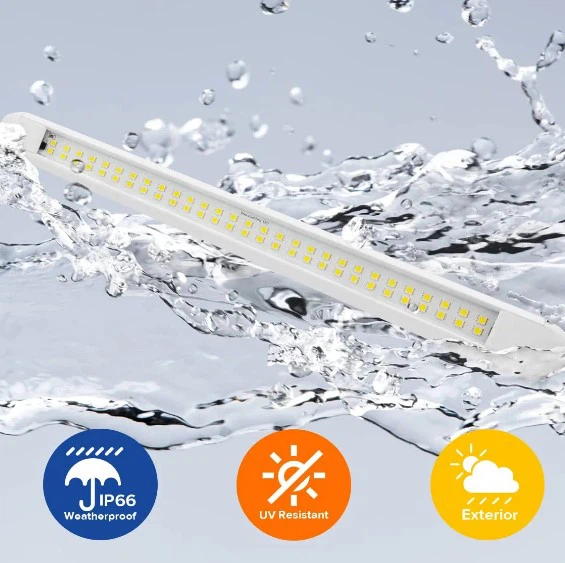
I came to the conclusion that switching to LED lights was the best method to improve the lighting in my RV. a simple, affordable, and very effective method for lighting a camper with insufficient battery life. LED lights are more powerful and brighter.
For new RVs, LED lighting is becoming the standard. Lighting in older motorhomes sometimes consumes a lot of electricity and might drain your leisure batteries.
We only have one leisure battery, so we only have a short window of time without a connection to the mains before the battery runs out of juice and we are left in the dark.
I made the decision to install LED lighting strips in its stead. These provide decent lighting with a manageable power consumption.
Furthermore, they operate with a wide variety of voltages, including 12 volts, which was what we required. Led strip lights come in a wide variety of shapes and sizes, but the kind I picked consumes less than 3 watts per meter. The ratio of an LED to a filament bulb is around 10 times. Consequently, a 3 watt LED produces nearly the same amount of light as a 30-watt filament bulb.
The majority of brightnesses are now expressed in lumens since power consumption is a poor measure of brightness.
Making ready your outdated motorhome lighting
The first step, which is crucial, is to confirm that all of your lights are powered by 12 volts and not by the mains.
None of the lights in our RV are powered by the mains; they are all 12 volt systems. With a multimeter, you may confirm this once again. If you don't feel comfortable doing this yourself, get expert assistance, such as from an electrician.
I made the decision to remove the internals from my old light fixtures and just utilize the old switch with the new LEDs.
Finding the good and the bad following the switch makes the situation simple. You should attach those wires to the LEDs. Simply take off all the unnecessary parts, such as the circuit boards with the tube starters.
Although it seems simple, several of the lights contain many pieces. The positive wire coming from the switch and the negative cable leaving the lamp are what you need. There shouldn't be any issues after you connect your LEDs to those wires.
Led polarity is crucial
Make sure the polarity is right before installing any LED lights. A filament bulb doesn't care which way the positive and negative wires are connected; it will operate regardless of polarity. Correct polarity is crucial for an LED light bulb.
The cable in the Hymer is counter-intuitive, which is the issue I discovered. In the UK, blue is neutral and brown is live. In a Hymer, brown represents negativity while blue represents positivity. Certain of the wiring is linked in an outdated manner while some extensions are connected in a more modern manner, which makes things quite difficult. Therefore, before you begin, you really have no option but to identify which wire is whose.
This may be verified with a multimeter. The LEDs are simple to attach and will function once you have the proper polarity.
Some of the previous spotlights removed bulbs when I installed our lights, so I chose to replace them with led bulbs. Some would function while others wouldn't. It took me some time to realize that the lights had been randomly connected and that I needed to rewire them with the proper polarity for the replacement bulbs in order for the led lights to function.