Chemical Factory Lighting Design|How to choose lamps and lanterns
Most of the chemical plants are inflammable and explosive places, and the environment is corrosive, which has its particularity compared with conventional plants. The lighting design of chemical plants directly affects many issues such as production safety, labor productivity, product quality and labor hygiene.
The setting of chemical production equipment is developing towards the combination and open air. The outdoor open air environment is affected by wind, rain, ice, snow, sun, sand, dust and living things. In addition, the outdoor temperature difference is large, and condensation is easy to occur; at the same time, the reaction material medium in most chemical production equipment has the characteristics of flammability, explosion and corrosiveness, and these conditions often exist at the same time. All these harsh conditions require Chemical lighting fixtures have higher resistance to environmental impact than ordinary lighting fixtures in structural design, insulation system, protection level and surface treatment.
The lighting equipment commonly used in chemical production equipment is explosion-proof and anti-corrosion. Therefore, in the lighting power distribution design of chemical production equipment, the selected lighting fixtures should be suitable for explosion-proof and anti-corrosion according to the environmental characteristics, and meet the requirements of the protection level. .
----------Lighting method-----------
The lighting methods of chemical plants are divided into general lighting, mixed lighting and local lighting. Its applicable principles shall comply with the following provisions:
General lighting refers to the uniform lighting set up to illuminate the entire place, specifically the lighting of the entire indoor and outdoor places, most of the workplaces, or the lighting of places that are not suitable for local lighting and mixed lighting. The general lighting should be Even lighting.
Generally, general lighting should be set up in the workplace; when different areas in the same place have different illumination requirements, general lighting in different areas should be used.
Mixed lighting refers to the lighting composed of general lighting and local lighting. Mixed lighting should be used in places where the illumination requirements of some operating surfaces are relatively high, and only general lighting is unreasonable;
Local lighting refers to the lighting that enhances the illuminance required by the local workplace, the lighting on the work surface with lighting direction requirements or the lighting in the local workplace where the general lighting fails to meet the production requirements. Only local lighting should not be installed in a workplace.
----------Lighting type------------
The types of lighting in chemical plants are divided into: normal lighting, emergency lighting, maintenance lighting, guard lighting, obstacle lighting, road lighting... Among them, emergency lighting includes backup lighting, safety lighting and evacuation lighting.
The following focuses on normal lighting, emergency lighting and road lighting:
1) Normal lighting:
All workplaces should be provided with normal lighting appropriate to the characteristics of the environment in order to maintain an appropriate level of illumination and to ensure that routine production operations can be carried out safely. Normal lighting should be set in all indoor and outdoor places where people work and move. Normal lighting should provide uniform lighting for each installation area; normal lighting in process control room and electrical control room should use anti-glare design lighting fixtures, special attention should be paid to ensure uniform lighting and avoid lighting on the control panel and display (CRT) Shadows or light reflections appear.
2) Emergency lighting:
Emergency lighting should be installed in places where it is necessary to temporarily continue to work, monitor work surfaces, evacuate personnel, and exit passage safety instructions after normal lighting is extinguished due to a fault.
Emergency lighting should be set up in the following situations in the workplace:
① After the normal lighting is extinguished due to a fault, it is necessary to ensure that the normal work or activities continue, and backup lighting should be provided; Lighting for continued work in places where work will cause great impact or economic loss, or lighting for normal firefighting in the event of a fire.
② After the normal lighting is extinguished due to a fault, it is necessary to ensure the safety of personnel in potential danger, and safety lighting should be set up, such as the use of circular saws and other workplaces;
③ After the normal lighting is extinguished due to a fault, the exits and passages to ensure the safe evacuation of personnel shall be provided with evacuation lighting. For example, evacuation sign lights set at exits and passages indicating the location of the exit and the direction of the escape route, and lighting set to illuminate the evacuation passages.
④ Emergency lighting includes backup lighting, safety lighting and evacuation lighting, but in the lighting design of chemical installation area, it is sometimes difficult to distinguish the difference between backup lighting, safety lighting and evacuation lighting. Control room, substation and power distribution room, self-contained power station, power station, fire control room and fire alarm button, diesel generator room, instrument panel installed on site, pump area, near eyewash, important valves or instruments Emergency lighting should be installed at places, important operating positions, etc., and when normal lighting fails, for safety reasons, to ensure the operation of the device or the place required for safe parking.
3) Road lighting:
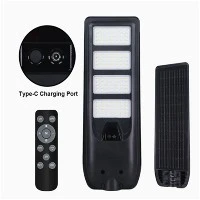
Street lights used for road lighting should be clock-controlled street lights that automatically turn on and off.
In the lighting design of petrochemical enterprises, national laws, regulations and technical and economic policies should be implemented; through lighting design, a safe, applicable and effective lighting system should be provided to create a good environment that is conducive to personal safety, production safety, product quality and labor productivity. Production and working environment; achieve safe use, energy saving, advanced technology, economical rationality, and convenient maintenance and management.
----------Selection of lamps and lanterns----------
1) LED T8 lamps should be used in places where the installation height of lamps is low.
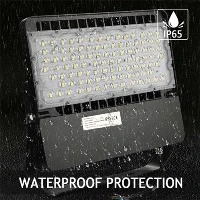
2) In places where the installation height of lamps is high and difficult to maintain, LED high bay lamps or floodlights are suitable.
3) LED explosion-proof lights should be used in special places.
4) Emergency lighting fixtures should be used in areas requiring emergency lighting.

Shenzhen Benwei Lighting Technology Co., Ltd is a professional manufacturer in producing LED lighting products, Our main products T8 T5 LED Tube, LED Grow Light,Poultry LED Light,Tri-proof LED Light,LED Flood Light, LED Panel, LED Stadium Light, LED High Bay, LED Classing Room Light ,If you want to purchase a high-quality LED lighting products or have a more in-depth understanding of the application of LED lighting, please contact send us inquiry.