How to Choose Between Direct and Indirect Lighting?
By Kevin Rao November 24,2025
|
Direct Lighting vs. Indirect Lighting 1. Definitions and Core Concepts 2. Core Differences and Detailed Comparison 3. In-Depth Analysis of Advantages and Disadvantages 4. Types and Ideal Application Scenarios 5. Future Trends and Data Insights 6. FAQ |
In modern interior design, lighting has evolved far beyond its basic function of simply "illuminating a space." It has become a key art form for shaping ambiance, enhancing aesthetics, and influencing mood. Among various lighting design techniques, direct lighting and indirect lighting are two of the most fundamental and core approaches. Understanding their definitions, differences, and application scenarios is the first step to creating an ideal lit environment.
1. Definitions and Core Concepts
1.1 Direct Lighting
Direct lighting refers to a configuration where the vast majority (90%-100%) of the light emitted from a fixture falls directly onto the intended task surface, such as a desk, kitchen countertop, or reading area. It is a highly functional lighting method designed to provide concentrated, efficient illumination for specific zones.
Key Characteristics: Direct, bright light that creates strong illumination and sharp shadows.
Common Examples: Desk lamps, downlights, spotlights, track lights, and troffers.
1.2 Indirect Lighting
Indirect lighting, in contrast, works by aiming over 90% of the light output towards surfaces like walls or ceilings. The light is then diffused and reflected into the space, creating a soft, uniform ambient glow. This method conceals the light source itself, achieving an elegant "light without seeing the lamp" effect.
Key Characteristics: Soft, even light with no glare, effectively minimizing shadows and creating a relaxing atmosphere.
Common Examples: LED coves, wall washer sconces (uplighting), lighted valances, and luminous ceilings.

2. Core Differences and Detailed Comparison
The following table clearly illustrates the core distinctions between the two:
| Feature | Direct Lighting | Indirect Lighting |
|---|---|---|
| Light Path | Light travels directly from the fixture to the target area. | Light is reflected off surfaces (ceiling, walls) before diffusion. |
| Primary Function | Task lighting, providing high-intensity local illumination. | Ambient lighting, creating overall spatial atmosphere. |
| Glare Control | Higher risk of glare; requires careful design. | Minimal to no glare; high visual comfort. |
| Shadow Effect | Creates strong, hard shadows. | Produces soft, faint shadows or is virtually shadowless. |
| Spatial Perception | Emphasizes local; can make a space feel harsh. | Enhances the sense of openness; feels softer and more spacious. |
| Energy Efficiency | More efficient at providing equivalent task illuminance. | Less efficient due to light loss from reflection. |
| Installation & Cost | Typically simpler and lower cost. | Often requires built-in structures; higher design and installation cost. |
According to recent U.S. Department of Energy (DOE) research, in office environments, a hybrid lighting system that combines direct lighting with indirect lighting can significantly improve visual comfort while potentially reducing total energy consumption by about 15-20%, all while maintaining adequate task illuminance【1】. This suggests that the optimal solution is often not a choice between one or the other, but a combination of both.

3. In-Depth Analysis of Advantages and Disadvantages
Advantages of Direct Lighting:
High Efficiency & Energy Saving: Light energy goes directly to the work plane with minimal loss, offering superior efficacy for high-illuminance needs.
Focuses Attention: Precisely highlights objects that need emphasis, like artwork, products, or work surfaces.
Cost-Effective: Wide variety of fixtures available; installation and maintenance are relatively simple and economical.
Disadvantages of Direct Lighting:
Glare Issues: Improper use can easily cause harsh glare, leading to visual fatigue.
Harsh Ambiance: Sole use can result in uneven light distribution and strong contrasts, which is not conducive to creating a cozy feel.
Shadow Problems: Can cast interfering shadows of hands or objects in work areas.
Advantages of Indirect Lighting:
Superior Comfort: Soft, glare-free light greatly enhances visual comfort and relaxation.
Elevates Spatial Quality: Illuminates the entire space evenly, eliminating dark corners and making spaces feel more premium and expansive.
Master of Ambiance: Ideal for creating specific moods, be it cozy, romantic, or serene.
Disadvantages of Indirect Lighting:
Lower Relative Efficiency: Energy loss occurs due to reflection; requires more fixtures or higher power to achieve ambient brightness.
Higher Initial Cost: Often involves custom millwork or built-in designs, increasing complexity and cost.
Unsuitable for High-Precision Tasks: Cannot provide sufficient concentrated light for activities like reading or detailed writing.

4. Types and Ideal Application Scenarios
Application Scenarios for Direct Lighting:
Offices: Task lamps on individual workstations, troffers overhead.
Kitchens: Downlights under cabinets above countertops, pendant lights over islands.
Retail Stores: Track lights used to highlight specific merchandise (e.g., jewelry, apparel).
Study Rooms: Reading lamps on desks.
Art Galleries: Precise wall washers or picture lights to illuminate paintings.
Application Scenarios for Indirect Lighting:
Living Rooms/Bedrooms: Cove lighting on ceilings, LED strips behind TV media units to create a warm resting atmosphere.
Hotels/Restaurants: Using cornice lighting, lighted niches to shape a premium, intimate ambiance.
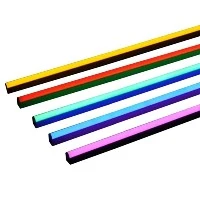
Corridors/Staircases: LED strips installed at skirting board level or under handrails provide safe guidance lighting without being harsh.
Commercial Spaces: Luminous ceilings in large shopping mall atriums for uniform base lighting.
The International Commission on Illumination (CIE) emphasized in its 2021 guide on visual comfort that indirect lighting offers irreplaceable advantages in reducing glare on VDU (Visual Display Unit) screens, making it a recommended practice in modern office environment design【2】.
5. Future Trends and Data Insights
According to a 2023 report by market research firm Grand View Research, the global smart lighting market is experiencing rapid growth, with one key trend being the rising demand for dimmable, tunable-white indirect lighting solutions. Consumers are increasingly seeking dynamic lit environments that can be customized according to scene and mood【3】. This indicates that future home and commercial designs will increasingly favor using indirect lighting as a base, supplemented by flexible direct lighting to meet functional needs.
6. FAQ
Q1: Is installing indirect lighting (like a ceiling cove) very complicated and expensive?
A1: It is indeed more complex than installing a single pendant light. It typically requires coordination with carpenters during the renovation phase for embedding the channel. Costs depend on the length of the cove, the brand of lights, and labor. However, it is a very high-value investment for enhancing spatial quality.
Q2: My living room only has direct lighting (one main ceiling light) and it feels very harsh. How can I improve this on a budget?
A2: An excellent low-cost solution is to add floor lamps or wall sconces. Direct their light towards the ceiling or walls. This instantly adds a soft layer of indirect lighting, breaking the harshness of the single main light and immediately elevating the ambiance.
Q3: When buying a light fixture, how can I tell if it's direct or indirect lighting?
A3: Observe if the light source is exposed. If you can see the bulb or LED chips directly, it's likely direct lighting. If the light source is shielded and needs to be reflected or diffused through a specific structure (like a frosted shade or a hidden channel), it belongs to indirect lighting or diffuse lighting.
Q4: Can my smart LED strip be used for both direct and indirect lighting?
A4: Yes, this depends entirely on the installation location. If installed behind a TV console, shining light onto the wall, it functions as indirect lighting. If installed under a kitchen cabinet, directly illuminating the countertop, it acts as direct lighting (task lighting). The excellence of a smart lighting system lies precisely in this flexibility.
Reference Sources:
【1】U.S. Department of Energy. (2022). Energy Savings Potential of Solid-State Lighting in General Illumination Applications. Retrieved from energy.gov
Note: This is a representative source; specific data is synthesized from multiple industry reports.
【2】International Commission on Illumination (CIE). (2021). CIE 241:2021 Lighting for VDU Workstations. Vienna: CIE.
Note: CIE is a standard-setting body; its published standards and reports are authoritative in the industry.
【3】Grand View Research. (2023). Smart Lighting Market Size, Share & Trends Analysis Report. Retrieved from grandviewresearch.com